
Martin Valliant
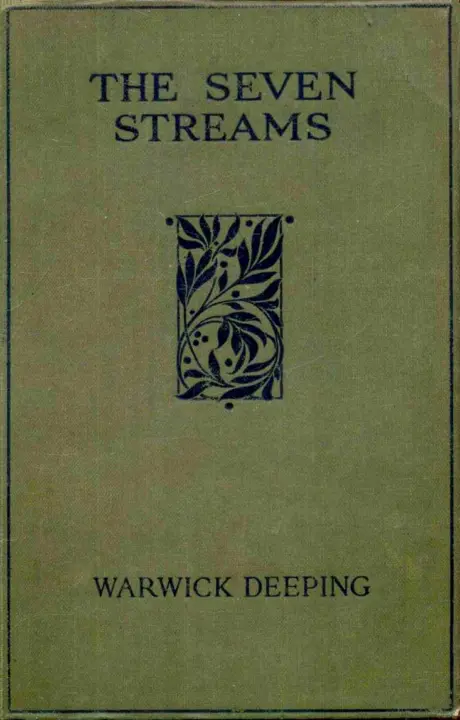
Warwick Deeping

THE CLASSIC COLLECTION · 1928
The prophetic marriage by Warwick Deeping. Explore this classic work in a free online edition. Subjects include Bildungsromans; Man-woman relationships -- Fiction; England -- Social life and customs -- Fiction; Marriage -- Fiction; World War, 1914-1918 -- France -- Fiction. Read the locally hosted text below, adjust the reading display, and continue where you left off.
Introduction adapted from the source catalogue; source summaries may be automatically generated.
Free to read · English · 117,622 words · No account needed
MAKE TIME FOR A GOOD BOOK
On by default. Untick to stop anonymous reading totals. Each page counts after 10 seconds in view. How this works.
Anonymous counting is on unless you have switched it off.
Poor Tod followed his new romantic instincts and the teachings of the books. He became the very son of his father, a little Quixote, who made up bunches of roses, and clove pinks and sweet peas, tagged a label to them and then tossed them with fear and trembling over Mr. Hornblower’s garden wall.
“To the most beautiful and lovely Queen of Pentworth.”
“A little token from your loyal and devoted knight and worshipper, Tod
Clarence Western.”
“To the noble lady whom I love.”
Also he tried his hand at poetry, and sent fragments of it with flowers.
“Your hair is like the brightest gold,
Your eyes are bluer than the sea.
But why is your sweet heart so cold
When I am sunk in misery?”
This particular appeal fell into the hands of Mr. Hornblower, who happened to be forking potatoes, and who made dreadful fun of it at the tea-table.
“Tell the little gentleman to take a Gregory powder, Millie. Your hair is like the brightest gold, is it? Gosh, he’s got it badly!”
Millie giggled, but she rather liked Tod’s very flattering despair. There were other boys who had fallen under her spell, but they were not so romantic and devoted as Tod. She relented, and allowed Tod an assignation at the gate under the scrubby old laurels at the end of the garden.
Tod was not so eloquent as his flowers or his poetry; he was ever rather a shy boy with girls and women, and this sudden nearness to his princess filled him with awe.
“Awfully good of you to let me come and talk to you,” he said.
“You rather like talking to me, then?” sang the siren.
“It’s music,” said Tod; “and isn’t your hair wonderful?”
She shook it at him.
“Would you like a little bit to keep?”
“Would you give it me?”
“If you’ll swear on your honour.”
“What do you want me to swear?” Tod asked.
“That you’ll never look at any other girl, and that you’ll fight any other boy who wants to talk to me. There’re lots, you know.”
“I’ll do that,” said Tod. “Give me your hand to hold.”
She gave him her hand through the bars of the gate, and Tod removed his cap, knelt down, and made his vow.
“I’ll always love Millie Hornblower,” he declaimed, “and I’ll defend her from all ruffians, dogs and rivals, with all my heart and strength. I’ll be her knight and her servant till I die, please God, Amen.”
With that he kissed her brown little fingers, and got up—blushing.
Your reading position is saved on this browser. Take it to another device with a library code. Reading pages adapt to text, rather than matching a printed edition.
Warwick Deeping

Warwick Deeping

Warwick Deeping
Warwick Deeping
BEHIND THE BOOK
This eBook is for the use of anyone anywhere in the United States and most other parts of the world at no cost and with almost no restrictions whatsoever. You may copy it, give it away or re-use it under the terms of the Project Gutenberg License included with this eBook or online at www.gutenberg.org. If you are not located in the United States, you will have to check the laws of the country where you are located before using this eBook. Read the source licence.
The original source file, including credits and licence, is retained by this library. Request an original-format copy at no charge. Please include the book title and Project Gutenberg identifier #79530.
KEEP YOUR CURIOSITY GOING
Coulson Kernahan

Maurice Baring
Frances Wright
Cécile Tormay

Frederic Jesup Stimson

W. H. P. (William Henry Pope) Jarvis