
Martin Valliant
Warwick Deeping

THE CLASSIC COLLECTION · 1928
The prophetic marriage by Warwick Deeping. Explore this classic work in a free online edition. Subjects include Bildungsromans; Man-woman relationships -- Fiction; England -- Social life and customs -- Fiction; Marriage -- Fiction; World War, 1914-1918 -- France -- Fiction. Read the locally hosted text below, adjust the reading display, and continue where you left off.
Introduction adapted from the source catalogue; source summaries may be automatically generated.
Free to read · English · 117,622 words · No account needed
MAKE TIME FOR A GOOD BOOK
On by default. Untick to stop anonymous reading totals. Each page counts after 10 seconds in view. How this works.
Anonymous counting is on unless you have switched it off.
When the dawn came he left that most comfortable of French beds in which he had been unable to sleep, washed himself, put on his best tunic and riding-breeches and his new field-boots, and went softly on to the broad, white-floored landing. The house seemed silent and asleep, and Tod slipped silently down the stairs, yet not so silently that he passed unheard by someone else who had been unable to sleep. Claire, standing at her window in her nightdress, saw Tod walk out towards the orchard. He paused by the gate to light his pipe.
“Mon pauvre,” she said to herself, “for you too the dawn is a sad one after a night of sadness. Will you call your pipe by my name, I wonder, as French boys do? Why did you come to us—ah!—why did you come?”
She watched Tod disappear into the orchard, and then slipped back into
bed.
“I will not see him again,” she said. “I do not think that I could bear it. I shall stay here till he has gone.”
Tod walked up and down the orchard for an hour. Perhaps—lover-like—he had hopes of seeing Claire again and of speaking a few last words to her, words that would remain after he had left, but it was not Claire who came to him, but Josephine on her way to the woodstack to bring in an armful of dry wood.
“Bonjour, monsieur. You are very early.”
Her dark eyes looked straight at Tod.
“I could not sleep,” he said, with brotherly frankness.
She paused by him, a woman who understood all that had happened to these two people, but whose thoughts were with Claire.
“You have been too happy in Myonville, Monsieur Tod.”
“Happy!”
He felt that Josephine understood.
“But not now.”
“Mon ami,” she said, “you will go to your home when the war is over, and you will forget.”
“I shall have no home,” he answered, “and I shall never forget. Some day—perhaps——”
She looked at him pityingly with her dark eyes.
“It is serious with you; I know. It is very hard.”
Tod thought a moment.
“Josephine—I wonder if I might write to her?”
She answered him at once and very firmly.
“No, monsieur. It would not be fair.”
“Not even once?”
“If wounds are kept open——”
Tod looked her straight in the face.
“You are right, absolutely right,” he said, “it would not be fair.”
And Josephine kissed him.
“Claire will understand,” she said.
Chapter Thirty-six
Your reading position is saved on this browser. Take it to another device with a library code. Reading pages adapt to text, rather than matching a printed edition.
Warwick Deeping

Warwick Deeping

Warwick Deeping
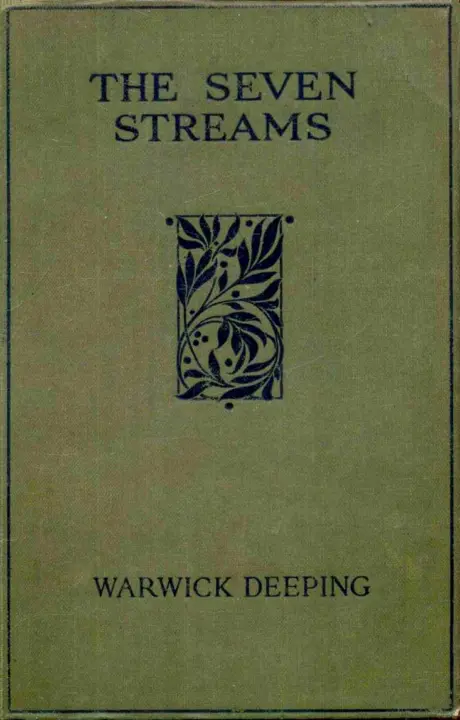
Warwick Deeping
BEHIND THE BOOK
This eBook is for the use of anyone anywhere in the United States and most other parts of the world at no cost and with almost no restrictions whatsoever. You may copy it, give it away or re-use it under the terms of the Project Gutenberg License included with this eBook or online at www.gutenberg.org. If you are not located in the United States, you will have to check the laws of the country where you are located before using this eBook. Read the source licence.
The original source file, including credits and licence, is retained by this library. Request an original-format copy at no charge. Please include the book title and Project Gutenberg identifier #79530.
KEEP YOUR CURIOSITY GOING
Coulson Kernahan

Maurice Baring
Frances Wright
Cécile Tormay

Frederic Jesup Stimson

W. H. P. (William Henry Pope) Jarvis