
Dead letters
Maurice Baring
THE CLASSIC COLLECTION · 1870
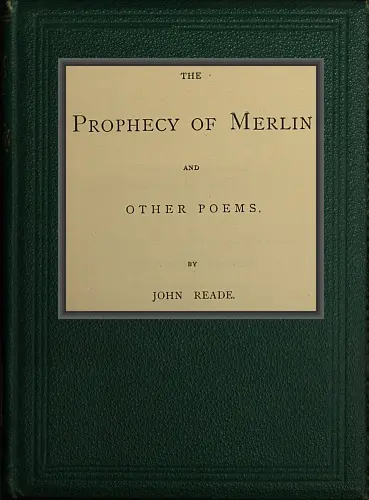
"The Prophecy of Merlin and Other Poems" by John Reade is a collection of poems written in the late 19th century. The central poem features Sir Bedivere, a knight from the Arthurian legend, in a poignant narrative exploring themes of loss, prophecy, and the legacy of King Arthur. The work captures the essence of longing for noble ideals and the cyclical nature of time, emphasizing the inevitable passage of heroes and the hope for their return in future generations. The opening of the collection presents a deeply emotional scene where Sir Bedivere, lamenting the departure of King Arthur to Avalon, grapples with his sorrow and the weight of loneliness. As he mourns, he encounters Merlin, who soothes his wounds and offers prophetic insights about Arthur's enduring legacy and the future of Britain. This dialogue reveals Merlin’s wisdom as he speaks of impending conflicts and the eventual return of a righteous ruler, ultimately foreshadowing Britain’s future under Queen Victoria and a new age of peace marked by the name of Arthur. This set of verses combines mythological resonance with historical reflection, setting a rich, contemplative tone for the poems that follow.
Introduction adapted from the source catalogue; source summaries may be automatically generated.
Free to read · English · 28,992 words · No account needed
MAKE TIME FOR A GOOD BOOK
On by default. Untick to stop anonymous reading totals. Each page counts after 10 seconds in view. How this works.
Anonymous counting is on unless you have switched it off.
And Balaam stood amazed
Long time, while thoughts, conflicting, tore his breast,
And barred all passage for his voice.
At length,
“Hath not the Highest, by this sign, declared
His purpose? I MUST GO!” he said, and then
Dark-boding terrors shook him and the strain
That held his face rapt westward, all relaxed
By speech, he felt as one, who, in a dream,
Stands on a steep cliff, by the greedy sea,
While ruthless foes pursue him.
“I MUST GO!”
He said, and from ten thousand horrid throats
There seemed to come a mocking answer, “Go!”
And o’er him came a shiver, as a lake
Shivers beneath the burden of a breeze.
And then there came a whisper to his ear,
“Balaam, God’s prophet! go not with these men!
Puttest thou Balak’s honour above His
Who chose thee to declare His will to men?
Go, and thou art undone! God doth not lie!”
Then Balaam, as in answer to a friend:
“There came across the desert lordly men
From Moab and from Midian, who besought,
With many prayers and noble gifts, that I,
Balaam, the Seer, would go with them and curse
A people who were terrible in war--
To whom the strength of Moab was as grass
Before the oxen, feeding on the plains--
If, haply, I might crush them with a curse!
These prayed I to abide with me all night,
Till I should learn the purpose of the Lord--
And, in a dream, God warned me not to go;
And so they went away ungratified.
Then came these princes with more precious gifts,
And still more precious promises, who said,
‘Balak, our lord, hath sent us unto thee,
And prayeth thee to come. He will promote
Thee and thy house to honour; and all boons,
Whate’er thou askest, he will freely give.’
And I replied, ‘If Balak’s house were full
Of gold and silver, and he made it mine,
Or more or less than God commandeth me,
I could not do. But tarry here to-night,
And I will hear the answer of the Lord.’
And then God sent a sign, the like of which
I, who know all the faces of the night,
And am familiar with all stars that shine
Over the hills and plains of Pethor-land,
Have never seen before, a sign which said:
‘Balaam, if these men call thee, rise and go.’
Or more or less than God commandeth me
I cannot do. Am I in this to blame?”
And then the wind came sweeping down the hills,
And Balaam heard again the mocking cry,
“If these man call thee, Balaam, rise and go.”
And though he shuddered, all his face grew dark
And knotted, as he said, “God doth not lie,
But--doth God mock? Hath he not sent a sign
To me, who have the power of reading signs,
His own high gift? And now--and now, O God!
If thou wouldst send me yet another sign--!”
And here the whisper of the still, small voice
Came back, “O, Balaam! wretched is their fate,
Who, knowing good from evil, choose not good,
Or suffer evil, howsoever fair,
To make the good less lovely in their eyes!
Full well thou knowest that thy heart is set
More on the gold of Balak than God’s will.
God doth not mock. ’Tis thou that mockest Him,
Coming into His presence, full of lust,
And seeking for a sign. If thou wert pure
No sign were needed. Being as thou art,
Wert thou to offer up the land’s whole wealth,
Oxen and rams, and corn, and wine, and oil,
And all the first-born of thy kings, no sign
Would purge thee of those sordid dreams that drag
Thy soul from God to hell!
It is not yet too late,
Perhaps, and but perhaps!
O, Balaam, rouse thee!
Thou art, e’en yet, God’s prophet! He has shewn
His will to none more clearly than to thee.
What is it He requireth at thy hands?
Be true and honest, pure and merciful,
Having thy heart aflame with faith and love,
Still walking humbly, as though prone to fall--
Guarding thine eyes from covetous wanderings,
Deeming God’s gifts more beautiful than man’s--
And he will keep thee right in all thy ways.
Oh! what is Balak’s honour, Balak’s gold,
To Balaam, if the Highest be his friend,
Who owns the wealth and beauty of the world?
Balaam, if these men call thee, do not go.”
And Balaam bowed himself unto the ground,
And lay upon his face in misery;
And in his heart an awful battle raged,
Where evil fought with good. Longtime he lay,
As one entranced, all motionless, but full,
Through every nerve, of wakeful, painful life.
And then he rose, as from his grave, so pale
And wild his visage; and he looked again,
Along the waste, towards the western sky,
But saw no sign, save that the stars grew dim,
And some were gone; and, even as he looked,
He seemed to hear from all the waking earth,
Borne through the gloaming on the mountain wind,
The words he loved and longed for and yet loathed,
“Balaam, if these men call thee, rise and go.”
Your reading position is saved on this browser. Take it to another device with a library code. Reading pages adapt to text, rather than matching a printed edition.
BEHIND THE BOOK
This eBook is for the use of anyone anywhere in the United States and most other parts of the world at no cost and with almost no restrictions whatsoever. You may copy it, give it away or re-use it under the terms of the Project Gutenberg License included with this eBook or online at www.gutenberg.org. If you are not located in the United States, you will have to check the laws of the country where you are located before using this eBook. Read the source licence.
The original source file, including credits and licence, is retained by this library. Request an original-format copy at no charge. Please include the book title and Project Gutenberg identifier #55170.
KEEP YOUR CURIOSITY GOING
Maurice Baring
Francis Greenleaf Allinson & Anne C. E. (Anne Crosby Emery) Allinson

Eric Mackay
Edmund Gosse
Sophia Margaretta Hensley
Stuart Dodgson Collingwood