
Dead letters
Maurice Baring
THE CLASSIC COLLECTION · 1870
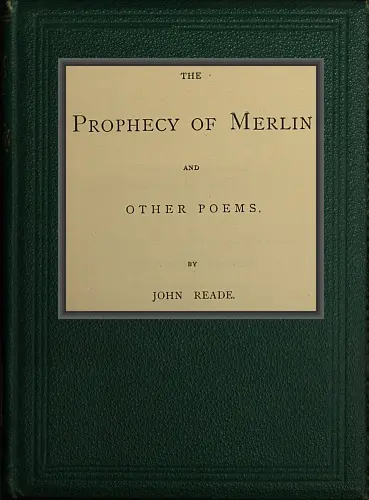
"The Prophecy of Merlin and Other Poems" by John Reade is a collection of poems written in the late 19th century. The central poem features Sir Bedivere, a knight from the Arthurian legend, in a poignant narrative exploring themes of loss, prophecy, and the legacy of King Arthur. The work captures the essence of longing for noble ideals and the cyclical nature of time, emphasizing the inevitable passage of heroes and the hope for their return in future generations. The opening of the collection presents a deeply emotional scene where Sir Bedivere, lamenting the departure of King Arthur to Avalon, grapples with his sorrow and the weight of loneliness. As he mourns, he encounters Merlin, who soothes his wounds and offers prophetic insights about Arthur's enduring legacy and the future of Britain. This dialogue reveals Merlin’s wisdom as he speaks of impending conflicts and the eventual return of a righteous ruler, ultimately foreshadowing Britain’s future under Queen Victoria and a new age of peace marked by the name of Arthur. This set of verses combines mythological resonance with historical reflection, setting a rich, contemplative tone for the poems that follow.
Introduction adapted from the source catalogue; source summaries may be automatically generated.
Free to read · English · 28,992 words · No account needed
MAKE TIME FOR A GOOD BOOK
On by default. Untick to stop anonymous reading totals. Each page counts after 10 seconds in view. How this works.
Anonymous counting is on unless you have switched it off.
“From thy branchlet torn away,
Whither, whither dost thou stray,
Poor dry leaf?”--“I cannot say.
Late, the tempest struck the oak,
Which was hitherto my stay.
Ever since that fatal stroke,
To the faithless winds a prey,
Not a moment’s rest I gain.
From the forest to the plain,
I am carried by the gale.
Yet I only go the way
That the rose-leaf shuns in vain,
And where laurel-leaves grow pale.”
André Chénier, for having dared to write against the excesses of his countrymen, was summoned before the Revolutional Tribunal, condemned and executed, in the year 1794. The first eight stanzas (in the translation) he composed in prison, after his condemnation; the two last he wrote at the foot of the scaffold, while waiting to be dragged to execution. He had just finished the line, “Le sommeil du tombeau pressera ma paupière,” when his turn came, and his words had their fulfillment. In the translation, the spirit, not the letter, has been regarded.
When one lone lamb is bleating in the shambles,
And gleams the ruthless knife,
His yester playmates pause not in their gambols,
Their wild, free joy of life,
To think of him; the little ones that played
With him in sunny hours,
In bright green fields, and his fair form arrayed
With ribbons gay and flowers,
Mark not his absence from the fleecy throng;
Unwept he sheds his blood;
And this sad destiny is mine. Ere long
From this grim solitude
I pass to death. But let me bear my fate,
And calmly be forgot;
A thousand others in the self-same state
Await the self-same lot.
And what were friends to me? Oh! one kind voice
Heard through those prison-bars,
Did it not make my drooping heart rejoice,
Though from my murderers
’Twas bought, perhaps? Alas! how soon life ends!
And yet why should my death
Make any one unhappy? Live, my friends.
Nor think my fleeting breath
Calls you to come. Mayhap, in days gone by,
I, too, from sight of sorrow
Turned, careless, with self-wrapt unpitying eye,
Not dreaming of the morrow.
And now misfortune presses on my heart,
Erewhile so strong and free,
’Twere craven to ask you to bear its smart--
Farewell, nor think of me!
As a faint ray or zephyr’s latest breath
Revives the dying day,
Beneath the scaffold, that stern throne of death,
I sing my parting lay.
Before an hour, with wakeful foot and loud,
Has marked its journey’s close
On yon bright disc, the sleep of death shall shroud
Mine eyes from worldly woes!
(From Lamartine.)
Your reading position is saved on this browser. Take it to another device with a library code. Reading pages adapt to text, rather than matching a printed edition.
BEHIND THE BOOK
This eBook is for the use of anyone anywhere in the United States and most other parts of the world at no cost and with almost no restrictions whatsoever. You may copy it, give it away or re-use it under the terms of the Project Gutenberg License included with this eBook or online at www.gutenberg.org. If you are not located in the United States, you will have to check the laws of the country where you are located before using this eBook. Read the source licence.
The original source file, including credits and licence, is retained by this library. Request an original-format copy at no charge. Please include the book title and Project Gutenberg identifier #55170.
KEEP YOUR CURIOSITY GOING
Maurice Baring
Francis Greenleaf Allinson & Anne C. E. (Anne Crosby Emery) Allinson

Eric Mackay
Edmund Gosse
Sophia Margaretta Hensley
Stuart Dodgson Collingwood