
Dead letters
Maurice Baring
THE CLASSIC COLLECTION · 1870
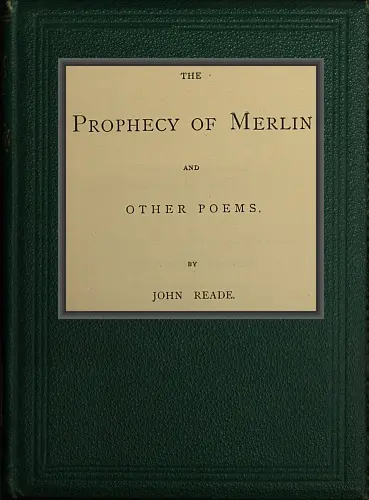
"The Prophecy of Merlin and Other Poems" by John Reade is a collection of poems written in the late 19th century. The central poem features Sir Bedivere, a knight from the Arthurian legend, in a poignant narrative exploring themes of loss, prophecy, and the legacy of King Arthur. The work captures the essence of longing for noble ideals and the cyclical nature of time, emphasizing the inevitable passage of heroes and the hope for their return in future generations. The opening of the collection presents a deeply emotional scene where Sir Bedivere, lamenting the departure of King Arthur to Avalon, grapples with his sorrow and the weight of loneliness. As he mourns, he encounters Merlin, who soothes his wounds and offers prophetic insights about Arthur's enduring legacy and the future of Britain. This dialogue reveals Merlin’s wisdom as he speaks of impending conflicts and the eventual return of a righteous ruler, ultimately foreshadowing Britain’s future under Queen Victoria and a new age of peace marked by the name of Arthur. This set of verses combines mythological resonance with historical reflection, setting a rich, contemplative tone for the poems that follow.
Introduction adapted from the source catalogue; source summaries may be automatically generated.
Free to read · English · 28,992 words · No account needed
MAKE TIME FOR A GOOD BOOK
On by default. Untick to stop anonymous reading totals. Each page counts after 10 seconds in view. How this works.
Anonymous counting is on unless you have switched it off.
So passed she from him; and, for seven long months
Beneath a rock by Strymon’s lonely flood
He wailed her fate and his, till all the caves
Re-echoed mournfully, and savage beasts,
Assuaged, knew milder breasts, and strength of oaks
Was captive led by magic of his song.
Even as, in woods, beneath a poplar’s shade
Lone Philomel laments her callow brood,
Robbed from the nest by cruel, churlish hands;
And she, poor childless mother, all night long,
Perched on a branch, renews the doleful strain,
And with her plaints makes all the grove resound;
So Orpheus mourned Eurydice, nor dreamed
Of other love, nor other nuptial tie.
Alone, ’mid Boreal ice, and by the banks
Of snow-girt Tanais, and through the plains
That feel the chill breath of Niphæan hills,
He sang the loss of sweet Eurydice
And Pluto’s bootless gift. And even when
The Thracian maidens maddened at the slight
Of their own beauty in such lasting grief
And wild from Bacchic orgies, slew the bard,
Strewing the broad fields with his severed limbs;
Then, even then, when Hebrus bore away
The tuneful head torn from the marble neck,
The cold lips, faithful still to their lost love,
Murmured, “Eurydice! Eurydice!”
And the sad banks replied “Eurydice!”
(From Catullus.)
Animula! vagula, blandula,
Hospes, comesque corporis,
Quæ nunc abibis in loca,
Pallidula rigida, nudula
Nec, ut soles, dabis jocos?
The same rendered into English:
Darling, gentle, wandering soul,
Long this body’s friend and guest,
Tell what region is thy goal,
Pale and cold and all undrest,
Lost thy wonted play and jest?
Spirit! sweet, gentle thing,
Thou seemest taking wing
For some new place of rest;
So long this body’s guest
And friend, dost thou forsake it,
And pallid, cold, and naked,
Thou wanderest,
Bereft of joy and jest,
Whither, ethereal thing?
Dear, pretty, fluttering, vital thing,
So long this body’s guest and friend,
Ah! tell me, whither dost thou wend
Thy lonely way,
Pallid and nude and shivering,
Nor, as thy wont is, gently gay?
(From Ovid’s “Metamorphoses.”)
Fairest of many youths was Pyramus,
And Thisbe beauteous among Eastern maids.
These dwelt in neighbour houses, where, of old,
Semiramis girt Babylon with walls.
And, being neighbours, these two fell in love,
And love with time grew stronger. They had wed,
But that their parents willed it not, and so
Forbade all intercourse. With mutual breasts,
Each sighed for other. Parted thus, they spoke
By signs, and, being hindered, loved the more.
Your reading position is saved on this browser. Take it to another device with a library code. Reading pages adapt to text, rather than matching a printed edition.
BEHIND THE BOOK
This eBook is for the use of anyone anywhere in the United States and most other parts of the world at no cost and with almost no restrictions whatsoever. You may copy it, give it away or re-use it under the terms of the Project Gutenberg License included with this eBook or online at www.gutenberg.org. If you are not located in the United States, you will have to check the laws of the country where you are located before using this eBook. Read the source licence.
The original source file, including credits and licence, is retained by this library. Request an original-format copy at no charge. Please include the book title and Project Gutenberg identifier #55170.
KEEP YOUR CURIOSITY GOING
Maurice Baring
Francis Greenleaf Allinson & Anne C. E. (Anne Crosby Emery) Allinson

Eric Mackay
Edmund Gosse
Sophia Margaretta Hensley
Stuart Dodgson Collingwood