
Dead letters
Maurice Baring
THE CLASSIC COLLECTION · 1870
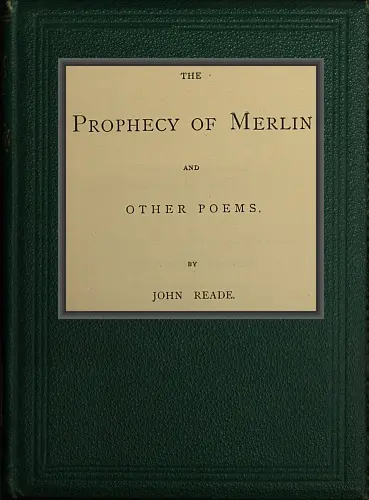
"The Prophecy of Merlin and Other Poems" by John Reade is a collection of poems written in the late 19th century. The central poem features Sir Bedivere, a knight from the Arthurian legend, in a poignant narrative exploring themes of loss, prophecy, and the legacy of King Arthur. The work captures the essence of longing for noble ideals and the cyclical nature of time, emphasizing the inevitable passage of heroes and the hope for their return in future generations. The opening of the collection presents a deeply emotional scene where Sir Bedivere, lamenting the departure of King Arthur to Avalon, grapples with his sorrow and the weight of loneliness. As he mourns, he encounters Merlin, who soothes his wounds and offers prophetic insights about Arthur's enduring legacy and the future of Britain. This dialogue reveals Merlin’s wisdom as he speaks of impending conflicts and the eventual return of a righteous ruler, ultimately foreshadowing Britain’s future under Queen Victoria and a new age of peace marked by the name of Arthur. This set of verses combines mythological resonance with historical reflection, setting a rich, contemplative tone for the poems that follow.
Introduction adapted from the source catalogue; source summaries may be automatically generated.
Free to read · English · 28,992 words · No account needed
MAKE TIME FOR A GOOD BOOK
On by default. Untick to stop anonymous reading totals. Each page counts after 10 seconds in view. How this works.
Anonymous counting is on unless you have switched it off.
She ceased; nor waited Hector long, but rushed
Forth from the house, along the very way
That he had come, through fair-built Troja’s streets;
Nor paused he till he reached the Scæan gate,
(Through which he meant to hie him to the plain).
But here Andromache of queenly dower,
His wife, the daughter of Eëtion,
Who dwelt erstwhile ’neath Placus’ woody height,
In Thebe, ruling o’er Cilician men,
Came running till she met him in the way.
With her, the nurse, who to her bosom held
An innocent-hearted babe, their only son,
His father’s joy, in beauty like a star,
Scamandrius named by Hector, but the host
Called him Astyanax, the City’s King,
Honouring Hector chief defence of Troy.
And now he looked on him, and smiled a smile
That spake his heart more than a thousand words,
And called the tears into his mother’s eyes.
She, clinging to her husband, grasped his hand,
And, sobbing “Hector,” spoke to him these words:
“Ah! love, thy bravery will be thy bane,
And, seeking glory, thou forgettest him
And me, ah! hapless me when thou art gone!
Soon, soon, I know it, all the foes of Troy,
Rushing on thee at once, shall take thy life.
And, when I miss thee, it were better far
That I were laid beneath the ground: for I
Shall then have none to comfort me, not one,
But woes on woes, when thou hast left me, Hector!
No sire have I, nor gentle mother left,--
Him, as thou know’st, the proud Achilles slew,
And razed his fair-built city to the ground.
High-gated Thebe. Yet he spoiled him not,
Although he slew him, but, with reverence,
Laid him in glittering arms upon the pyre,
And raised a mound in honour of his name,
Which the hill-nymphs garlanded round with elms,
The daughters of the ægis-bearing Zeus.
And my seven brothers, in one fatal day,
Entered the gloomy shades where Pluto reigns,
Slain by the ruthless hand that slew my sire,
As, in their native fields, they watched the herds
Of kine, slow-footed, and of snowy sheep.
Nor did my queenly mother long survive,
For, led a captive to the Grecian camp,
With other spoils, the victor sent her home,
For goodly ransom, only to be slain
By the sure shaft of huntress Artemis.
But thou art father, mother, brother, spouse,
My pride, my Hector! Oh! then, pity me!
Stay here and watch with me upon this tower,--
Stay, stay, my Hector, go not hence to make
Thy child an orphan and a widow me!
But set the forces by the Fig-tree Hill,
Where the chief risk of hostile entrance lies,
And where the wall is weakest. At that point
Already have the bravest of our foes--
Idomeneus and either Ajax, Diomede,
And the two sons of Atreus--made assault,
Whether incited thither by some voice
Prophetic, or high hope of victory.
So stay, my Hector, they will need thee here.”
Your reading position is saved on this browser. Take it to another device with a library code. Reading pages adapt to text, rather than matching a printed edition.
BEHIND THE BOOK
This eBook is for the use of anyone anywhere in the United States and most other parts of the world at no cost and with almost no restrictions whatsoever. You may copy it, give it away or re-use it under the terms of the Project Gutenberg License included with this eBook or online at www.gutenberg.org. If you are not located in the United States, you will have to check the laws of the country where you are located before using this eBook. Read the source licence.
The original source file, including credits and licence, is retained by this library. Request an original-format copy at no charge. Please include the book title and Project Gutenberg identifier #55170.
KEEP YOUR CURIOSITY GOING
Maurice Baring
Francis Greenleaf Allinson & Anne C. E. (Anne Crosby Emery) Allinson

Eric Mackay
Edmund Gosse
Sophia Margaretta Hensley
Stuart Dodgson Collingwood