THE CLASSIC COLLECTION✦The private life of Henry Maitland: A record dictated by J. H.CLASSIC FREE BOOKS
The private life of Henry Maitland: A record dictated by J. H.
Morley Roberts
THE CLASSIC COLLECTION · 1902
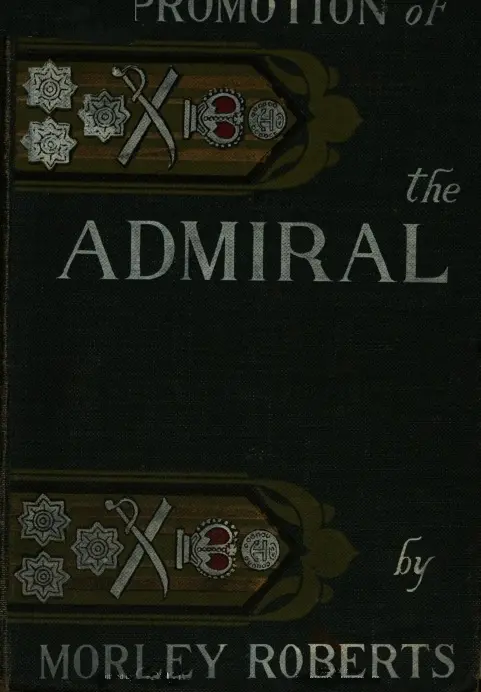
"The Promotion of the Admiral and Other Sea Comedies" by Morley Roberts is a collection of fictional sea comedies likely written in the early 20th century. The primary narrative follows a rough and shrewd boarding-house keeper named Shanghai Smith, who has a history of mischief and interaction with sailors, particularly a British admiral named Richard Dunn. The stories depict humorous escapades rooted in naval life, exploring themes of rivalry, identity, and revenge, particularly as Smith seeks to exact his vengeance on the admiral who once bested him in a fight. At the start of the narrative, readers are introduced to Shanghai Smith, a notorious figure in San Francisco's Barbary Coast, who tells a tale of being thrashed by a naval officer named Richard Dunn many years ago. Smith learns that Dunn, now an admiral, is arriving in San Francisco, igniting his desire for revenge. Following this setup, the plot takes a twist as Smith plots to "shanghai" the admiral and ship him onto a notoriously rough vessel called the "California", leading to a series of comedic events that showcase the admiral’s resilience and resourcefulness. As the story unfolds, the humorous elements of mistaken identities and the clash of naval tradition with the rough-and-tumble world of the Barbary Coast are cleverly woven together, setting the stage for an engaging and entertaining read.
Introduction adapted from the source catalogue; source summaries may be automatically generated.
Free to read · English · 51,189 words · No account needed
MAKE TIME FOR A GOOD BOOK
On by default. Untick to stop anonymous reading totals. Each page counts after 10 seconds in view. How this works.
Anonymous counting is on unless you have switched it off.
"I'm rather sorry for Sibley Gawthrop," she said; but Gardiner was not so young as to be discouraged by her sympathy for Sibley.
"May I be sorry for him too?" asked Gardiner, boldly.
Edith Atherton stared at him and dropped her eyes.
"How is your father?" she asked irrelevantly. "He was a very nice
old man."
"So he is," replied Gardiner, "the only trouble was that he believed he owned me. He came from the South, and was one of the few Southerners, who, on losing their slaves, played their own game on the men from the North. He and I quarrelled about a subject in which I considered he had no right to interfere."
There were no obvious implications in the way he spoke, and Edith
Atherton saw none.
"What was that?" she asked, innocently enough.
"His view was that I shouldn't marry until he let me. I wanted to
marry you."
Edith gasped a little and took hold of her chair as she bent forward.
"Indeed, Mr. Gardiner."
"And I still want to, Miss Atherton. And as the lady whom he wished me to marry was married a month ago, I think he will forgive me, if I ask him. It was always understood, even when we parted, that he would reinstate me as his partner if I succeeded for myself."
"And have you succeeded?" asked Edith with bent head.
Gardiner rose from his chair and went towards her.
"That is for you to say," he cried.
And when he returned to the office he handed in no more than a paragraph. It was considered in some quarters an adequate explanation of the disappearance of Hunt and Gawthrop. Yet it was not adequate for Edith. It was only when she became Mrs. Gardiner, and they were on their way East, that her husband told her the truth.
"I'm really very sorry now," said Gardiner. "Nevertheless, it will do them lots of good. They required it. You never really liked either of them, Edith?"
"No-o, not that way," said his wife. But she said to herself, "Next day I should have accepted Mr. Gawthrop!"
They ran into Laramie Junction, that horrible centre of sage-brush
and alkali. A bitter wind drove dust against the windows of their
car.
"It's a ghastly prospect," said Gardiner, as he looked out on the
prairie.
"It would have been," replied his wife absently.
"It would have been?" asked her husband in surprise.
"I mean it is, of course," said Edith hastily.
Your reading position is saved on this browser. Take it to another device with a library code. Reading pages adapt to text, rather than matching a printed edition.
Morley Roberts
Morley Roberts
Morley Roberts
BEHIND THE BOOK
This eBook is for the use of anyone anywhere in the United States and most other parts of the world at no cost and with almost no restrictions whatsoever. You may copy it, give it away or re-use it under the terms of the Project Gutenberg License included with this eBook or online at www.gutenberg.org. If you are not located in the United States, you will have to check the laws of the country where you are located before using this eBook. Read the source licence.
The original source file, including credits and licence, is retained by this library. Request an original-format copy at no charge. Please include the book title and Project Gutenberg identifier #68919.
KEEP YOUR CURIOSITY GOING
Coulson Kernahan

Maurice Baring
Frances Wright
Cécile Tormay

Frederic Jesup Stimson

W. H. P. (William Henry Pope) Jarvis