THE CLASSIC COLLECTION✦The private life of Henry Maitland: A record dictated by J. H.CLASSIC FREE BOOKS
The private life of Henry Maitland: A record dictated by J. H.
Morley Roberts
THE CLASSIC COLLECTION · 1902
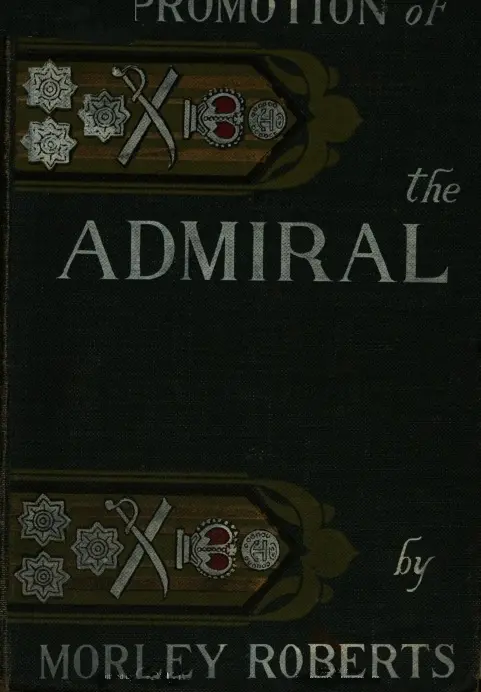
"The Promotion of the Admiral and Other Sea Comedies" by Morley Roberts is a collection of fictional sea comedies likely written in the early 20th century. The primary narrative follows a rough and shrewd boarding-house keeper named Shanghai Smith, who has a history of mischief and interaction with sailors, particularly a British admiral named Richard Dunn. The stories depict humorous escapades rooted in naval life, exploring themes of rivalry, identity, and revenge, particularly as Smith seeks to exact his vengeance on the admiral who once bested him in a fight. At the start of the narrative, readers are introduced to Shanghai Smith, a notorious figure in San Francisco's Barbary Coast, who tells a tale of being thrashed by a naval officer named Richard Dunn many years ago. Smith learns that Dunn, now an admiral, is arriving in San Francisco, igniting his desire for revenge. Following this setup, the plot takes a twist as Smith plots to "shanghai" the admiral and ship him onto a notoriously rough vessel called the "California", leading to a series of comedic events that showcase the admiral’s resilience and resourcefulness. As the story unfolds, the humorous elements of mistaken identities and the clash of naval tradition with the rough-and-tumble world of the Barbary Coast are cleverly woven together, setting the stage for an engaging and entertaining read.
Introduction adapted from the source catalogue; source summaries may be automatically generated.
Free to read · English · 51,189 words · No account needed
MAKE TIME FOR A GOOD BOOK
On by default. Untick to stop anonymous reading totals. Each page counts after 10 seconds in view. How this works.
Anonymous counting is on unless you have switched it off.
The committee went below, with the geologist leading. He carried his
belaying-pin in his pocket. As they marched, the uproar was
tremendous.
"What a skull he must have!" said the ethnologist. "I wish I had it
in my collection."
"So do I," said the pathologist
And the authority on philology pressed to the front rank, for Captain Joseph Prowse was doing his best.
"Lemme out," he roared; "oh, when I do get out, I'll show you what I
am."
"Shut up!" said the young geologist, with firmness.
The captain gave an audible gasp.
"Shut up?" he inquired weakly.
"Yes," said the leader, "and give us your sextant, if you have one."
"Well, I'm damned," said Prowse, after a long and striking pause. "May I inquire if you've took command? For if so, and you require my services to peel pertaters and sweep the deck, just say so, and let me out."
"Will you be civil if we let you out?" asked the astronomer kindly.
"Civil?" said Prowse, choking; "what do you think?"
"We don't think you will be," replied the astronomer, "from the tone
of your voice."
"I'm sure he won't be," said the geologist.
"I think we'd better keep him where he is," said the rest anxiously; "why, the man's nothing but a raging lunatic."
"Oh!" said Prowse from within. "Look here, you mutineers, is
Simpkins in this?"
"No," said the geologist, who showed a little humour occasionally, "he's out of it. He tried to rescue you, so we hung him. But he came to again, and is now at the wheel. What about that sextant?"
"I ain't got no sextant," said Prowse sulkily. He recognised it was no use kicking, and the rum was dying out of his aching head.
"Then let's go on deck," said the men of science. "What's the use of
talking to him."
"Oh, please," said the subdued skipper; but they paid no attention,
and returned to Simpkins.
At various intervals during the day Prowse made more and more pitiful appeals to be let out. But as the weather was clear and bright, Simpkins and his "overwhelming odds" were at work on deck, and paid little or no attention. Simpkins now did not take his line from the skipper, but, feeling that the command was in commission, adopted the manner of the sergeant-instructor at a gymnasium.
"Now, if a couple or four of you gentlemen would keep the pumps going," he urged from his station at the wheel, "we should get along a deal better. And if you, sir, would come and take the wheel agin for two shakes of a lamb's tail, I don't see no reason I shouldn't loose the upper main-topsail."
Your reading position is saved on this browser. Take it to another device with a library code. Reading pages adapt to text, rather than matching a printed edition.
Morley Roberts
Morley Roberts
Morley Roberts
BEHIND THE BOOK
This eBook is for the use of anyone anywhere in the United States and most other parts of the world at no cost and with almost no restrictions whatsoever. You may copy it, give it away or re-use it under the terms of the Project Gutenberg License included with this eBook or online at www.gutenberg.org. If you are not located in the United States, you will have to check the laws of the country where you are located before using this eBook. Read the source licence.
The original source file, including credits and licence, is retained by this library. Request an original-format copy at no charge. Please include the book title and Project Gutenberg identifier #68919.
KEEP YOUR CURIOSITY GOING
Coulson Kernahan

Maurice Baring
Frances Wright
Cécile Tormay

Frederic Jesup Stimson

W. H. P. (William Henry Pope) Jarvis