THE CLASSIC COLLECTION✦The private life of Henry Maitland: A record dictated by J. H.CLASSIC FREE BOOKS
The private life of Henry Maitland: A record dictated by J. H.
Morley Roberts
THE CLASSIC COLLECTION · 1902
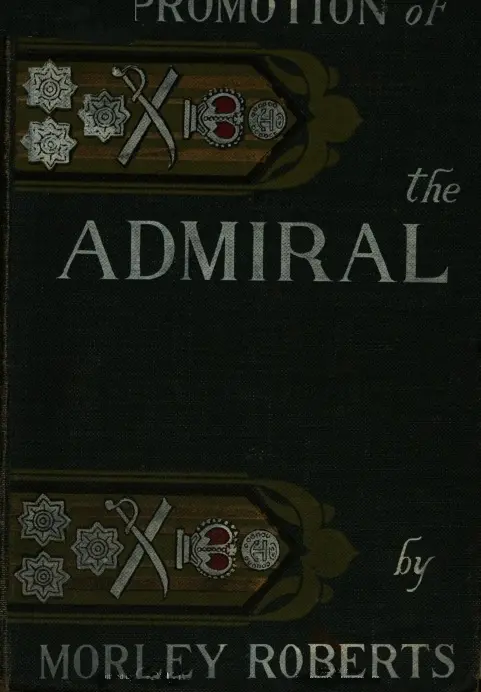
"The Promotion of the Admiral and Other Sea Comedies" by Morley Roberts is a collection of fictional sea comedies likely written in the early 20th century. The primary narrative follows a rough and shrewd boarding-house keeper named Shanghai Smith, who has a history of mischief and interaction with sailors, particularly a British admiral named Richard Dunn. The stories depict humorous escapades rooted in naval life, exploring themes of rivalry, identity, and revenge, particularly as Smith seeks to exact his vengeance on the admiral who once bested him in a fight. At the start of the narrative, readers are introduced to Shanghai Smith, a notorious figure in San Francisco's Barbary Coast, who tells a tale of being thrashed by a naval officer named Richard Dunn many years ago. Smith learns that Dunn, now an admiral, is arriving in San Francisco, igniting his desire for revenge. Following this setup, the plot takes a twist as Smith plots to "shanghai" the admiral and ship him onto a notoriously rough vessel called the "California", leading to a series of comedic events that showcase the admiral’s resilience and resourcefulness. As the story unfolds, the humorous elements of mistaken identities and the clash of naval tradition with the rough-and-tumble world of the Barbary Coast are cleverly woven together, setting the stage for an engaging and entertaining read.
Introduction adapted from the source catalogue; source summaries may be automatically generated.
Free to read · English · 51,189 words · No account needed
MAKE TIME FOR A GOOD BOOK
On by default. Untick to stop anonymous reading totals. Each page counts after 10 seconds in view. How this works.
Anonymous counting is on unless you have switched it off.
"Never mind, sir," said Hart encouragingly. "I've 'ad many a row with a Frenchy, and I never knowed my 'avin' not the least notion of what 'e meant ever stopped the fight from comin' off. If so be I see you get stuck, I'll come in, sir."
And they were met by the French sailor who thought he spoke English.
"I spik En'lish, goddam," said the Frenchman. "Leaverpool, Por'smout'; mais le capitaine spik besser."
"Good-mornin'," said Simcox meekly to the French captain, a long unhappy looking man, who might have been the skipper of a chasse-marée for all the style he put on.
"Mais, oui----" said the captain.
"This 'ere paper is for you," said Simcox, "and by the powers I hope
you can't read it."
He handed the ultimatum to the Frenchman, who studied it while his
crew came round.
"Je ne peux pas le lire, monsieur," he said at length.
Simcox turned to Hart.
"There, now what the blazes am I to do when he talks that way?"
"Just hexplain it," said Hart, as he helped himself to a chew. "Say,
'Hout o' this!'"
"It means you've got to go," said Simcox; "you can't be allowed to stay in the best part of our island."
"Goddam," cried the Frenchman, with his hand in his hair. "I spik English, two, tree word: pilote, feesh, shannel, owaryo!"
"Owaryo?" asked Simcox.
"That's his way o' sayin' 'How are you?'" interjected Hart, who was contemptuously sizing up the French sailors.
"Ah, how are you?" said Simcox.
"Owaryo," replied the French captain, smiling.
"Very well, thanks," said Simcox; "but I'm the ambassador."
"Ma foi, ambassadeur! You spik Français?"
"And you've just got to get," added Simcox.
"March!" cried Hart.
The Frenchmen "jabbered" a bit among themselves.
"Quoi donc? Marcher?" asked their skipper.
"We, old son," said Hart; "marshay if you like. Just pack up and quit. We gives you an hour to gather up your dunnage. Now do you understand?"
Whether the Frenchmen understood or not it was tolerably obvious they did not like the tone with which Hart spoke, or the looks of evident disfavour he cast at them. The captain turned away.
"Stop!" said Hart, and he went in for a dumb pantomime, in which he vaguely suggested that over yonder hill was an army of Englishmen.
"And we mean 'avin' our rights," he ended with. And just then old
Jones appeared in sight.
"Are they jossers goin' to evacuate or not?" he bellowed. "What's their captain say to the statues quo? Don't they know the first thing about diplomatics? Tell 'em that to prepare for peace we makes war."
Your reading position is saved on this browser. Take it to another device with a library code. Reading pages adapt to text, rather than matching a printed edition.
Morley Roberts
Morley Roberts
Morley Roberts
BEHIND THE BOOK
This eBook is for the use of anyone anywhere in the United States and most other parts of the world at no cost and with almost no restrictions whatsoever. You may copy it, give it away or re-use it under the terms of the Project Gutenberg License included with this eBook or online at www.gutenberg.org. If you are not located in the United States, you will have to check the laws of the country where you are located before using this eBook. Read the source licence.
The original source file, including credits and licence, is retained by this library. Request an original-format copy at no charge. Please include the book title and Project Gutenberg identifier #68919.
KEEP YOUR CURIOSITY GOING
Coulson Kernahan

Maurice Baring
Frances Wright
Cécile Tormay

Frederic Jesup Stimson

W. H. P. (William Henry Pope) Jarvis