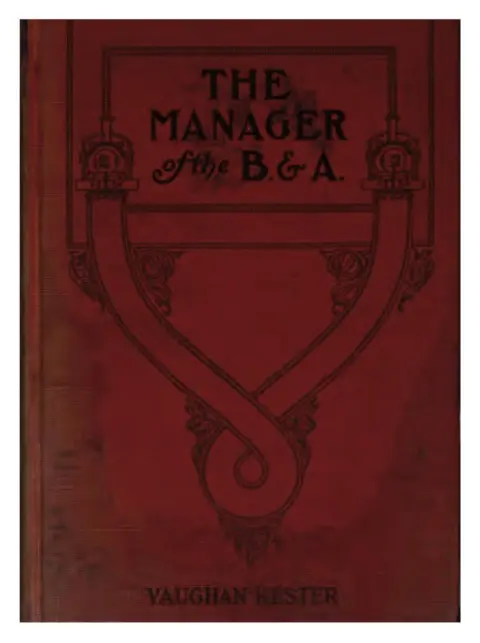
The Hand of the Mighty, and Other Stories
Vaughan Kester
THE CLASSIC COLLECTION · 1911
"The Prodigal Judge" by Vaughan Kester is a novel written during the late 19th century. The story begins with the death of General Quintard, the last of his line, whose life was marked by isolation and neglect. The narrative revolves around themes of inheritance, personal struggles, and the curiosity of the community regarding the general's reclusive existence and his young ward, Hannibal Wayne Hazard, who was left behind amidst secrets and unanswered questions surrounding his background. At the start of this work, we are introduced to the somber atmosphere surrounding the funeral of General Quintard. The old general, who had isolated himself from society for decades, is mourned only by a few old slaves and local townsfolk who hardly knew him. Meanwhile, two men—Jonathan Crenshaw, a businessman, and Bladen, a lawyer—discuss the general’s fading estate and the boy Hannibal, who was mysteriously deposited at his home by a woman long ago. As they delve into the legacy of the general and the implications of the boy's presence, we see glimpses of the tight-knit yet judgmental community. The opening sets the stage for conflicts related to ownership and guardianship over Hannibal, foreshadowing the struggles that will impact their lives as the story unfolds.
Introduction adapted from the source catalogue; source summaries may be automatically generated.
Free to read · English · 116,185 words · No account needed
MAKE TIME FOR A GOOD BOOK
On by default. Untick to stop anonymous reading totals. Each page counts after 10 seconds in view. How this works.
Anonymous counting is on unless you have switched it off.
“Nothing, not a damn cent!” said Ware. Murrell laughed incredulously. “It's so! I've turned it all over--more lands, more niggers, bigger crops each year. Another man might have saved his little spec, but I couldn't; I reckon I never believed it would go to her, and I've managed Belle Plain as if I were running it for myself.” He seemed to writhe as if undergoing some acute bodily pain.
“And you are in a fair way to turn it all over to her husband when she marries, and step out of here a beggar, unless--”
“It isn't right, John! I haven't had pay for my ability! Why, the place would have gone down to nothing with any management but mine!”
“If she were to die, you'd inherit?”
Ware laughed harshly.
“She looks like dying, doesn't she?”
“Listen to me, Tom. I'll take her away, and Belle Plain is yours--land, stock and niggers!” said Murrell quietly.
Ware shifted and twisted in his seat.
“It can't be done. I can advise and urge: but I can't command. She's got her friends, those people back yonder in North Carolina, and if I made things uncomfortable for her here she'd go to them and I couldn't stop her. You don't seem to get it through your head that she's got no earthly use for you!”
Murrell favored him with a contemptuous glance.
“You're like every one else! Certain things you'll do, and certain other things you won't even try to do--your conscience or your fear gets in your way.”
“Call it what you like.”
“I offer to take the girl off your hands; when I quit the country she
shall go with me--”
“And I'd be left here to explain what had become of her!” cried Ware, in
a panic.
“You won't have anything to explain. She'll have disappeared, that will be all you'll know,” said Murrell quietly.
“She'll never marry you.”
“Don't you be too sure of that. She may be glad enough to in the end.”
“Oh, you think you are a hell of a fellow with women! Well, maybe you are with one sort--but what do you know about her kind?” jeered the planter.
Murrell's brow darkened.
“I'll manage her,” he said briefly.
“You were of some account until this took hold of you,” complained Ware.
“What do you say? One would hardly think I was offering to make you a present of the best plantation in west Tennessee!” said Murrell.
Ware seemed to suck in hope through his shut teeth.
“I don't want to know anything about this, you are going to swamp yourself yet--you're fixing to get yourself strung up--yes, by thunder, that'll be your finish!”
Your reading position is saved on this browser. Take it to another device with a library code. Reading pages adapt to text, rather than matching a printed edition.
BEHIND THE BOOK
This eBook is for the use of anyone anywhere in the United States and most other parts of the world at no cost and with almost no restrictions whatsoever. You may copy it, give it away or re-use it under the terms of the Project Gutenberg License included with this eBook or online at www.gutenberg.org. If you are not located in the United States, you will have to check the laws of the country where you are located before using this eBook. Read the source licence.
The original source file, including credits and licence, is retained by this library. Request an original-format copy at no charge. Please include the book title and Project Gutenberg identifier #5129.
KEEP YOUR CURIOSITY GOING
Cécile Tormay

Moritz Busch
Coulson Kernahan
John L. Ransom

Maurice Baring
Frances Wright