THE CLASSIC COLLECTION✦The mate of the VancouverCLASSIC FREE BOOKS
The mate of the Vancouver
Morley Roberts
THE CLASSIC COLLECTION · 1912
"The Private Life of Henry Maitland: A Record Dictated by J. H." by Morley Roberts is a biographical account written in the early 20th century. The narrative centers around Henry Maitland, a relatively obscure yet insightful figure in literature, as described through the eyes of his close friend J.H. The text seeks to present an authentic portrait of Maitland's tumultuous life, exploring the complexities of his character and personal struggles amid the literary world. The opening of the biography establishes the context of J.H.'s deep acquaintance with Maitland, emphasizing the difficulty and responsibility of representing a friend’s life truthfully. J.H. reflects on Maitland's earlier years at Moorhampton College, highlighting his brilliance and idealism while foreshadowing the challenges that would soon confront him. As the narrative unfolds, it delves into both Maitland's academic honors and the unfortunate entanglement with a young woman from the streets, which would lead to a series of personal crises and moral dilemmas. The preface and opening chapters set the tone for an exploration of not just Maitland's external life but also the internal struggles that would shape his destiny as a writer and individual.
Introduction adapted from the source catalogue; source summaries may be automatically generated.
Free to read · English · 72,731 words · No account needed
MAKE TIME FOR A GOOD BOOK
On by default. Untick to stop anonymous reading totals. Each page counts after 10 seconds in view. How this works.
Anonymous counting is on unless you have switched it off.
It rarely happened that I went to him without some story of the week's happenings, to be told again in return something which had occurred to him. For instance, there was that story of the lady who asked him his experience with regard to the management of butlers. In return I could tell him of going out to dinner at houses where people would have been horrified to learn that I had eaten nothing that day, and possibly nothing the day before. For us to consort with the comfortably situated sometimes seemed to both of us an intolerably fine jest, which was added to by the difference of these comfortable people from the others we knew. Here and there we came across some fatly rich person who, by accident, had once been deprived of his usual dinner. It seemed to give him a sympathetic feeling for the very poor. But, after all, though I did sometimes associate with such people, I was happier in my own room with Maitland, or in his flat, where we discussed our Æschylus, or wrought upon metres or figures of speech--always a great joy to us. Upon these, too, Maitland was really quite learned. He was full of examples of brachyology. Anacoluthon he was well acquainted with. Not even Farrar, in his "Greek Syntax," or some greater man, knew more examples of chiasmus, asyndeton, or hendiadys. In these byways he generally rejoiced, and we were never satisfied unless at each meeting, wherever it might be, we discovered some new phrase, or new word, or new quotation.
Once at 7K I quoted to him from Keats' "Endymion" the lines about those people who "unpen their baaing vanities to browse away the green and comfortable juicy hay of human pastures." All that evening he was denouncing various comfortable people who fed their baaing vanity on everything delightful. He declared they browsed away all that made life worth while, and in return for my gift to him of this noble quotation he produced something rather more astounding, and perhaps not quite so quotable, out of Zola's "Nana." We had been talking of realism, and of speaking the truth, of being direct, of not being mealy-mouthed; in fact, of not letting loose "baaing vanities," and suddenly he took down "Nana" and said, "Here Zola has put a phrase in her mouth which rejoices me exceedingly. It is a plain, straight-forward, absolutely characteristic sentiment, such as we in England are not allowed to represent. Nana, on being remonstrated with by her lover-in-chief for her infidelities, returns him the plain and direct reply, 'Quand je vois un homme qui me plait, je couche avec.' He went on to declare that writing any novels in England was indeed a very sickening business, but he added, "I really think we begin to get somewhat better in this. However, up to the last few years, it has been practically impossible to write anything more abnormal about a man's relations with women than a mere bigamy." Things have certainly altered, but I think he was one of those who helped to break down that undue sense of the value of current morality which has done so much harm to the study of life in general, and indeed to life itself. His general rage and quarrel with that current morality, for which he had not only a contempt, but a loathing which often made him speechless, comes out well in what he thought and expressed about the Harold Frederick affair. There was, of course, as everybody knows, a second illegitimate family. While the good and orthodox made a certain amount of effort to help the wife and the legal children, they did their very best to ignore the second family. However, to Maitland's great joy, there were certain people, notably Mrs. Stephens, who did their very best for the other children and for the poor mother. Maitland himself subscribed, before he knew the actual position, to both families, and betrayed extraordinary rage when he learnt how that second family had been treated, and heard of the endeavours of the "unco' guid" to ignore them wholly. But then such actions and such hypocrisy are characteristic of the middle class in this country and not in this country alone. He loathed their morals which became a system of cruelty; their greed and its concomitant selfishness: their timidity which grows brutal in defence of a position to which only chance and their rapacity have entitled them.
Your reading position is saved on this browser. Take it to another device with a library code. Reading pages adapt to text, rather than matching a printed edition.
Morley Roberts
Morley Roberts
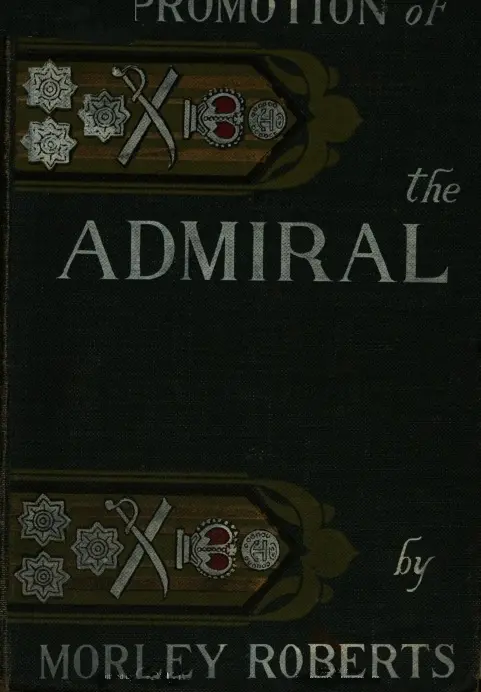
Morley Roberts
BEHIND THE BOOK
This eBook is for the use of anyone anywhere in the United States and most other parts of the world at no cost and with almost no restrictions whatsoever. You may copy it, give it away or re-use it under the terms of the Project Gutenberg License included with this eBook or online at www.gutenberg.org. If you are not located in the United States, you will have to check the laws of the country where you are located before using this eBook. Read the source licence.
The original source file, including credits and licence, is retained by this library. Request an original-format copy at no charge. Please include the book title and Project Gutenberg identifier #69000.
KEEP YOUR CURIOSITY GOING

Charles G. (Charles Griffith) Ross
Hannah Webster Foster

Emily Lawless
Edwin Hamlin Carr

Charles De Lano Hine
Andrew Ure