THE CLASSIC COLLECTION✦The hermit of Turkey HollowCLASSIC FREE BOOKS
The hermit of Turkey Hollow
Arthur Cheney Train
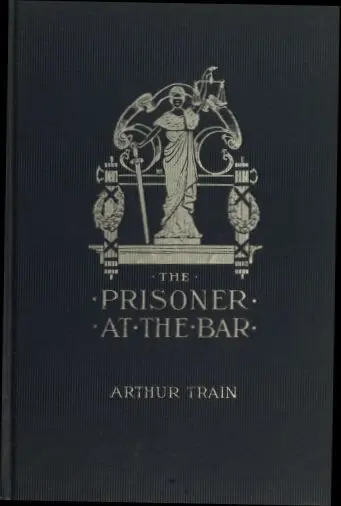
THE CLASSIC COLLECTION · 1906
"The Prisoner at the Bar: Sidelights on the Administration of Criminal Justice" by Arthur Train is a nonfiction account written in the early 20th century. The book aims to provide a detailed and engaging exploration of the criminal justice system, highlighting the processes from arrest to conviction and examining the perspectives of the various participants, including the police, lawyers, and the accused. At the start of this work, Train introduces the complexities surrounding the concept of crime, emphasizing that public perception is often shaped by sensational media coverage rather than an understanding of the legal processes involved. He argues that many commonly held beliefs about crime and criminals are oversimplified or erroneous, and he seeks to provide clarity on the administration of criminal justice. The opening discusses the definition of a crime and highlights the intricacies of legal terminology, illustrating differences between various types of crimes and their implications. Train sets the stage for a comprehensive discussion on how individuals can be categorized as criminals and the societal implications of such classifications.
Introduction adapted from the source catalogue; source summaries may be automatically generated.
Free to read · English · 111,596 words · No account needed
MAKE TIME FOR A GOOD BOOK
On by default. Untick to stop anonymous reading totals. Each page counts after 10 seconds in view. How this works.
Anonymous counting is on unless you have switched it off.
Tricks of the Trade (Chapter XVI), of the successful practitioner, 303 bolder than in civil courts, 304 inducing complainant to withdraw charge, 309, 310 securing adjournments, 310 persuading court that case is trivial, 310 obtaining immediate hearing to find out People's evidence, 311 waiving examination to conceal defendant's case, 311 which are utilized after magistrate has held accused, 314 securing permission for defendant to appear before Grand Jury, 314 securing delay in trial, 314 introducing "ringers" in place of real defendant, 318-320 attempt to have witnesses identify dummies, 321, 322 appeals to sympathy of jury, 305, 307, 322 offer to "take first twelve" jurors, 323 obtaining one favorable juror, 323 getting members of same race as defendant on jury, 324 gaining good will of jury by chance remark, 325 defendant's counsel intentionally appearing intoxicated, 325 supplying missing evidence in counsel's opening or closing, 326, 328 getting one of two defendants to take entire blame, 328, 332 most of them unsuccessful, 333
True bill. See Indictment
Twitchell, case of, 282, 283
Verdicts (Chapter XIII), lack of accuracy in, 209
arbitrariness of, 209
form of, 243
procedure in rendering, 244
difficulty in reaching, 244, 245
of murder in first degree rare, 246
how received by defendants, 246, 247
slowness in reaching, 253
Verdicts, in Manhattan Bank case, 255
by eleven jurors, advisability of, 347
Voir dire, 305, 324
Warren, Chas. D., definition of criminals by, 19, 24
within the definition, 24
"Watch, The," 109
Wellman's "Art of Cross-Examination," 282, 287, 298, 299
Wigmore, Professor John H. See Introduction
"Wire tappers," wire tapping described, 14
(See McCord and Livingston and Tompkins cases)
Witnesses (Chapter XII). See Evidence.
value of testimony of, 224
original capacity of, for observing correctly, 225
children make remarkable, 225, 226
often honestly mistaken, 226
present stronger testimony in court than upon preliminary
examination, 228
unconscious amplification by, 229, 230
fallibility of the honest witnesses, 230
recollect impossible details, 232
who refresh recollection, 233
ultimate test of value of testimony of, 236
physical condition of important, 236
to be convincing must be positive, 237
the most effective witness with jury, 237
measurement of time by, 238
difficulty of finding language comprehensible to, 238, 239
difficulty with foreign, 239
Wood, Fernando, 319
Women in the Courts (Chapter XV), sentences of, table, 202 their evidence originally regarded with suspicion, 279-281 men said to rely on power of 281
Your reading position is saved on this browser. Take it to another device with a library code. Reading pages adapt to text, rather than matching a printed edition.
Arthur Cheney Train
Arthur Cheney Train
Arthur Cheney Train
Arthur Cheney Train
BEHIND THE BOOK
This eBook is for the use of anyone anywhere in the United States and most other parts of the world at no cost and with almost no restrictions whatsoever. You may copy it, give it away or re-use it under the terms of the Project Gutenberg License included with this eBook or online at www.gutenberg.org. If you are not located in the United States, you will have to check the laws of the country where you are located before using this eBook. Read the source licence.
The original source file, including credits and licence, is retained by this library. Request an original-format copy at no charge. Please include the book title and Project Gutenberg identifier #58534.
KEEP YOUR CURIOSITY GOING

Charles G. (Charles Griffith) Ross
Hannah Webster Foster

Emily Lawless
Edwin Hamlin Carr

Charles De Lano Hine
Andrew Ure