THE CLASSIC COLLECTION✦The hermit of Turkey HollowCLASSIC FREE BOOKS
The hermit of Turkey Hollow
Arthur Cheney Train
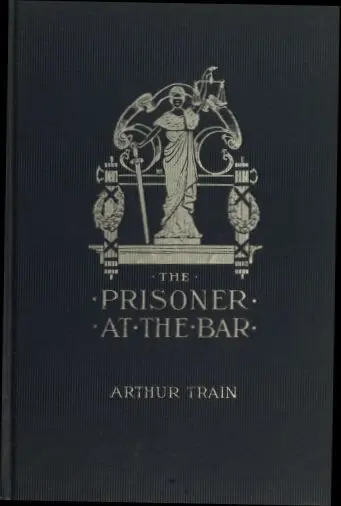
THE CLASSIC COLLECTION · 1906
"The Prisoner at the Bar: Sidelights on the Administration of Criminal Justice" by Arthur Train is a nonfiction account written in the early 20th century. The book aims to provide a detailed and engaging exploration of the criminal justice system, highlighting the processes from arrest to conviction and examining the perspectives of the various participants, including the police, lawyers, and the accused. At the start of this work, Train introduces the complexities surrounding the concept of crime, emphasizing that public perception is often shaped by sensational media coverage rather than an understanding of the legal processes involved. He argues that many commonly held beliefs about crime and criminals are oversimplified or erroneous, and he seeks to provide clarity on the administration of criminal justice. The opening discusses the definition of a crime and highlights the intricacies of legal terminology, illustrating differences between various types of crimes and their implications. Train sets the stage for a comprehensive discussion on how individuals can be categorized as criminals and the societal implications of such classifications.
Introduction adapted from the source catalogue; source summaries may be automatically generated.
Free to read · English · 111,596 words · No account needed
MAKE TIME FOR A GOOD BOOK
On by default. Untick to stop anonymous reading totals. Each page counts after 10 seconds in view. How this works.
Anonymous counting is on unless you have switched it off.
There used to be an old court officer in one of the parts of the General Sessions a few years ago who was a loyal son of Old Erin and a devout member of the Roman Church.
On one occasion, a defendant having been found guilty he was arraigned at the bar for the purpose of having his pedigree taken, old Flaherty officiating. The conversation which ensued may be worth preservation.
Flaherty to Defendant: "Say, me friend, where was ye born?"
Defendant to Flaherty: "Lowell, Mass."
Flaherty to Clerk: "Lowell, Mass."
Flaherty to Defendant: "Where do yez hang out?"
Defendant: "Nowhere."
Flaherty to Clerk: "Ain't got none."
Flaherty to Defendant: "Phat do yez do fer a livin'?"
Defendant: "Nothin'."
Flaherty to Clerk: "Ain't got none."
Flaherty to Defendant: "Are ye married?"
Defendant: "No,--thank God."
Flaherty to Clerk: "He says 'No, thank God!'"
Flaherty to Defendant: "Ever receive any previous religious
instruction?"
Defendant: "How's that?"
Flaherty to Defendant: "Phat's yer religion?"
Defendant: "Don't believe in nothin'."
Flaherty to Clerk (loudly): "PROTESTANT!"
For a convict to give under oath false answers to the questions thus put to him is, of course, perjury. It is frequently of no small importance for a prisoner to conceal his identity, or at least his record. But if a Bible is thrust into his right hand he is loath to put himself within the statute governing false swearing, for the chances are all in favor of his being found out, in which case his punishment will be severe. The writer recalls a dramatic incident of a man who endeavored to prevent his past offences coming to the knowledge of the judge. He bore, however, all the ear-marks of an ex-convict, and the court became suspicious that all was not right. He had just been convicted of stealing a purse. The jury had remained out until eleven o'clock at night and the court-room was practically deserted. The prisoner was placed before the bar. We will call him James Graham. The clerk put the usual questions and then inquired:
"Have you ever been convicted before?"
"No," answered the prisoner in a low voice.
There was a long pause, and then the judge, looking down intently from
the bench, said:
"Graham, is that the truth?"
"Yes, sir," replied the prisoner.
"Are you quite sure?" insisted the court.
"Yes, sir."
"Swear him!" ordered the judge.
The officer started to place the Bible in Graham's hand, but he refused
to take it.
"No, no, I can't!" he whispered. "I can't--I--I--it's no use!" he added.
"When were you convicted?"
"I served six months for petty larceny about five years ago."
"Is that all?"
"Yes, sir."
"Are you sure?"
"Yes, sir."
Your reading position is saved on this browser. Take it to another device with a library code. Reading pages adapt to text, rather than matching a printed edition.
Arthur Cheney Train
Arthur Cheney Train
Arthur Cheney Train
Arthur Cheney Train
BEHIND THE BOOK
This eBook is for the use of anyone anywhere in the United States and most other parts of the world at no cost and with almost no restrictions whatsoever. You may copy it, give it away or re-use it under the terms of the Project Gutenberg License included with this eBook or online at www.gutenberg.org. If you are not located in the United States, you will have to check the laws of the country where you are located before using this eBook. Read the source licence.
The original source file, including credits and licence, is retained by this library. Request an original-format copy at no charge. Please include the book title and Project Gutenberg identifier #58534.
KEEP YOUR CURIOSITY GOING

Charles G. (Charles Griffith) Ross
Hannah Webster Foster

Emily Lawless
Edwin Hamlin Carr

Charles De Lano Hine
Andrew Ure