THE CLASSIC COLLECTION✦The hermit of Turkey HollowCLASSIC FREE BOOKS
The hermit of Turkey Hollow
Arthur Cheney Train
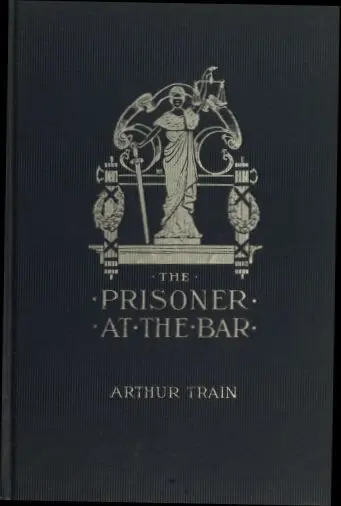
THE CLASSIC COLLECTION · 1906
"The Prisoner at the Bar: Sidelights on the Administration of Criminal Justice" by Arthur Train is a nonfiction account written in the early 20th century. The book aims to provide a detailed and engaging exploration of the criminal justice system, highlighting the processes from arrest to conviction and examining the perspectives of the various participants, including the police, lawyers, and the accused. At the start of this work, Train introduces the complexities surrounding the concept of crime, emphasizing that public perception is often shaped by sensational media coverage rather than an understanding of the legal processes involved. He argues that many commonly held beliefs about crime and criminals are oversimplified or erroneous, and he seeks to provide clarity on the administration of criminal justice. The opening discusses the definition of a crime and highlights the intricacies of legal terminology, illustrating differences between various types of crimes and their implications. Train sets the stage for a comprehensive discussion on how individuals can be categorized as criminals and the societal implications of such classifications.
Introduction adapted from the source catalogue; source summaries may be automatically generated.
Free to read · English · 111,596 words · No account needed
MAKE TIME FOR A GOOD BOOK
On by default. Untick to stop anonymous reading totals. Each page counts after 10 seconds in view. How this works.
Anonymous counting is on unless you have switched it off.
During the selection of a jury to try Moran, the dynamiter, in March, 1906, before Judge Foster, in the General Sessions, a little old man took the stand who qualified satisfactorily as a juror so far as the prosecution was concerned. Daniel F. Cohalan, attorney for the defendant, then took him in hand somewhat as follows:
"Have you any prejudice against a man accused of crime?"
"I have not," replied the little old man.
"Or against this defendant?"
"I have not."
"Do you think you would make an absolutely fair and impartial juror?"
"I do."
"Do you know of any reason to the contrary?"
"I do not."
Cohalan turned to another line of examination.
"Do you read the papers?"
"Yes. Yes."
"What paper do you read?"
"What paper?"
"Yes. What paper do you read in the morning?"
The little old man settled himself in his chair and, eyeing Cohalan
suspiciously, replied:
"I read the Herald, Times, World, Journal, Sun, Tribune, Press, Staats Zeitung, Telegraph----"
"Stop!" cried Cohalan feebly; "that's quite enough. Don't you do
anything but read the papers?"
The little old man regarded the lawyer scornfully.
"I spend six hours a day keeping myself informed of what is going on. I flatter myself that there is nothing in the whole world with which I am not fully acquainted. Knowledge is power!"
Cohalan collapsed into his seat.
"That is all. You are excused. You know too much for us!"
As the little old man shuffled off he whispered to the prosecutor:
"I'd have given the ---- twenty years!"
On the other hand, the hyper-sensitiveness of counsel renders it easy for talesmen to escape who do not wish to serve. The writer knows an estimable man who is regularly drawn about four times a year upon the special jury. He has never served. His method is as follows: Having taken his seat upon the witness-stand he wrinkles his forehead and looks fiercely at the defendant. When asked if he has any objection to capital punishment he thrusts out his under jaw and exclaims: "I should say not! I think hangin's too good for 'em!" In reality he is the mildest, the most sympathetic and the "easiest" of human beings. Another observant talesman who appears periodically has learned, the writer believes, his trick from the first. His stock reply to the same question relative to capital punishment is, "I have not. I believe in the Biblical injunction of 'an eye for an eye,' and 'a tooth for a tooth,' and, 'Whoso sheddeth man's blood by man shall his blood be shed.'" Needless to say, he leaves the stand with the same alacrity as the other. Jurors readily enter into friendly relations with the prosecutor and defendant's counsel, but rarely with any effect upon their verdicts. In the first trial of Mock Duck, a Chinaman indicted for murder, where the defence interposed was an alibi, to wit, that the prisoner had been buying a terrapin in Fulton Market at the time of the commission of the crime (whence the prosecutor claimed that it was the case of a Mock Duck with a mock turtle defence), a juryman met the defendant's counsel during recess and told him that there was no further need for him to call any more witnesses for the defendant, as the jury "understood the situation perfectly." The lawyer took the hint, and upon the reopening of court closed his case, feeling sure of an acquittal or at least of a disagreement. When the jury had retired the talesman in question made a long speech in favor of murder in the first degree, and refused to vote for any other crime. Such performances are rare. Of course, it not infrequently occurs that a juror by his manner of asking questions shows plainly his state of mind. The feelings of a prosecutor can be easily imagined when a juror turns in disgust from one of the People's witnesses, or those of a defendant's counsel when another, looking towards the prisoner, grinds his teeth as the evidence goes in and ejaculates, "Brute!"
Your reading position is saved on this browser. Take it to another device with a library code. Reading pages adapt to text, rather than matching a printed edition.
Arthur Cheney Train
Arthur Cheney Train
Arthur Cheney Train
Arthur Cheney Train
BEHIND THE BOOK
This eBook is for the use of anyone anywhere in the United States and most other parts of the world at no cost and with almost no restrictions whatsoever. You may copy it, give it away or re-use it under the terms of the Project Gutenberg License included with this eBook or online at www.gutenberg.org. If you are not located in the United States, you will have to check the laws of the country where you are located before using this eBook. Read the source licence.
The original source file, including credits and licence, is retained by this library. Request an original-format copy at no charge. Please include the book title and Project Gutenberg identifier #58534.
KEEP YOUR CURIOSITY GOING

Charles G. (Charles Griffith) Ross
Hannah Webster Foster

Emily Lawless
Edwin Hamlin Carr

Charles De Lano Hine
Andrew Ure