THE CLASSIC COLLECTION✦An outlaw’s diary: the CommuneCLASSIC FREE BOOKS
An outlaw’s diary: the Commune
Cécile Tormay
THE CLASSIC COLLECTION · 1887
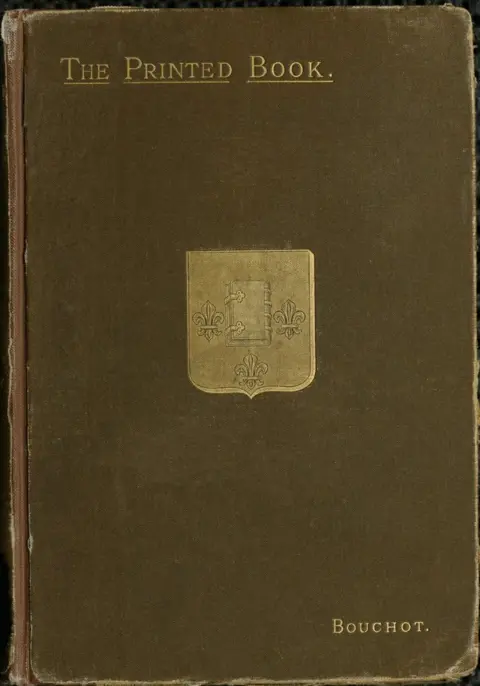
"The Printed Book: Its History, Illustration and Adornment" by Henri Bouchot is a historical account written in the late 19th century. This work offers a comprehensive survey of the development of the printed book from the time of Gutenberg to the present, highlighting the art and industry surrounding book production, illustration, and design. It paints a picture of the evolution of printing techniques and artistic contributions to bookmaking over four centuries. The opening of the text introduces reader to the preamble of the work, explaining its purpose as a summary of the book's history, focusing especially on the artistic elements as opposed to purely technical aspects of printing. Bouchot mentions the vast number of previous essays on the subject, signifying that while it may not provide new revelations for experts, it aims to be a useful resource for those interested. He notes a particular emphasis on illustrators and decorative artists, briefly recounting the early innovations in printing prior to Gutenberg’s movable type, and hints at the complexity of the development of the art form that this narrative will explore in the subsequent chapters.
Introduction adapted from the source catalogue; source summaries may be automatically generated.
Free to read · English · 63,136 words · No account needed
MAKE TIME FOR A GOOD BOOK
On by default. Untick to stop anonymous reading totals. Each page counts after 10 seconds in view. How this works.
Anonymous counting is on unless you have switched it off.
He has left us in a celebrated print a representation of a bookseller's shop of his time. It is for us an interesting page, in which is shown simply and rather naïvely the picturesque side of these stores, with the dealer and his wife selling new works to their customers. The shop is compact, and very much like the open-air stalls of to-day; posting-bills above the shelves indicate the "new books;" and if the inscriptions given by Bosse be credited, the Palace dealer offered his books with singular eclecticism: Boccaccio, Aretin, the Astrée of D'Urfé, the Bible, and Machiavelli. In the hands of the woman is seen the romance Marianne:
"Icy les cavaliers les plus adventureux
En lisant les romans s'animent à combattre;
Et de leur passion les amants langoureux
Flattent les mouvements par des vers de théâtre,"
says the text of Bosse. What was commonly done then is still done,
shopping and rummaging the stalls, and those of the Palace were
attractive.
If we credit Sauval, the great number of booksellers, in the middle of the century, was due to the wits of the Hotel de Rambouillet. The passion for novelty, for recent works, had produced that quantity of publishers, he says, that we have seen on the Pont Neuf, and that we still see to-day at the Palace and the University, but of which the number is so multiplied in all these places that in the Palace they count more than other dealers; and as to the neighbourhood of the University, they are obliged, in order to lodge the rest, to extend the ancient bounds from St. Yves to the river (Sauval, Antiquités de Paris, viii., 354).
In fact, each year saw an increase in the number of publishers in corporation, with syndicate and adjuncts. Under the reign of Louis XIII., the single year 1610 had fifty to take rank, and among them Antoine Vitré, who was to become the most illustrious of his contemporaries. But, as there were no more than six printers, it may be inferred that all the rest were booksellers, in the true sense of the word, of those who encumbered afterwards the great salle of which Sauval speaks. Antoine Vitré was syndic in May, 1643, on the accession of Louis XIV. He had four adjuncts. With him the Book marked the solemn style that the commencement of the century had given to it. Royal printer for the Oriental languages from 1621, he undertook a Syriac work, the first that was attempted in Paris. The project of a Polyglot Bible gave him the idea of acquiring for the King the Oriental manuscripts and matrices of Savary de Brèves. The King left to him the care of negotiating the business, but did not reimburse him without numerous difficulties, in the midst of which the printer was made to lose the means of conveniently continuing his trade. The advocate Le Jay charging himself with the enormous expenses necessitated by the Polyglot Bible, it was composed in the hope that Cardinal Richelieu would pay the cost. He was willing to do so, but required that his name should figure on the book; and as Le Jay, an independent man, formally opposed it, Vitré met with ill-will from the Minister, which increased from day to day. In 1645 the impression was finished, but Le Jay was ruined, and if we admire the paper, the type, and the extraordinary size of the nine volumes of the Polyglot Bible, we find in it so many faults, errors, and misprints that it has fallen to nearly nothing, hardly being worth its binding. There were terrible mortifications in the business, and Vitré had to submit to them more than any one. Nevertheless he did not let his presses stand still, and he published successively Arabic, Turkish, and Persian works. His action against the Savary heirs, as representing the King, in the acquisition mentioned above, continued also after the impression of the Bible, and hindered his progress. He struggled on; and the assembly of clergy, of which he was the printer, sought to help him out of his difficulties. The matter being once terminated, the Cardinal being dead, and Vitré having been named by Colbert director of the Royal Printing House in place of Cramoisy, he died in his turn, and was later accused of having destroyed the types and matrices of the Polyglot Bible, so that they should not be used after him. This fable, long accredited, has since been ascertained to be false, for the punches and matrices passed to the Royal Library, thence to the Royal Printing House, reorganised in 1691.
Your reading position is saved on this browser. Take it to another device with a library code. Reading pages adapt to text, rather than matching a printed edition.
BEHIND THE BOOK
This eBook is for the use of anyone anywhere in the United States and most other parts of the world at no cost and with almost no restrictions whatsoever. You may copy it, give it away or re-use it under the terms of the Project Gutenberg License included with this eBook or online at www.gutenberg.org. If you are not located in the United States, you will have to check the laws of the country where you are located before using this eBook. Read the source licence.
The original source file, including credits and licence, is retained by this library. Request an original-format copy at no charge. Please include the book title and Project Gutenberg identifier #44890.
KEEP YOUR CURIOSITY GOING
Cécile Tormay

Moritz Busch
John L. Ransom
Frances Wright
Cécile Tormay

Mabel Potter Daggett