THE CLASSIC COLLECTION✦An outlaw’s diary: the CommuneCLASSIC FREE BOOKS
An outlaw’s diary: the Commune
Cécile Tormay
THE CLASSIC COLLECTION · 1887
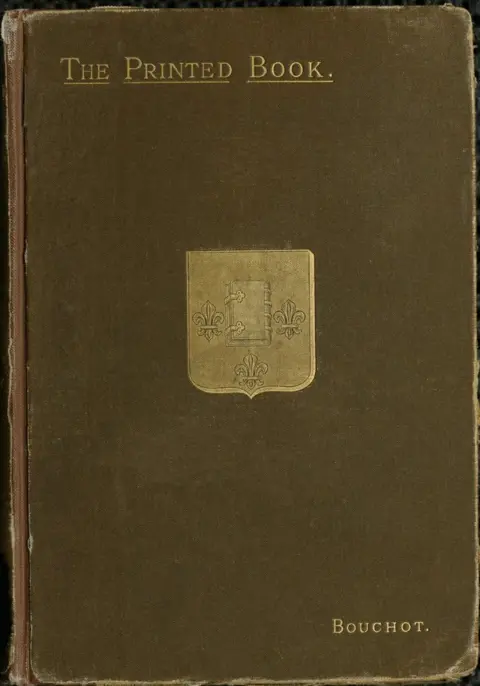
"The Printed Book: Its History, Illustration and Adornment" by Henri Bouchot is a historical account written in the late 19th century. This work offers a comprehensive survey of the development of the printed book from the time of Gutenberg to the present, highlighting the art and industry surrounding book production, illustration, and design. It paints a picture of the evolution of printing techniques and artistic contributions to bookmaking over four centuries. The opening of the text introduces reader to the preamble of the work, explaining its purpose as a summary of the book's history, focusing especially on the artistic elements as opposed to purely technical aspects of printing. Bouchot mentions the vast number of previous essays on the subject, signifying that while it may not provide new revelations for experts, it aims to be a useful resource for those interested. He notes a particular emphasis on illustrators and decorative artists, briefly recounting the early innovations in printing prior to Gutenberg’s movable type, and hints at the complexity of the development of the art form that this narrative will explore in the subsequent chapters.
Introduction adapted from the source catalogue; source summaries may be automatically generated.
Free to read · English · 63,136 words · No account needed
MAKE TIME FOR A GOOD BOOK
On by default. Untick to stop anonymous reading totals. Each page counts after 10 seconds in view. How this works.
Anonymous counting is on unless you have switched it off.
Thielman Kerver in his own works shows himself as the rival of Simon Vostre. The Hardouins, who followed the same profession, do not appear to have attained the success of their predecessors; and, excepting in the Heures à l'Usage de Rome, published in 1503 by Gilles Hardouin on the Pont au Change, at the sign of the "Rose," they servilely imitated them. There was also among the disciples of Vostre William Eustache, bookseller to the King, "tenant la boutique dedans la grant salle du palais du costé de messeigneurs les présidens, ou sur les grans degrés du costé de la conciergerie à l'ymage St. Jean levangeliste." Eustache made use of the work of Pigouchet and Kerver, not to mention the printers of the end of the fifteenth century.
We have named the principal, the fortunate ones; but what becomes of the crowd of other publishers whose hopes vanished before the success of Vostre and Verard? There were Denis Meslier, with his quarto Heures de Bourges, and Vincent Commin, bookseller of the Rue Neuve Notre Dame, who thus appealed to his customers:--
"Qui veult en avoir? On en treuve
A tres grand marché et bon pris
A la Rose, dans la rue Neuve
De Nostre-Dame de Paris."
There were also Robin Chaillot, Laurent Philippe, and a hundred others whose names have died with them or are only preserved on the torn pages of their works.
But if books of this kind found vogue and a large sale at this epoch, the dealers did not keep to pious publications only. By a singular mixture of the sacred and the profane, the bookmen put on sale on their stalls the "Decameron" of Boccaccio as well as the "Hours of the Immaculate Virgin," and the purchasers thought fit to make the acquaintance of the one as well as the other. Besides, the end of the fifteenth century had its literary preferences, its alluring titles, its attractive frontispieces. At the commencement of the present century double titles--"Atala; or, The Child of Mystery;" "Waverley; or, Sixty Years Since"--were common, although now out of fashion. Since then came books of travels--Voyages au Pays des Milliards, etc. In the fifteenth century, and even since the fourteenth, a series of titles was in public favour. There was first the Débats, or "Dialogues:" Débat de la Dame et de l'Escuyer, Paris, 1490, folio; "Dialogue of Dives and Pauper," London, Richard Pynson, 1493; and many other eccentric titles. There came also thousands of complaintes, a kind of lay in verse or prose; blasons, light pieces describing this or that thing; doctrinals, that had nothing to do with doctrine. And among the most approved subjects, between the piety of some and the gaiety of others, the Dances of Death established themselves firmly, showing, according to the hierarchy of classes then prevalent, Death taking the great ones of the earth, torturing equally pope, emperor, constable, or minstrel, grimacing before youth, majesty, and love. Long before printing appeared, the Dances of Death took the lead; they were some consolation for the wretched against their powerful masters, the revenge of the rabble against the king; they may be seen painted, sculptured, illuminated, when engraving was not there to multiply their use; they may be seen largely displayed on walls, sombre, frightful, at Dresden, Leipzig, Erfurt, Berne, Lucerne, Rouen, Amiens, and Chaise-Dieu. It was the great human equality, attempted first by the French, then by the inimitable Holbein.
Your reading position is saved on this browser. Take it to another device with a library code. Reading pages adapt to text, rather than matching a printed edition.
BEHIND THE BOOK
This eBook is for the use of anyone anywhere in the United States and most other parts of the world at no cost and with almost no restrictions whatsoever. You may copy it, give it away or re-use it under the terms of the Project Gutenberg License included with this eBook or online at www.gutenberg.org. If you are not located in the United States, you will have to check the laws of the country where you are located before using this eBook. Read the source licence.
The original source file, including credits and licence, is retained by this library. Request an original-format copy at no charge. Please include the book title and Project Gutenberg identifier #44890.
KEEP YOUR CURIOSITY GOING
Cécile Tormay

Moritz Busch
John L. Ransom
Frances Wright
Cécile Tormay

Mabel Potter Daggett