THE CLASSIC COLLECTION✦An outlaw’s diary: the CommuneCLASSIC FREE BOOKS
An outlaw’s diary: the Commune
Cécile Tormay
THE CLASSIC COLLECTION · 1887
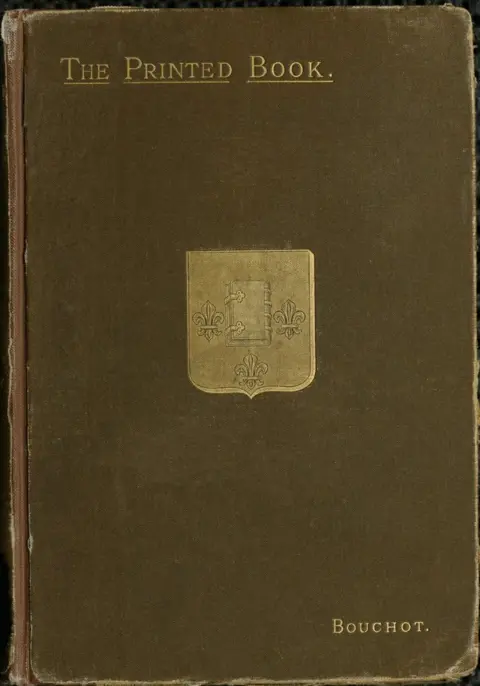
"The Printed Book: Its History, Illustration and Adornment" by Henri Bouchot is a historical account written in the late 19th century. This work offers a comprehensive survey of the development of the printed book from the time of Gutenberg to the present, highlighting the art and industry surrounding book production, illustration, and design. It paints a picture of the evolution of printing techniques and artistic contributions to bookmaking over four centuries. The opening of the text introduces reader to the preamble of the work, explaining its purpose as a summary of the book's history, focusing especially on the artistic elements as opposed to purely technical aspects of printing. Bouchot mentions the vast number of previous essays on the subject, signifying that while it may not provide new revelations for experts, it aims to be a useful resource for those interested. He notes a particular emphasis on illustrators and decorative artists, briefly recounting the early innovations in printing prior to Gutenberg’s movable type, and hints at the complexity of the development of the art form that this narrative will explore in the subsequent chapters.
Introduction adapted from the source catalogue; source summaries may be automatically generated.
Free to read · English · 63,136 words · No account needed
MAKE TIME FOR A GOOD BOOK
On by default. Untick to stop anonymous reading totals. Each page counts after 10 seconds in view. How this works.
Anonymous counting is on unless you have switched it off.
Rome possesses a dozen collections and celebrated deposits. The Vatican, not numerous, is most choice; the importance of its manuscripts is known to the entire world, but only a part of the 50,000 printed books are catalogued. The Library of Victor Emmanuel, formerly of the Jesuits, amounts to about 66,000 volumes. At Venice the splendid monument called the Antiqua Libraria di St. Marco has changed its destination; constructed in the sixteenth century and commenced by Sansovino for a library, it is now a royal palace. This city has lost that which had made its glory, and its collections are very modest in our days.
The magnificent educational establishments in the form of public libraries provided in the United States deserve special mention. Nearly every city has its public library, supported by a small tax; and many large libraries are wholly supported by private munificence. The first to be established was founded in 1732 by Benjamin Franklin in Philadelphia, and still exists as the Library Company; many important bequests have been made to it, the latest being £200,000 by Dr. Richard Rush. The library now numbers 150,000 volumes. The Congressional Library of Washington, besides its annual income from Government, receives by deposit for copyright a copy of every work published in the United States; it now has 565,000 volumes.
The Astor Library and the Lenox Library of New York were both founded and endowed by the families whose name they bear; the former has 223,284 volumes, the latter 25,000. The city of Chicago recently fell heir to the magnificent sum of over one million sterling for the establishment of a library of reference, and New York was benefited by the late Mr. Tilden to the extent of £800,000 for a public library.
When we have named the libraries of St. Petersburg and Moscow for Russia, Stockholm for Sweden, and the Escurial for Spain, we shall have mentioned very hastily the most important establishments in the world. For more than four centuries the love of books has preserved and fortified itself, and increases each day. If we were to endeavour to approximately imagine the number of printed books diffused, we should be frightened at it. It is by miles that to-day are counted the shelves of the National Library or of the British Museum; and each year the production is accelerated, as is also the number of readers.
Albi, first printer at, 47.
Alciati, books of emblems, 126.
Alding, Henry, printer in Sicily, 35.
Aldus Manutius, son-in-law of Torresani, 51;
printer in Venice, 99, 103, 128;
books for Grolier, 260.
America, North, printing in, 216.
Antwerp, early printing at, 67;
Plantin, 140.
Ars Memorandi, block book, 10.
Ars Moriendi, block book, 8.
Asola, Andrew d', successor of Jenson, 50.
Audran, C., engraver, 158.
Augsburg, Formschneiders at, 58.
Badier, Florimond, bookbinder, 280.
Your reading position is saved on this browser. Take it to another device with a library code. Reading pages adapt to text, rather than matching a printed edition.
BEHIND THE BOOK
This eBook is for the use of anyone anywhere in the United States and most other parts of the world at no cost and with almost no restrictions whatsoever. You may copy it, give it away or re-use it under the terms of the Project Gutenberg License included with this eBook or online at www.gutenberg.org. If you are not located in the United States, you will have to check the laws of the country where you are located before using this eBook. Read the source licence.
The original source file, including credits and licence, is retained by this library. Request an original-format copy at no charge. Please include the book title and Project Gutenberg identifier #44890.
KEEP YOUR CURIOSITY GOING
Cécile Tormay

Moritz Busch
John L. Ransom
Frances Wright
Cécile Tormay

Mabel Potter Daggett