THE CLASSIC COLLECTION✦In furthest IndCLASSIC FREE BOOKS
In furthest Ind
Sydney C. Grier

THE CLASSIC COLLECTION · 1902
"The Prince of the Captivity: The Epilogue to a Romance" by Sydney C. Grier is a novel written in the early 20th century. The story revolves around Lord Usk, a young man beset by feelings of infatuation and social anxieties, particularly concerning an American heiress, Miss Félicia Steinherz. The narrative explores themes of love, societal expectations, identity, and the cultural clash between American wealth and British nobility. At the start of the novel, Usk travels on the South Wales Express, lost in thoughts about Félicia, who has captivated him in ways he never anticipated. Flashbacks reveal his astonishment at how profound his life feels since meeting her, contrasting his previous perceived contentment. The reader is introduced to the complexities of his feelings and social standing, as Usk grapples with his family's expectations, his insecurities about wealth and status, and the potential impact of proposing to Félicia. Additional characters, such as Mr. Hicks, provide comic relief and guidance while hinting at complications that will arise from Usk's growing affection for Félicia and her father's prestigious background.
Introduction adapted from the source catalogue; source summaries may be automatically generated.
Free to read · English · 131,826 words · No account needed
MAKE TIME FOR A GOOD BOOK
On by default. Untick to stop anonymous reading totals. Each page counts after 10 seconds in view. How this works.
Anonymous counting is on unless you have switched it off.
Then, before Prince Soudaroff’s witticism had time to grow stale by repetition, and when the papers, having made the most of the sensation afforded by the medical evidence as to the cause of the secretary’s death, were beginning to hunt for a fresh topic of interest, there came a rush of events which swept the “Balkan mystery” clean out of men’s minds. Just at first it was remembered sufficiently for Prince Soudaroff’s friends to say among themselves, with exquisite glee, that if he had his secrets from the Emperor, the Emperor clearly kept one or two things secret from him. But as Prince Soudaroff only looked wise and said nothing in public, the world in general thought he had known of the matter all along, little guessing the gnashing of teeth and tearing of hair which had taken place in certain chancelleries, that of Scythia not excepted, when the news came. There was a revolution--the fifth, if minor outbreaks are left out of the calculation--in Neustria.
This new revolution was the crowning glory of its kind. Other revolutions had been bungled at their inception, or had dragged on for several years before they could fairly be considered successful, but this one seemed to have been born full-grown. One night Prince Timoleon Malasorte was a casual sojourner in a Lutetian hotel, so little thought of as a political personage that the police either were not aware of his arrival in the forbidden capital, or winked at it. The next night he was master of the army, and by its means of every fortress in the country, master of the ecclesiastical system, and through it of the women of Neustria, master also of the national purse-strings. The whole thing came about with almost the suddenness of a transformation scene. It was never known publicly when and how the idea of the revolution had taken shape, or how long the astutest minds in Europe had toiled by devious and underground paths to prepare its way; all that was certain was that one morning the city was white and purple with unauthorised proclamations, posted in all sorts of forbidden places. The police tore them down, only to find that whatever way they turned, fresh bills were posted behind their backs, and while they did their confused best to keep pace with the bill-stickers, a drastic “Pride’s Purge” was being administered at the centre of parliamentary life. The Senate and the Chamber of Deputies were found to be surrounded by troops, and the alarmed legislators saw their sacred precincts invaded by armed men, headed by--as it seemed to their startled eyes--the counterfeit presentment of Timoleon I. Without giving them time to recover from their surprise, the new Timoleon informed them that he had assumed the office of Dictator in order to save the country from the evils menacing it, and announced a dissolution. Before even the most violent deputy could raise his voice in protest, soldiers were filing down the alleys between the rows of seats, and arresting one man here and another there. Those arrested were taken at once into safe keeping, where they met many of their friends in other walks of life, who had been apprehended at their homes or places of business. The city Municipality, indeed, found its numbers almost complete in this new place of meeting. The whole scheme could not, naturally, be carried out with the same celerity and certainty as these preliminary steps, and in the streets of Lutetia there were a number of spasmodic attempts to erect barricades. But Prince Timoleon and his supporters were not men to be trifled with; troops had been posted at strategic points throughout the whole city, and there were cannon ready wherever they were likely to be needed. In these circumstances the barricade-builders found it well to carry back into the houses the bedding and furniture they had requisitioned, to restore the overturned cabs to their normal position, and even to lay down again the torn-up paving-stones. In the more respectable portions of the city no opposition was offered to the new rule. The better class of people were so sick of their late government, so weary of a long succession of mediocrities diversified by knaves, that they were ready to welcome any change that promised stability and some measure of relief from corruption, and above all, they hailed the advent of a man--a commanding personality who would not only command but be obeyed. The priests headed processions of their flocks to take the oath of allegiance to the new government, and--surest sign of the strength that lay behind the movement--the credit of the country rose higher than before, and the Dictator had no difficulty in obtaining money. In all the larger provincial towns a similar change of affairs had taken place, and each town saw that the district round it followed its example. The rural inhabitants submitted to the altered conditions quite philosophically. They had always been of the opinion that they lived in the worst possible world for honest people, so that it was clear they could not become worse off. There was some fear lest the sacred names which had been handed down from the days of the first revolution should be lost to sight, and an absolutist empire, supported, as it was now currently believed this new enterprise had been throughout, on one side by the Jews and on the other by the Jesuits, be set up. But the Dictator was too wise for this. The proclamation which he issued on the night of his triumph, dated from the Presidential palace (which the former occupant had quitted in haste and without much reluctance), was a model in its way. After a short sketch of Roman history, appropriate to the occasion, Prince Timoleon called the nation to witness that he had been welcomed as the saviour of society by the whole people, and established at the head of the government with scarcely the shedding of a drop of blood. There was the inevitable reference to the deeds, sacrifices, and triumphs of his ancestors; but with touching modesty and fairness Timoleon Lucanor, Prince-Dictator, concluded by saying that he proposed immediately to take a plébiscite of the whole nation on the question of reviving the imperial form of government in Neustria. This clinched matters. Timoleon Lucanor trusted the people.
Your reading position is saved on this browser. Take it to another device with a library code. Reading pages adapt to text, rather than matching a printed edition.
Sydney C. Grier

Sydney C. Grier
Sydney C. Grier
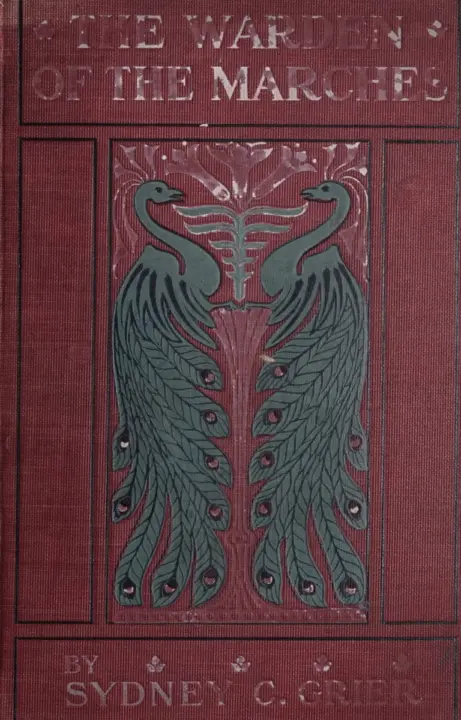
Sydney C. Grier
BEHIND THE BOOK
This eBook is for the use of anyone anywhere in the United States and most other parts of the world at no cost and with almost no restrictions whatsoever. You may copy it, give it away or re-use it under the terms of the Project Gutenberg License included with this eBook or online at www.gutenberg.org. If you are not located in the United States, you will have to check the laws of the country where you are located before using this eBook. Read the source licence.
The original source file, including credits and licence, is retained by this library. Request an original-format copy at no charge. Please include the book title and Project Gutenberg identifier #66558.
KEEP YOUR CURIOSITY GOING
Coulson Kernahan

Maurice Baring
Frances Wright
Cécile Tormay

Frederic Jesup Stimson

W. H. P. (William Henry Pope) Jarvis