THE CLASSIC COLLECTION✦In furthest IndCLASSIC FREE BOOKS
In furthest Ind
Sydney C. Grier

THE CLASSIC COLLECTION · 1902
"The Prince of the Captivity: The Epilogue to a Romance" by Sydney C. Grier is a novel written in the early 20th century. The story revolves around Lord Usk, a young man beset by feelings of infatuation and social anxieties, particularly concerning an American heiress, Miss Félicia Steinherz. The narrative explores themes of love, societal expectations, identity, and the cultural clash between American wealth and British nobility. At the start of the novel, Usk travels on the South Wales Express, lost in thoughts about Félicia, who has captivated him in ways he never anticipated. Flashbacks reveal his astonishment at how profound his life feels since meeting her, contrasting his previous perceived contentment. The reader is introduced to the complexities of his feelings and social standing, as Usk grapples with his family's expectations, his insecurities about wealth and status, and the potential impact of proposing to Félicia. Additional characters, such as Mr. Hicks, provide comic relief and guidance while hinting at complications that will arise from Usk's growing affection for Félicia and her father's prestigious background.
Introduction adapted from the source catalogue; source summaries may be automatically generated.
Free to read · English · 131,826 words · No account needed
MAKE TIME FOR A GOOD BOOK
On by default. Untick to stop anonymous reading totals. Each page counts after 10 seconds in view. How this works.
Anonymous counting is on unless you have switched it off.
“And this was all a blind?” Usk ventured to ask, as a smile, called up by his recollections, crept over Mr Steinherz’s face.
“It was all done with a purpose, and when by-and-by I was allowed to run down to the Adriatic for more important experiments on board the Claudine, though the limit of my stay was strictly fixed, I knew my time was at hand. But before it arrived something happened which changed the whole character of my flight. In her lifetime my mother had befriended a young girl, the last descendant of a noble, but poverty-stricken, family of Weldart. As a child, Konstantia von Lilienkranz had shown extraordinary talent in several directions, and her own intense desire was to go upon the stage. My mother dissuaded her from this, but sent her, at her own expense, to a famous conservatorium, where her musical gifts might be cultivated, intending to find her a post as Court pianist when she grew up. Her death left the poor girl friendless, for she knew too well the light in which her patroness had been regarded by the members of the Imperial family to seek help from them. The variety of her talents had created quite a sensation at the conservatorium, and admiring professors and fellow-students had done so much to spread her fame that she was actually offered an engagement to play ingénue parts at a leading Vindobona theatre, while a great maestro volunteered to train her to sing in grand opera. Remembering the wishes of her patroness, she refused both offers, and had the courage to strike out for herself in a new line--as a society entertainer, you would call it, I suppose. She gave a series of concerts at which she herself, either as singer, reciter, or instrumentalist, supplied all the items, and the idea was so new and daring that she was the sensation of the moment in the capital. This was soon after I had been allowed a little more freedom. I was anxious to show an interest in my mother’s protégée, and went to hear her play several times. I sent her bouquets, and asked to be presented to her, the girl receiving the attentions, as they were offered, purely as marks of kindness from the son of her patroness. But the censorious world thought otherwise, as I ought to have remembered would be only too likely in the case of a woman in her position. My cousins met me with meaning looks, and congratulated me on my conquest. ‘The stony-hearted Stanzerl,’ as the gilded youth of Vindobona called her, had stepped down from her pedestal, so they hinted. The cessation of my attentions might have ended the scandal as regarded myself, but the whispers had reached her. One day the old woman, half-attendant, half-duenna, who lived with her, came to me privately to beg me not to show any further interest in her charge, who was in the deepest distress owing to the reports spread concerning her. I was horrified and disgusted. That I should have brought this anguish upon my mother’s favourite! Impulsively I wrote off to my brother Florian’s widow, whom I knew to have the kindest heart in the world, telling her what I had reason to belief was the case, that Fräulein von Lilienkranz found the strain and publicity of her life very trying, and would be most thankful to exchange it for a more sheltered one. Would not my sister-in-law find room for her in her household, even if only as instructor in music to her year-old daughter? I waited impatiently for the answer. Princess Florian wrote in evident distress of mind. She would have been delighted to befriend any one in whom my mother had been interested, but in this case she had been warned--deeply underlined--that it would be wiser not to take any step, and she could not disregard the warning. I was perplexed and disappointed, but I could not give up my plan so easily. I ran down to my sister-in-law’s estates on a visit--having duly obtained leave--and asked her point-blank why she would not help Fräulein von Lilienkranz. With the utmost difficulty I extracted from her that in view of the rumours connecting the young lady’s name with mine, she could not admit her into her household. In vain I pointed out to her that if I had unwittingly compromised the girl, my relations might at least do what they could to clear her name, but she was afraid of offending my father, and would do nothing. Then I saw that there was method in what had been done. I was to be entangled in an ordinary vulgar scandal, to keep me from rushing into an unequal marriage. There and then I determined to turn the tables upon my friends, and I waylaid the old duenna the next day, and with all possible frankness took her into my confidence. I told her it was my desire to marry Fräulein von Lilienkranz, and intrusted her with a letter asking for an interview. The adventure pleased me; there was something chivalrous in the idea that made me half in love with the girl already, and when I saw her, her resistance to the notion determined me to persist in it. She was horrified at the thought of injuring the son of her patroness, but she was lonely and troubled, and had learnt that a public life is not the easiest one in the world for a good woman. I told her that I was resolved upon escaping from Pannonia, and that if she would give up her career for my sake, we would make a home together in the New World. I had not foreseen her adoring gratitude, and it made me ashamed, but she consented, and I laid my plans--quickly, you may guess, for whether I attended her concerts or stayed away from them, tongues wagged afresh, and Konstantia suffered a new martyrdom. I needn’t waste time in telling you of the different failures and disappointments I had to face; let us go on to the decisive moment. It was a cold spring evening. I had ordered a special train to be in readiness to take me southwards at eleven o’clock, and I had also invited a number of friends to supper at ten, on the understanding that we were to make a night of it. You observe that the arrangements sound slightly inconsistent?”
Your reading position is saved on this browser. Take it to another device with a library code. Reading pages adapt to text, rather than matching a printed edition.
Sydney C. Grier
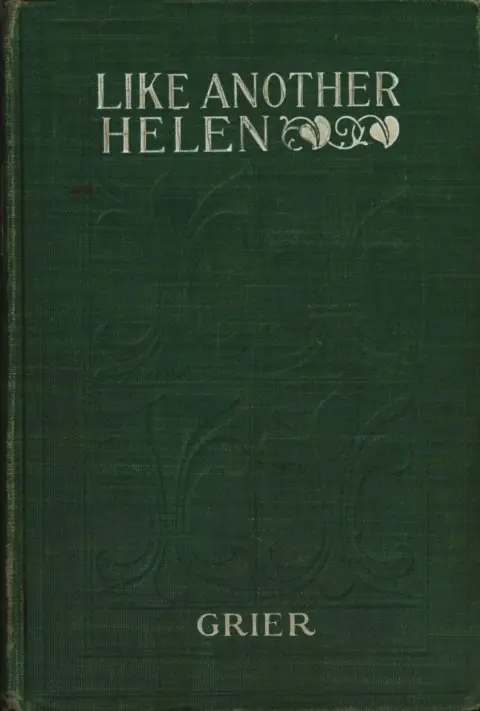
Sydney C. Grier
Sydney C. Grier
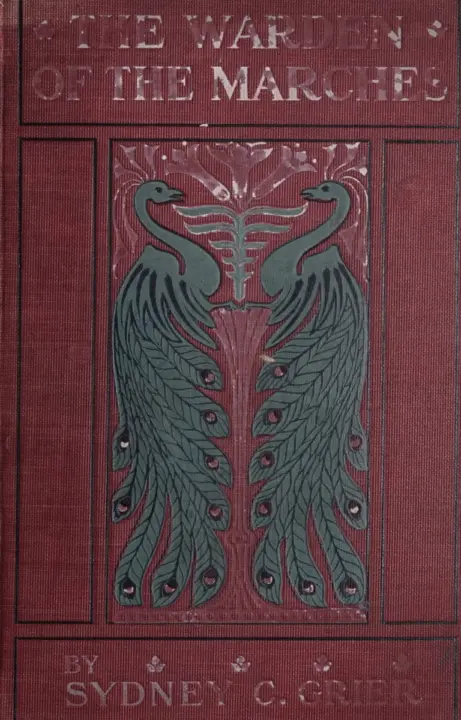
Sydney C. Grier
BEHIND THE BOOK
This eBook is for the use of anyone anywhere in the United States and most other parts of the world at no cost and with almost no restrictions whatsoever. You may copy it, give it away or re-use it under the terms of the Project Gutenberg License included with this eBook or online at www.gutenberg.org. If you are not located in the United States, you will have to check the laws of the country where you are located before using this eBook. Read the source licence.
The original source file, including credits and licence, is retained by this library. Request an original-format copy at no charge. Please include the book title and Project Gutenberg identifier #66558.
KEEP YOUR CURIOSITY GOING
Coulson Kernahan

Maurice Baring
Frances Wright
Cécile Tormay

Frederic Jesup Stimson

W. H. P. (William Henry Pope) Jarvis