THE CLASSIC COLLECTION✦In furthest IndCLASSIC FREE BOOKS
In furthest Ind
Sydney C. Grier

THE CLASSIC COLLECTION · 1902
"The Prince of the Captivity: The Epilogue to a Romance" by Sydney C. Grier is a novel written in the early 20th century. The story revolves around Lord Usk, a young man beset by feelings of infatuation and social anxieties, particularly concerning an American heiress, Miss Félicia Steinherz. The narrative explores themes of love, societal expectations, identity, and the cultural clash between American wealth and British nobility. At the start of the novel, Usk travels on the South Wales Express, lost in thoughts about Félicia, who has captivated him in ways he never anticipated. Flashbacks reveal his astonishment at how profound his life feels since meeting her, contrasting his previous perceived contentment. The reader is introduced to the complexities of his feelings and social standing, as Usk grapples with his family's expectations, his insecurities about wealth and status, and the potential impact of proposing to Félicia. Additional characters, such as Mr. Hicks, provide comic relief and guidance while hinting at complications that will arise from Usk's growing affection for Félicia and her father's prestigious background.
Introduction adapted from the source catalogue; source summaries may be automatically generated.
Free to read · English · 131,826 words · No account needed
MAKE TIME FOR A GOOD BOOK
On by default. Untick to stop anonymous reading totals. Each page counts after 10 seconds in view. How this works.
Anonymous counting is on unless you have switched it off.
“I cannot speak calmly when I think of my mother,” he went on. “For political reasons, which means, in plain English, her brother’s need of money, she was married to my father as a child of seventeen, after being summarily converted for the purpose. Needless to say, her consent was not asked to either process. She made him an excellent wife, and if he had taken her advice, it would, I believe, have averted the revolution which cost him his throne; but on account of her German and Protestant upbringing she was always looked upon with distrust, and my father himself shared it. So strongly did she disapprove of the perpetual intrigues by which he sought to regain his kingdom after losing it, that soon after my birth an amicable separation was arranged, without giving rise to any scandal. My mother retired with me to an estate on the Adriatic, where my father and brothers visited us occasionally, and I was sometimes conducted, much against my will, to Vindobona, which my mother, on the plea of ill-health, always avoided, and from which I always returned to her with increasing joy. As I grew older her one fear was that I might be taken from her, and to escape this she proposed that I should be entered as a student at the naval academy of the great dockyard and arsenal which lay not far from us. Though all my training hitherto had been military, it was the sea to which my own heart turned, and I don’t know whether my mother or I was the more rejoiced when I was allowed to follow my bent. For several happy years I worked hard at the mysteries of shipbuilding--much harder than suited my superiors and companions, who would have preferred to see me placed in some post of nominal authority, where I should not trouble them. Several times it was suggested that I should be appointed to a sea-going ship, and sent on a long cruise, but my mother’s piteous entreaties--she humbled herself to my father and the Emperor in her agony at the thought of losing me--and my own absorption in my work, which seemed likely to be productive of great advantage to the navy in future, gained me a respite. One of the complaints against me was that I withdrew myself from the society of companions of my own age. It did not occur to my accusers that in my leisure hours I had the constant society of a woman who had read widely, thought deeply, and suffered much, and that this had quite spoiled me for the company of the class of men I met every day. I always look back to my twenty-third year as the period of my greatest happiness--perhaps in contrast with the dark time which followed. A legacy had come to me from a godfather when I was twenty-one, and I spent the greater part of it in building a large steam-yacht from my own designs. Some of my relations looked askance at such waste of money, but the Emperor, finding that the yacht was intended to test various inventions of my own in naval matters, was pleased with my interest in my profession, and encouraged me. I called the yacht the Claudine, after my mother, and spared no pains to make her the smartest and most seaworthy craft of her size afloat. When she was finished we tested her in all weathers. I had a crew enrolled from among the fishermen with whom I had made friends as a boy, and my mother was always my passenger. Only one of her ladies cared for the sea, and she made her her constant companion on these trips. Aline von Hartenweg was young, beautiful, enthusiastic, devoted to my mother, devoted to the sea--is it any wonder that an attachment sprang up between us? We were so happy, so thoroughly contented with our life, that we did not ourselves perceive the chief cause of our happiness. Others saw it before we did, notably the chaplain at the Castle, whom my mother always suspected of being placed as a spy upon her. Presently a furious letter from my father announced that he was coming to put an end to this foolishness, and to send me off on a three years’ cruise. My mother had long been suffering from a mortal disease, but I shall never believe that she might not have lived for years, if she had been left in peace. As it was, the shock, and the realisation of the truth, were too much for her, and when the King arrived he found her on her deathbed. She had poured out her soul to me on the subject of Aline, assuring me that the marriage would never be allowed, that our attachment could only cause misery and contention, and adjuring me to go abroad as my father wished, unless I felt that my life’s happiness was bound up in Aline. I assured her that it was, and her last words to my father, who could not in decency refuse to hear them, were a petition that we might be allowed to marry. Then she died.”
Your reading position is saved on this browser. Take it to another device with a library code. Reading pages adapt to text, rather than matching a printed edition.
Sydney C. Grier

Sydney C. Grier
Sydney C. Grier
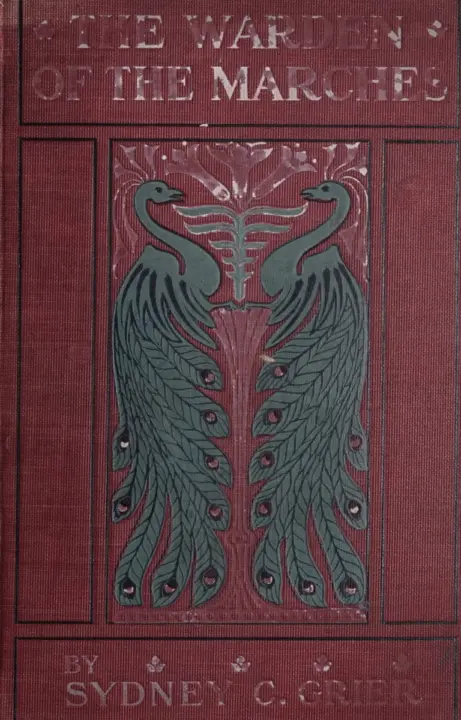
Sydney C. Grier
BEHIND THE BOOK
This eBook is for the use of anyone anywhere in the United States and most other parts of the world at no cost and with almost no restrictions whatsoever. You may copy it, give it away or re-use it under the terms of the Project Gutenberg License included with this eBook or online at www.gutenberg.org. If you are not located in the United States, you will have to check the laws of the country where you are located before using this eBook. Read the source licence.
The original source file, including credits and licence, is retained by this library. Request an original-format copy at no charge. Please include the book title and Project Gutenberg identifier #66558.
KEEP YOUR CURIOSITY GOING
Coulson Kernahan

Maurice Baring
Frances Wright
Cécile Tormay

Frederic Jesup Stimson

W. H. P. (William Henry Pope) Jarvis