THE CLASSIC COLLECTION✦Home Rule Second EditionCLASSIC FREE BOOKS
Home Rule Second Edition
Harold Spender
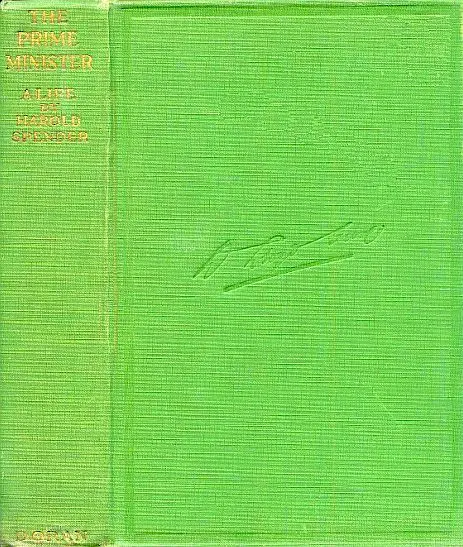
THE CLASSIC COLLECTION · 1920
"The Prime Minister" by Harold Spender is a biographical work written in the early 20th century. The book delves into the life of David Lloyd George, a significant political figure in Wales and the United Kingdom, particularly focusing on his formative years and early influences that shaped his character and leadership style. The narrative encapsulates the socio-political atmosphere of Wales during his childhood and youth, exploring themes of ambition, social justice, and national identity. The opening of the book details David Lloyd George's childhood in North Wales, surrounded by the vibrant landscapes that would instill in him a deep appreciation for his homeland. Following his father's untimely death, he and his siblings are raised by their mother and uncle Richard Lloyd, who instills values of education, hard work, and community involvement. As the story unfolds, we observe the young David’s rapid intellectual development, his experiences with local education, and his growing interest in public affairs, foreshadowing his eventual rise in politics. The detailed descriptions of his surroundings, the struggles of his family, and the vibrant village life paint a rich backdrop that explains the shaping of a man destined for political leadership.
Introduction adapted from the source catalogue; source summaries may be automatically generated.
Free to read · English · 103,885 words · No account needed
MAKE TIME FOR A GOOD BOOK
On by default. Untick to stop anonymous reading totals. Each page counts after 10 seconds in view. How this works.
Anonymous counting is on unless you have switched it off.
XII. THE TURKISH PORTIONS of the present Ottoman Empire should be ASSURED A SECURE SOVEREIGNTY, but the OTHER NATIONALITIES which are under Turkish rule should be ASSURED AN UNDOUBTED SECURITY OF LIFE, and an absolutely unmolested opportunity of autonomous development, and the DARDANELLES should be PERMANENTLY OPENED as a free passage to the ships and commerce of all nations under international guarantees.
XIII. =An Independent Polish State should be erected=, which should include the territories inhabited by INDISPUTABLY POLISH POPULATIONS, which should be assured a free and secure access to the sea, and whose political and economic independence and territorial integrity should be guaranteed by international covenant.
XIV. A GENERAL ASSOCIATION OF NATIONS must be formed under specific covenant for the purpose of affording mutual guarantees of political independence and territorial integrity to great and small States alike.
NOTE.—Point II was practically cut out of the terms by the Versailles Council. Note the comprehensiveness of Point XIII, which explains the largeness of the Polish claims. Point XIV is the germ of the League of Nations idea, and is carried out in the famous clause 10 of the Covenant since rejected by the Senate of the United States.
Note that there is no mention of indemnities; but the Council of Versailles opened the door by insisting on compensation to civilian populations. The £5,000,000,000 claimed in the Treaty represents an instalment of that claim which is estimated as likely to amount to £8,000,000,000.
Acland, Sir Arthur, 81, 168
Addison, Dr., speech on Munitions, 218;
Introduces Housing Bill, 314
Agadir Speech at Mansion House, 159
Agricultural Rates Bill (1896), 108
Aisne, the, 280
Albert, 274
American Army reinforcements, 1918, 276
Amiens, 151;
German attempt to capture, 277, 281
Arabi Pasha, 48
Armentières, 278
Armistice, conditions of, 283;
declared, 284
Arnold, Matthew, 50, 147
Asquith, Mr., and Welsh Disestablishment, 105;
successor to Campbell-Bannerman, 112;
and South African War, 115;
in opposition (1902), 129, 134;
and Tariff Reform, 136;
Premier, 149;
evidence on Bulgaria, 191;
munition speech, Newcastle, 213;
reconstruction of Government (1915), 214;
interview of December 1916, 236;
negotiations with Mr. Lloyd George, 237;
downfall of Government, 242;
refuses Woolsack, 242;
and Maurice incident, 267
Athens, 184
Aubers Ridge, attack on, 214
Austria, strength in 1915, 198;
Italy declares war on, 200;
surrenders, 283
Your reading position is saved on this browser. Take it to another device with a library code. Reading pages adapt to text, rather than matching a printed edition.
BEHIND THE BOOK
This eBook is for the use of anyone anywhere in the United States and most other parts of the world at no cost and with almost no restrictions whatsoever. You may copy it, give it away or re-use it under the terms of the Project Gutenberg License included with this eBook or online at www.gutenberg.org. If you are not located in the United States, you will have to check the laws of the country where you are located before using this eBook. Read the source licence.
The original source file, including credits and licence, is retained by this library. Request an original-format copy at no charge. Please include the book title and Project Gutenberg identifier #60179.
KEEP YOUR CURIOSITY GOING
Cécile Tormay

Moritz Busch
John L. Ransom
Frances Wright
Cécile Tormay

Mabel Potter Daggett