THE CLASSIC COLLECTION✦Home Rule Second EditionCLASSIC FREE BOOKS
Home Rule Second Edition
Harold Spender
THE CLASSIC COLLECTION · 1920
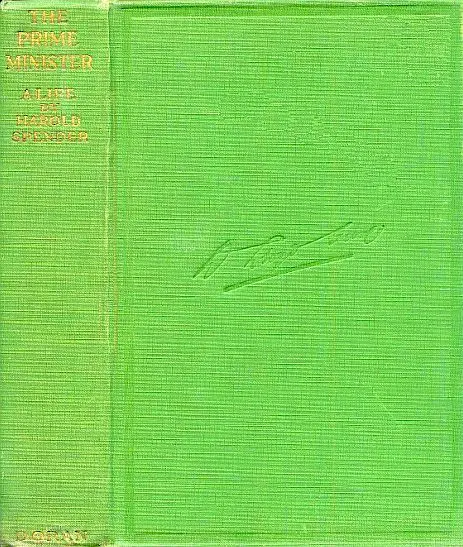
"The Prime Minister" by Harold Spender is a biographical work written in the early 20th century. The book delves into the life of David Lloyd George, a significant political figure in Wales and the United Kingdom, particularly focusing on his formative years and early influences that shaped his character and leadership style. The narrative encapsulates the socio-political atmosphere of Wales during his childhood and youth, exploring themes of ambition, social justice, and national identity. The opening of the book details David Lloyd George's childhood in North Wales, surrounded by the vibrant landscapes that would instill in him a deep appreciation for his homeland. Following his father's untimely death, he and his siblings are raised by their mother and uncle Richard Lloyd, who instills values of education, hard work, and community involvement. As the story unfolds, we observe the young David’s rapid intellectual development, his experiences with local education, and his growing interest in public affairs, foreshadowing his eventual rise in politics. The detailed descriptions of his surroundings, the struggles of his family, and the vibrant village life paint a rich backdrop that explains the shaping of a man destined for political leadership.
Introduction adapted from the source catalogue; source summaries may be automatically generated.
Free to read · English · 103,885 words · No account needed
MAKE TIME FOR A GOOD BOOK
On by default. Untick to stop anonymous reading totals. Each page counts after 10 seconds in view. How this works.
Anonymous counting is on unless you have switched it off.
Many Englishmen, great and small, have a right to share in the glory of this great work. We must not forget those men who, before the great central crisis arose, battled alone against a sea of errors and failings in high places—great civil servants like Sir Hubert Llewellyn Smith, or great public servants like Lord Moulton. Such men do not labour in the limelight. We must remember their services.
Nor must we forget loyal political helpers like Dr. Addison, Mr. Lloyd George’s first lieutenant at the Ministry, and Mr. Montagu, his successor.
But, when all is said and done, the man who did the deed was Mr. Lloyd George. Without his resolution and decision England would have fared badly in that dark hour. It was he who designed, directed, and completed this noble and stupendous endeavour. It was he who carried it through. It was he who, when others failed, armed and strengthened our armies. It is scarcely too much to say that it was he who, under Providence, saved England.
[90] See Dr. Addison’s description (House of Commons, June 28th, 1917): “There was to be one aim, and one aim only—to obtain the goods and make delivery of them to the Army. No other interests and no considerations of leisure were to be entertained.”
[91] Lieutenant-General Sir John Philip Du Cane, Major-General R.A., G.H.Q., 1915. Afterwards British representative with Marshal Foch.
[92] Similarly, to Lord French he said eight years (Journal interview,
Sept. 1917).
[93] Mr. Montagu, in the House of Commons, on August 16th, 1916, said openly that “Mr. Lloyd George ordered far more guns than were thought by the War Office to be necessary, and yet received new requirements showing that he had not ordered enough.”
[94] Mr. Lloyd George’s statement of December 21st, 1915, Mr. Montagu’s statement of August 16th, 1916, and Dr. Addison’s statement of June 28th, 1917.
[95] Twelve areas: England and Wales, 8; Scotland, 2; Ireland, 2; 40 local Munition Committees in the engineering centres consisting of local business men. (Mr. Lloyd George, December 21st, 1915.)
[96] Within a year the labour employed on munitions had gone up from 1,635,000 to 2,250,000, and there were 32 national shell factories, 12 for projectiles, 6 for cartridges, etc. (Mr. Montagu, August 1915.)
[97] There had also been in March an agreement between the Government and the Trade Unions called the Treasury Agreement, and administered by a Labour Advisory Committee. The general line of that agreement was an understanding to suspend restrictive Trade Union practices in return for a promise to tax excess profits.
[98] He put this appeal very strongly in a speech to the engineers at Cardiff on June 11th, 1915.
Your reading position is saved on this browser. Take it to another device with a library code. Reading pages adapt to text, rather than matching a printed edition.
BEHIND THE BOOK
This eBook is for the use of anyone anywhere in the United States and most other parts of the world at no cost and with almost no restrictions whatsoever. You may copy it, give it away or re-use it under the terms of the Project Gutenberg License included with this eBook or online at www.gutenberg.org. If you are not located in the United States, you will have to check the laws of the country where you are located before using this eBook. Read the source licence.
The original source file, including credits and licence, is retained by this library. Request an original-format copy at no charge. Please include the book title and Project Gutenberg identifier #60179.
KEEP YOUR CURIOSITY GOING
Cécile Tormay

Moritz Busch
John L. Ransom
Frances Wright
Cécile Tormay

Mabel Potter Daggett