THE CLASSIC COLLECTION✦Less than kinCLASSIC FREE BOOKS
Less than kin
Alice Duer Miller
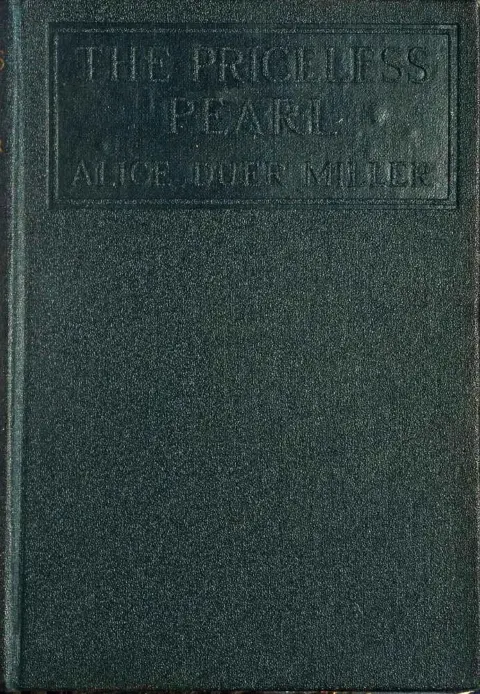
THE CLASSIC COLLECTION · 1923
"The Priceless Pearl" by Alice Duer Miller is a novel written in the early 20th century. The story revolves around Pearl Leavitt, a beautiful young woman whose looks create complications in her professional life, leading her to lose multiple jobs due to the distractions she causes in male-dominated workplaces. The book delves into themes of gender dynamics, societal expectations, and the struggles of a woman trying to make her way in a world that often judges her based on her appearance rather than her abilities. The opening of the novel introduces Pearl in the context of her most recent job at an encyclopedia publishing company, where her beauty has led to her dismissal, largely due to the emotional turmoil it causes in one of her male colleagues. After an emotional confrontation with her boss, she storms into a board meeting to voice her grievances, making a bold statement on the double standards faced by women in the workforce. As she navigates her job search, her story intersects with her college friend, Augusta, setting the stage for a series of events that will test both women's resolve and their understanding of relationships, ambition, and self-worth.
Introduction adapted from the source catalogue; source summaries may be automatically generated.
Free to read · English · 36,584 words · No account needed
MAKE TIME FOR A GOOD BOOK
On by default. Untick to stop anonymous reading totals. Each page counts after 10 seconds in view. How this works.
Anonymous counting is on unless you have switched it off.
"Griggs describes the young woman I have in mind as of pleasing
appearance."
"That means perfectly hideous."
"You wouldn't want a prize beauty, would you?"
"Certainly I would. I like to have lovely things about me. I suppose
you think that's idiotic."
He assured her that he never thought her idiotic--at least not unintentionally--and went on to obtain the famous pledge--the promise that she would keep the governess he sent her until his return in September. She agreed finally, partly because it was getting late and she was sleepy, partly because she reflected that there were more ways of getting rid of governesses than by sending them away.
"I'm so sleepy," she said, yawning, "and yet I don't quite like to go to bed until Antonia comes in."
"Antonia?" said Wood. "I thought she went to bed at nine."
It appeared that Antonia had formed the habit lately of sleeping on the beach--at least for the earlier part of the night--just digging a hole and curling up there. Her mother thought it an interesting, primitive, healthy sort of instinct.
"And yet," she added thoughtfully, as if she knew she were a little finicky, "I don't like to lock up the house until she comes in."
"I think you're right," said her brother. These were the things that terrified him so--a little girl out in the blackness of that beach in her pajamas. How could he go to Mexico and leave her? He rose and went to the edge of the piazza, which rested on the dunes.
He could see nothing but the stars.
"Shall I call her?" he said.
"I hate to wake her; but--yes, just give a call."
He shouted, and in a few seconds a faint, cheerful hullo reached them, and a little figure appeared over the dunes.
"Were you asleep, darling?" said her mother.
"No, I was swimming," said Antonia. She stepped within the circle of light from the windows, and Wood could see that her dark curly hair was plastered to her head, and her pajamas clung to her like tissue paper. "I love to swim at night," she said. "It makes you feel like a spirit."
She shared her more important thoughts with her uncle. Then, turning to her mother, she advanced toward her with outstretched arms as if to clasp her in a wet embrace.
"Look out for your mother's dress," said Wood, for Edna Conway was as usual perfectly dressed in white. She smiled at him and took the child to her breast.
"Dear Anthony," she said, "if you were married you'd know that a woman loves her children better than her clothes."
Your reading position is saved on this browser. Take it to another device with a library code. Reading pages adapt to text, rather than matching a printed edition.
Alice Duer Miller

Alice Duer Miller
Alice Duer Miller
Alice Duer Miller
BEHIND THE BOOK
This eBook is for the use of anyone anywhere in the United States and most other parts of the world at no cost and with almost no restrictions whatsoever. You may copy it, give it away or re-use it under the terms of the Project Gutenberg License included with this eBook or online at www.gutenberg.org. If you are not located in the United States, you will have to check the laws of the country where you are located before using this eBook. Read the source licence.
The original source file, including credits and licence, is retained by this library. Request an original-format copy at no charge. Please include the book title and Project Gutenberg identifier #64192.
KEEP YOUR CURIOSITY GOING
Coulson Kernahan

Maurice Baring
Frances Wright
Cécile Tormay

Frederic Jesup Stimson

W. H. P. (William Henry Pope) Jarvis