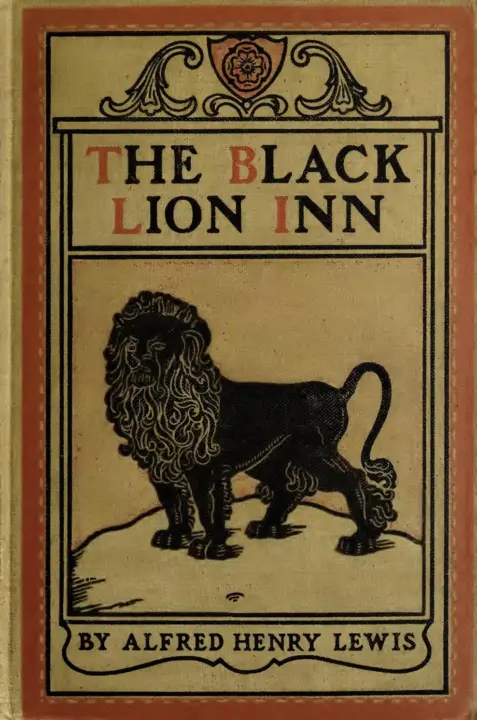
The Black Lion Inn
Alfred Henry Lewis
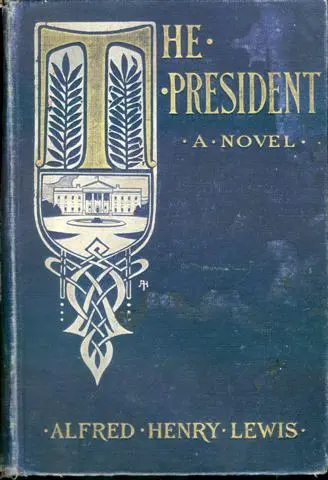
THE CLASSIC COLLECTION · 1904
"The President: A Novel" by Alfred Henry Lewis is a political fiction written in the early 20th century. It explores themes of ambition and power through its main character, Richard Storms, who is entangled in the world of Washington politics and captivated by the beautiful Dorothy Harley. His complex relationships with other characters, including the ambitious Senator Patrick Henry Hanway and the imposing Count Storri, set the stage for a narrative steeped in intrigue and romantic tension. The opening of the novel introduces Richard Storms in his luxurious Washington residence, where he is portrayed as a self-absorbed man seeking a purpose in life. His mundane morning routine contrasts sharply with the arrival of his breakfast and his thoughts of the beautiful Dorothy, whom he saved from an accident in the past. A romantic fascination with her is evident as he cherishes a memento of their encounter, a broken heel from her shoe. Meanwhile, the backdrop of socio-political maneuvering in Washington, as exemplified by the calculating Senator Hanway and the brutish Count Storri, hints at forthcoming conflict as Richard attempts to navigate both his romantic pursuits and the treacherous waters of political ambition. The stage is set for a tale of love, rivalry, and the complexities of power dynamics.
Introduction adapted from the source catalogue; source summaries may be automatically generated.
Free to read · English · 115,181 words · No account needed
MAKE TIME FOR A GOOD BOOK
On by default. Untick to stop anonymous reading totals. Each page counts after 10 seconds in view. How this works.
Anonymous counting is on unless you have switched it off.
The two were near a window and quite alone, for Bess had stepped into the hall to give directions to a servant. Mr. Fopling sat the length of the room away, wrapped in meditation. Richard looked tenderly apologetic, and Dorothy, after sparkling for a jealous moment, softened to be in sympathy with Richard.
And the strange thing was that neither had ever said one word of love to the other. They had begun to love at sight, taking each other for granted, worshiping frankly, sweetly, with the candid, innocent informality of barbarians to whom the conventional was the unknown. After all, why not? Isn't word of eye as sacred as word of mouth?
Bess returned to them from the hall.
"I say, Bess!" bleated Mr. Fopling anxiously.
"In a moment, child!" returned Bess, in maternal tones.
Mr. Fopling relapsed, while Richard was amused. Some corner of Richard's amusement must have stuck out to attract the notice of Bess. She met it finely, undisturbed.
"Some day, Mr. Storms," beamed Bess, as though replying to a question, "I shall talk to you on marriage and husbands."
"Why not on marriage and wives?"
"Because I would not speak of the philosopher and the experiment, but of the experiment and the result. Marriage is a cause; the husband an effect. Husbands are artificial and made by marriage. Wives, like poets, are born, not made. I shall talk to you on marriage and husbands; I have some original ideas, I assure you."
"Now I can well believe that!" declared Richard, much tumbled about in his mind. Bess's harangue left him wondering whether she might not be possessed of a mild mania on wedlock and husbands.
"You need have no misgivings," returned Bess, as though reading his thoughts; "you will find me sane to the verge of commonplace."
Richard's stare was the mate to Mr. Fopling's; he could not decide just how to lay hold on the sibyl of the golden locks. Perceiving him wandering in his wits, Dorothy took him up warmly.
"Can't you see Bess is laughing at you?" she cried.
"You know her so much better than I," argued Richard, in extenuation of his dullness. "Some day I hope to be so well acquainted with Miss Marklin as to know when she laughs."
"You are to know her as well as I do," returned Dorothy, with decision, "for Bess is my dearest friend."
"And that, I'm sure," observed Richard, craftily measuring forth a two-edged compliment, "is the highest possible word that could be spoken of either."
At this speech Dorothy was visibly disarmed; whereat Richard
congratulated himself.
Your reading position is saved on this browser. Take it to another device with a library code. Reading pages adapt to text, rather than matching a printed edition.
Alfred Henry Lewis
Alfred Henry Lewis
Alfred Henry Lewis
Alfred Henry Lewis
BEHIND THE BOOK
This eBook is for the use of anyone anywhere in the United States and most other parts of the world at no cost and with almost no restrictions whatsoever. You may copy it, give it away or re-use it under the terms of the Project Gutenberg License included with this eBook or online at www.gutenberg.org. If you are not located in the United States, you will have to check the laws of the country where you are located before using this eBook. Read the source licence.
The original source file, including credits and licence, is retained by this library. Request an original-format copy at no charge. Please include the book title and Project Gutenberg identifier #18572.
KEEP YOUR CURIOSITY GOING
Coulson Kernahan

Maurice Baring
Frances Wright
Cécile Tormay

Frederic Jesup Stimson

W. H. P. (William Henry Pope) Jarvis