The Black Lion Inn
Alfred Henry Lewis
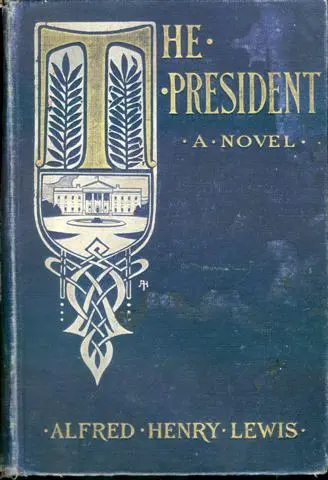
THE CLASSIC COLLECTION · 1904
"The President: A Novel" by Alfred Henry Lewis is a political fiction written in the early 20th century. It explores themes of ambition and power through its main character, Richard Storms, who is entangled in the world of Washington politics and captivated by the beautiful Dorothy Harley. His complex relationships with other characters, including the ambitious Senator Patrick Henry Hanway and the imposing Count Storri, set the stage for a narrative steeped in intrigue and romantic tension. The opening of the novel introduces Richard Storms in his luxurious Washington residence, where he is portrayed as a self-absorbed man seeking a purpose in life. His mundane morning routine contrasts sharply with the arrival of his breakfast and his thoughts of the beautiful Dorothy, whom he saved from an accident in the past. A romantic fascination with her is evident as he cherishes a memento of their encounter, a broken heel from her shoe. Meanwhile, the backdrop of socio-political maneuvering in Washington, as exemplified by the calculating Senator Hanway and the brutish Count Storri, hints at forthcoming conflict as Richard attempts to navigate both his romantic pursuits and the treacherous waters of political ambition. The stage is set for a tale of love, rivalry, and the complexities of power dynamics.
Introduction adapted from the source catalogue; source summaries may be automatically generated.
Free to read · English · 115,181 words · No account needed
MAKE TIME FOR A GOOD BOOK
On by default. Untick to stop anonymous reading totals. Each page counts after 10 seconds in view. How this works.
Anonymous counting is on unless you have switched it off.
"And to think," cried Dorothy, her nose in the bosom of a rose, "no one knows from whom they come! Mamma thinks Count Storri sends them. It's so good of him, if he does!"
Dorothy's head was bowed over the flowers. As she spoke, however, her blue eye, full of mischief, watched Richard through a silken lock of hair that had fallen forward.
"But you don't think it's Storri?" cried Richard dolorously.
"Oh, no!" returned Dorothy, shaking her head with wise decision, "I don't think it's Count Storri. But of course I wouldn't tell mamma so; she doesn't like to be contradicted. Still," and here Dorothy looked quite wistful, "I wish I knew who did send them."
Before Richard could take up the delicate question of the roses and their origin, there arrived the word of Senator Hanway that he be shown into the study.
"Now that I'm a working journalist, Miss Harley," said Richard, "I shall be obliged to see your uncle every day."
"Oh, dear!" exclaimed Dorothy, with a fine sympathy; "how hard they drive you poor newspaper people!"
"Still, we go not without our rewards," returned Richard.
Then observing that Senator Hanway's messenger--who had not those reasons for loitering which made slow the feet of Richard--was already halfway down the hall, Richard took Dorothy's small hand in his, and, before she knew her peril or might make an effort to avoid it, rapturously kissed the fingers, not once, not twice, but five times. The very fingers themselves burned with the scandal of it! Following this deed of rapine, Richard went his vandal way; Dorothy's face turned a twin red with the roses.
Dorothy said nothing in rebuke of Richard, and it is to be assumed that, so flagrant an outrage left her without breath to voice her condemnation. That she was disturbed to the heart is sure, for she went instantly to her friend, the sibyl of the golden locks, for conference, confidence, and consolation.
"Wasn't he wretchedly bold, Bess?" said Dorothy in an awe-stricken
whisper.
"Absolutely abandoned!" said Bess.
Then the two sat in silence for ten impressive seconds.
"Bess," remarked Dorothy tentatively, "suppose mamma were to forbid me loving one whom I loved----" Here she broke down, aghast.
"My dear Dorothy," cried the other, surprised into deepest concern, "your mother didn't see him kissing your fingers, did she?"
"Oh, no, Bess," said Dorothy hurriedly, "we were quite alone."
"You foolish girl," returned Bess. "You alarmed me!"
"But really, Bess," persisted Dorothy, "to put it this way: if your mamma insisted, would you give way and marry a man you didn't love?"
Your reading position is saved on this browser. Take it to another device with a library code. Reading pages adapt to text, rather than matching a printed edition.
Alfred Henry Lewis
Alfred Henry Lewis
Alfred Henry Lewis
Alfred Henry Lewis
BEHIND THE BOOK
This eBook is for the use of anyone anywhere in the United States and most other parts of the world at no cost and with almost no restrictions whatsoever. You may copy it, give it away or re-use it under the terms of the Project Gutenberg License included with this eBook or online at www.gutenberg.org. If you are not located in the United States, you will have to check the laws of the country where you are located before using this eBook. Read the source licence.
The original source file, including credits and licence, is retained by this library. Request an original-format copy at no charge. Please include the book title and Project Gutenberg identifier #18572.
KEEP YOUR CURIOSITY GOING
Coulson Kernahan

Maurice Baring
Frances Wright
Cécile Tormay

Frederic Jesup Stimson

W. H. P. (William Henry Pope) Jarvis