The Black Lion Inn
Alfred Henry Lewis
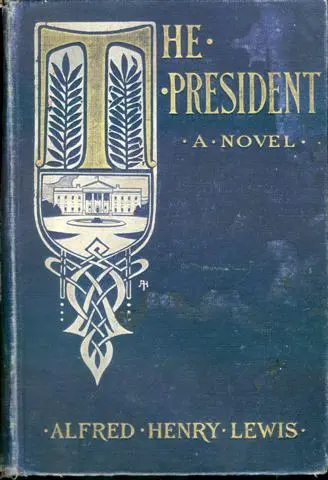
THE CLASSIC COLLECTION · 1904
"The President: A Novel" by Alfred Henry Lewis is a political fiction written in the early 20th century. It explores themes of ambition and power through its main character, Richard Storms, who is entangled in the world of Washington politics and captivated by the beautiful Dorothy Harley. His complex relationships with other characters, including the ambitious Senator Patrick Henry Hanway and the imposing Count Storri, set the stage for a narrative steeped in intrigue and romantic tension. The opening of the novel introduces Richard Storms in his luxurious Washington residence, where he is portrayed as a self-absorbed man seeking a purpose in life. His mundane morning routine contrasts sharply with the arrival of his breakfast and his thoughts of the beautiful Dorothy, whom he saved from an accident in the past. A romantic fascination with her is evident as he cherishes a memento of their encounter, a broken heel from her shoe. Meanwhile, the backdrop of socio-political maneuvering in Washington, as exemplified by the calculating Senator Hanway and the brutish Count Storri, hints at forthcoming conflict as Richard attempts to navigate both his romantic pursuits and the treacherous waters of political ambition. The stage is set for a tale of love, rivalry, and the complexities of power dynamics.
Introduction adapted from the source catalogue; source summaries may be automatically generated.
Free to read · English · 115,181 words · No account needed
MAKE TIME FOR A GOOD BOOK
On by default. Untick to stop anonymous reading totals. Each page counts after 10 seconds in view. How this works.
Anonymous counting is on unless you have switched it off.
Mrs. Hanway-Harley sighed economically, and suggested that Richard's happiness ought not to blind him to the subject of expense. It would cost a pot of money to make the journey intimated. In a sudden gush of hardihood Richard kissed Mrs. Hanway-Harley, and assured her that in all his life, a life remarkable for an utter carelessness of money, he had never felt less like reckoning a cost. From beginning to end he meant to close his eyes to that subject of expense. There the business ended, for Mrs. Hanway-Harley was too much overcome by the kiss to proceed.
Richard went home and, being full of that honeymoon the possible expense of which had alarmed the economies of Mrs. Hanway-Harley, summoned Mr. Gwynn. That austere man assumed his place on the rug in frigid waiting.
"Mr. Gwynn, you will go to London, and from there to Paris, and lastly to Naples, and at each place prepare for our reception. You will meet us in Naples somewhere from the middle to the last of June. I say last of June, for before we reach Naples we may idle away a fortnight in the Mediterranean. Have everything in perfect order."
"Very good, sir," said Mr. Gwynn.
Richard made a slight dismissive motion with his hand, as showing Mr. Gwynn that he might retire. Mr. Gwynn creaked apologetically, but stood his ground.
"What is it?" said Richard.
"If you please, sir," observed Mr. Gwynn, a gleam in the piscatorial eye, "if you please, sir, before I leave for Europe have I your permission to take out my first papers and declare my intention to become a citizen of this country?"
"May I ask what has moved you to propose this compliment for the United
States?"
"Why, sir, should you be so good as to sanction it, I have a little
plan, sir."
"Indeed; and what may be the plan which results so much to the advantage
of this country?"
"I have a plan, sir," said Mr. Gwynn, with a hesitating creak, "always of course, sir, with your consent, to become a Senator, sir."
"Ah, I see," observed Richard with a fine gravity, "your acquaintance with Senators Gruff and Dice and Loot and others, and your study of those statesmen, have encouraged an ambition to make yourself one of them."
"Yes, sir, if you please, sir."
"And what State do you intend to honor as its Senator?"
"That I shall leave entirely to you, sir. I think you will agree, sir, that there are several States where the word of the Anaconda should accomplish what I desire, sir."
Your reading position is saved on this browser. Take it to another device with a library code. Reading pages adapt to text, rather than matching a printed edition.
Alfred Henry Lewis
Alfred Henry Lewis
Alfred Henry Lewis
Alfred Henry Lewis
BEHIND THE BOOK
This eBook is for the use of anyone anywhere in the United States and most other parts of the world at no cost and with almost no restrictions whatsoever. You may copy it, give it away or re-use it under the terms of the Project Gutenberg License included with this eBook or online at www.gutenberg.org. If you are not located in the United States, you will have to check the laws of the country where you are located before using this eBook. Read the source licence.
The original source file, including credits and licence, is retained by this library. Request an original-format copy at no charge. Please include the book title and Project Gutenberg identifier #18572.
KEEP YOUR CURIOSITY GOING
Coulson Kernahan

Maurice Baring
Frances Wright
Cécile Tormay

Frederic Jesup Stimson

W. H. P. (William Henry Pope) Jarvis