The Black Lion Inn
Alfred Henry Lewis
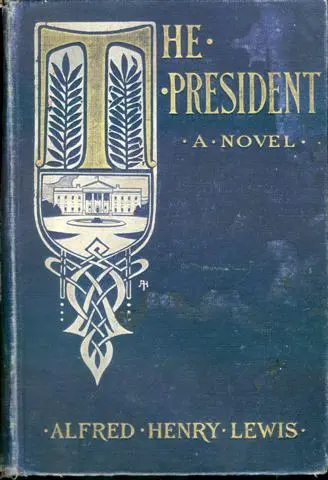
THE CLASSIC COLLECTION · 1904
"The President: A Novel" by Alfred Henry Lewis is a political fiction written in the early 20th century. It explores themes of ambition and power through its main character, Richard Storms, who is entangled in the world of Washington politics and captivated by the beautiful Dorothy Harley. His complex relationships with other characters, including the ambitious Senator Patrick Henry Hanway and the imposing Count Storri, set the stage for a narrative steeped in intrigue and romantic tension. The opening of the novel introduces Richard Storms in his luxurious Washington residence, where he is portrayed as a self-absorbed man seeking a purpose in life. His mundane morning routine contrasts sharply with the arrival of his breakfast and his thoughts of the beautiful Dorothy, whom he saved from an accident in the past. A romantic fascination with her is evident as he cherishes a memento of their encounter, a broken heel from her shoe. Meanwhile, the backdrop of socio-political maneuvering in Washington, as exemplified by the calculating Senator Hanway and the brutish Count Storri, hints at forthcoming conflict as Richard attempts to navigate both his romantic pursuits and the treacherous waters of political ambition. The stage is set for a tale of love, rivalry, and the complexities of power dynamics.
Introduction adapted from the source catalogue; source summaries may be automatically generated.
Free to read · English · 115,181 words · No account needed
MAKE TIME FOR A GOOD BOOK
On by default. Untick to stop anonymous reading totals. Each page counts after 10 seconds in view. How this works.
Anonymous counting is on unless you have switched it off.
"But the father's fortune is not sure," remonstrated Richard. "The father's riches, or the lover's poverty, may vanish in a night."
"We must deal with the present," said Mrs. Hanway-Harley.
Richard pondered the several perplexities of the case.
"If I had a fortune equal to Mr. Harley's, you would not object, madam?"
"It is the only bar I urge," said Mrs. Hanway-Harley suavely.
"Then I am to understand that, should a day come when I can measure wealth with Mr. Harley, I may claim Dorothy as my own?"
Mrs. Hanway-Harley bowed.
"My daughter, however, must not be bound by any promise."
"Your daughter, madam," returned Richard, with a color of pride, "shall never be bound by me. Though I held a score of promises, I would have no wife who did not come to me of her free choice. I do not look on love as a business proposition."
"Older people do," responded Mrs. Hanway-Harley dryly.
"Madam," said Richard, "I have only one more question to ask. What is to be my attitude towards your daughter, while I am searching for that fortune?"
It was here that Mrs. Hanway-Harley made her greatest stroke; she reached Richard where he had no defense.
"Your attitude, Mr. Storms, towards my daughter, I shall leave to you for adjustment as a man of honor."
Richard crossed the street to Dorothy and told her what had passed. Dorothy kissed him, and cried over him, and made a wail against their darkling fate.
"How I wish papa was poor!" cried Dorothy. "I wish he didn't have a dollar!" Then, conscience-stricken: "No, I don't! Poor pop; he doesn't hate money, if I do."
Richard took Dorothy's sweet face between his hands, and looked into her
eyes.
"You will believe me, darling?"
"Yes!"
"Then don't weep, don't worry! I promise that within the year you shall be my wife. I'll find the way to find the money."
"And hear me promise," returned Dorothy. "Money or no money, I'll become your wife what day you will."
Of course, after such a speech, there befell a sweet world and all of foolish tenderness; but, since the scandalized Ajax would not stay to witness it, neither shall you.
Mrs. Hanway-Harley said nothing to Dorothy of her interview with Richard; she appeared to believe that Richard had saved her that labor. There was a kind of sneer in this. Feeling the sneer, Dorothy put no questions; she was willing, in her resentment, to have it understood that Richard had told her. Why should he not?--she who was to be his wife! Dorothy would have been proud to proclaim her troth from the house-tops.
Your reading position is saved on this browser. Take it to another device with a library code. Reading pages adapt to text, rather than matching a printed edition.
Alfred Henry Lewis
Alfred Henry Lewis
Alfred Henry Lewis
Alfred Henry Lewis
BEHIND THE BOOK
This eBook is for the use of anyone anywhere in the United States and most other parts of the world at no cost and with almost no restrictions whatsoever. You may copy it, give it away or re-use it under the terms of the Project Gutenberg License included with this eBook or online at www.gutenberg.org. If you are not located in the United States, you will have to check the laws of the country where you are located before using this eBook. Read the source licence.
The original source file, including credits and licence, is retained by this library. Request an original-format copy at no charge. Please include the book title and Project Gutenberg identifier #18572.
KEEP YOUR CURIOSITY GOING
Coulson Kernahan

Maurice Baring
Frances Wright
Cécile Tormay

Frederic Jesup Stimson

W. H. P. (William Henry Pope) Jarvis