The Black Lion Inn
Alfred Henry Lewis
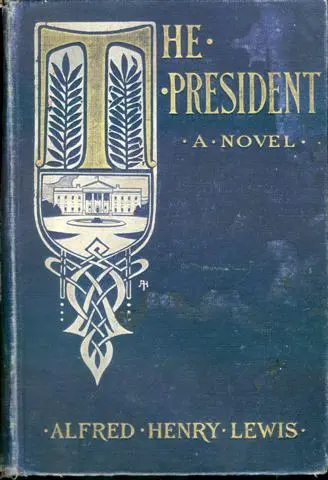
THE CLASSIC COLLECTION · 1904
"The President: A Novel" by Alfred Henry Lewis is a political fiction written in the early 20th century. It explores themes of ambition and power through its main character, Richard Storms, who is entangled in the world of Washington politics and captivated by the beautiful Dorothy Harley. His complex relationships with other characters, including the ambitious Senator Patrick Henry Hanway and the imposing Count Storri, set the stage for a narrative steeped in intrigue and romantic tension. The opening of the novel introduces Richard Storms in his luxurious Washington residence, where he is portrayed as a self-absorbed man seeking a purpose in life. His mundane morning routine contrasts sharply with the arrival of his breakfast and his thoughts of the beautiful Dorothy, whom he saved from an accident in the past. A romantic fascination with her is evident as he cherishes a memento of their encounter, a broken heel from her shoe. Meanwhile, the backdrop of socio-political maneuvering in Washington, as exemplified by the calculating Senator Hanway and the brutish Count Storri, hints at forthcoming conflict as Richard attempts to navigate both his romantic pursuits and the treacherous waters of political ambition. The stage is set for a tale of love, rivalry, and the complexities of power dynamics.
Introduction adapted from the source catalogue; source summaries may be automatically generated.
Free to read · English · 115,181 words · No account needed
MAKE TIME FOR A GOOD BOOK
On by default. Untick to stop anonymous reading totals. Each page counts after 10 seconds in view. How this works.
Anonymous counting is on unless you have switched it off.
"Rub that baby look out of your face, instantly! You are not a child!"
Dorothy stiffened like a grenadier. She remembered Richard; her mother was right; she was not a child, she was a woman, and so the world should find her. Dorothy's eyes began to gleam dangerously, and if Mrs. Hanway-Harley had owned any gift to read faces, she might have hesitated at this pinch.
"What would you have?" said Dorothy, and her tones were as brittle and as devoid of sentimental softness as Mrs. Hanway-Harley's.
"Marriage."
"Marriage with Storri?"
"Dorothy," said Mrs. Hanway-Harley with a sigh, softly returning to the lines she had originally laid out, "Count Storri, in the most delicate way, like the gentleman and nobleman he is, has asked for your hand."
Mrs. Hanway-Harley had read something like this in a magazine, and now reeled it off with tender majesty. When she spoke of Storri she had quite the empress air.
"For my hand!" said Dorothy, beginning to pant.
Mrs. Hanway-Harley looked up; there was a hardness in Dorothy's tone that was not only new, but unpleasant. Down deep in her nature, Dorothy hid those stubborn traits that distinguished her religious ancestor of the gate-post and the water-pan.
"For your hand," repeated Mrs. Hanway-Harley uneasily.
Dorothy making no return, Mrs. Hanway-Harley, after waiting a moment, gave herself to a recount of those glowing advantages promised by such a marriage. Was a nobleman, wealthy, young, handsome, on terms of comradeship with his Czar, to be refused? Half the women in Washington were wild for such an offer. It would place the Harleys on a footing by themselves.
"But I don't love him!" urged Dorothy, as though that had to do with the
question.
At this foolishly unfortunate objection, Mrs. Hanway-Harley was rendered speechless. Then, as notice of Dorothy's white, cold obstinacy began to dawn upon her, she went suddenly into lamentations. To think her child, her only child, should deal her such a blow! Mrs. Hanway-Harley called herself the most ill-treated of parents. She said her best and dearest feelings had been trampled upon. In a shower of tears, and a cataract of complaint, she bemoaned her dark, ungrateful destiny. At this, Dorothy's tears began to flow, and the interview became hysterical.
Mrs. Hanway-Harley was the earlier to recover her balance. Drying her
eyes, she said:
"Disobedient child!"--this was also from the magazine--"since you will not listen to the voice of love, since you will not listen to the voice of reason, you shall listen to the voice of command."
Then, striking a pose that was almost tragic, Mrs. Hanway-Harley told Dorothy she must marry Storri.
Your reading position is saved on this browser. Take it to another device with a library code. Reading pages adapt to text, rather than matching a printed edition.
Alfred Henry Lewis
Alfred Henry Lewis
Alfred Henry Lewis
Alfred Henry Lewis
BEHIND THE BOOK
This eBook is for the use of anyone anywhere in the United States and most other parts of the world at no cost and with almost no restrictions whatsoever. You may copy it, give it away or re-use it under the terms of the Project Gutenberg License included with this eBook or online at www.gutenberg.org. If you are not located in the United States, you will have to check the laws of the country where you are located before using this eBook. Read the source licence.
The original source file, including credits and licence, is retained by this library. Request an original-format copy at no charge. Please include the book title and Project Gutenberg identifier #18572.
KEEP YOUR CURIOSITY GOING
Coulson Kernahan

Maurice Baring
Frances Wright
Cécile Tormay

Frederic Jesup Stimson

W. H. P. (William Henry Pope) Jarvis