The justice of Gideon
Eleanor Gates
THE CLASSIC COLLECTION · 1912
"The Poor Little Rich Girl" by Eleanor Gates is a novel written in the early 20th century. The story revolves around Gwendolyn, a wealthy little girl who grapples with feelings of disappointment and longing as she experiences the complexities of her life surrounded by affluence yet lacking genuine happiness and freedom. The narrative explores her emotional struggles in a world filled with lavishness and the expectations that come with being a rich child. At the start of the novel, Gwendolyn, on the day of her seventh birthday, checks her height against a mark made on a mirror, only to find that she has not grown as she had hoped. This triggers a cascade of emotions leading to disappointment and grief. As she navigates the nursery, her feelings of being overlooked and undervalued surface, especially in the presence of her governess and nursemaid. The opening establishes her yearning for autonomy and emotional connection against the backdrop of her wealthy upbringing, highlighting her isolation in a world that is seemingly perfect yet emotionally unfulfilling.
Introduction adapted from the source catalogue; source summaries may be automatically generated.
Free to read · English · 54,587 words · No account needed
MAKE TIME FOR A GOOD BOOK
On by default. Untick to stop anonymous reading totals. Each page counts after 10 seconds in view. How this works.
Anonymous counting is on unless you have switched it off.
"That depends on where we're going," replied the Policeman, helplessly. "And with the Bird gone, of course I don't know."
"I'll tell you," said the little old gentleman promptly. "First, we
must cross the Glass--"
Gwendolyn gave him a quick glance. Surely he meant cross the grass.
"Yes, the Glass; go on," encouraged the Officer.
"--And find him." Those round dark eyes darted a quick glance at
Gwendolyn.
Jane, capering at his heels, now interrupted. "Find him!" she taunted. "Gwendolyn'll never find her father if she don't listen to me."
He ignored her. "Next," he went on "we'll steer straight for Robin
Hood's Barn."
"Oh!" exclaimed the Policeman "Then we have to go around."
"Everybody has to go around."
Once more Jane broke in. "Gwendolyn," she called, "you'll never find your mother. This precious pair is takin' you the wrong way!"
Gwendolyn paid no heed. Ahead the road divided--to the left in a narrow bridle-path, all loose soil and hoof-prints, and sharp turns; to the right in a level thoroughfare that held a straight course. She touched the little old gentleman's elbow. "Which?" she whispered.
As the parting of the ways was reached, he pointed. And she saw a sign--a sign with an arrow directing travelers to the right. Under the arrow, plainly lettered, were the words:
To the Bear's Den.
Gwendolyn looked her concern. "Do we have to go that road?" she asked
him.
He nodded.
The next moment, with a loud rumbling of the eyes, Jane came alongside. "Oh, dearie," she cried, "you couldn't hire me to go. And I wouldn't like to see you go. I think too much of you, I do indeed."
"Hold your tongue!" ordered the little old gentleman, crossly.
Jane obeyed. Up came a hand, and she seized the tongue-tip in her front mouth. But since there was a second tongue-tip in that back face, she still continued her babbling: "Don't ask me to trapse over the hard pavements on my poor tired feet, dearie, just because you take your notions.... Come, I say! Your mother's nobody, anyhow.... You don't know what you're sayin' or doin', poor thing! You're just wanderin', that's all--just wanderin'."
"I'm wandering in the right direction, anyhow," retorted Gwendolyn, stoutly. And to the little old gentleman, "I'm sorry we're going this way, though. I'm 'fraid of Bears,"--for the sign was past now; the four were on the level thoroughfare.
The Policeman seemed not to have remarked her anxiety. "And after the Den, what do we pass?" he questioned.
"The Big Rock," answered the Man-Who-Makes-Faces.
Your reading position is saved on this browser. Take it to another device with a library code. Reading pages adapt to text, rather than matching a printed edition.
Eleanor Gates
Eleanor Gates
Eleanor Gates
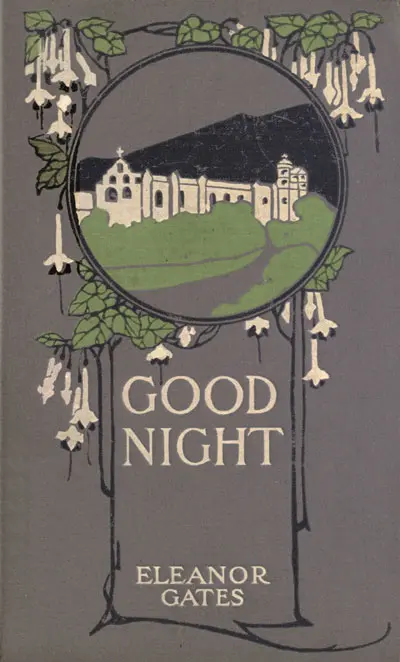
Eleanor Gates
BEHIND THE BOOK
This eBook is for the use of anyone anywhere in the United States and most other parts of the world at no cost and with almost no restrictions whatsoever. You may copy it, give it away or re-use it under the terms of the Project Gutenberg License included with this eBook or online at www.gutenberg.org. If you are not located in the United States, you will have to check the laws of the country where you are located before using this eBook. Read the source licence.
The original source file, including credits and licence, is retained by this library. Request an original-format copy at no charge. Please include the book title and Project Gutenberg identifier #15714.
KEEP YOUR CURIOSITY GOING
Coulson Kernahan

Maurice Baring
Frances Wright
Cécile Tormay
Francis Greenleaf Allinson & Anne C. E. (Anne Crosby Emery) Allinson

Frederic Jesup Stimson