The justice of Gideon
Eleanor Gates
THE CLASSIC COLLECTION · 1912
"The Poor Little Rich Girl" by Eleanor Gates is a novel written in the early 20th century. The story revolves around Gwendolyn, a wealthy little girl who grapples with feelings of disappointment and longing as she experiences the complexities of her life surrounded by affluence yet lacking genuine happiness and freedom. The narrative explores her emotional struggles in a world filled with lavishness and the expectations that come with being a rich child. At the start of the novel, Gwendolyn, on the day of her seventh birthday, checks her height against a mark made on a mirror, only to find that she has not grown as she had hoped. This triggers a cascade of emotions leading to disappointment and grief. As she navigates the nursery, her feelings of being overlooked and undervalued surface, especially in the presence of her governess and nursemaid. The opening establishes her yearning for autonomy and emotional connection against the backdrop of her wealthy upbringing, highlighting her isolation in a world that is seemingly perfect yet emotionally unfulfilling.
Introduction adapted from the source catalogue; source summaries may be automatically generated.
Free to read · English · 54,587 words · No account needed
MAKE TIME FOR A GOOD BOOK
On by default. Untick to stop anonymous reading totals. Each page counts after 10 seconds in view. How this works.
Anonymous counting is on unless you have switched it off.
"Hear that will you, Thomas!" cried Jane. "Mr. Potter never hurried
the best-tastin' ones!"
Thomas gave her a significant stare. "I tell you, a certain person is growin' keen," he said in a low voice.
Jane took Gwendolyn by the arm. "Put all that Johnnie Blake nonsense out of your head," she commanded. "Folks that live in the woods don't know nothin'. They're silly and pokey."
Gwendolyn shook her head with deliberation. "Johnny Blake wasn't pokey," she denied. "He had a willow fishpole, and a string tied to it. And he caught shiny fishes on the end of the string."
"Johnnie Blake!" sniffed Jane. "Oh, I know all about him. Rosa told me. He's a common, poor little boy. And"--severely--"I, for one, can't see why you was ever allowed to play with him!...
"Now, darlin',"--softening--"here we stand fussin', and you ain't even guessed what your presents are. Guess something that's real fine: something you'd like in the city, pettie." She began to unwrap the larger of the packages.
"Oh," said Gwendolyn. "What I'd like in the city. Well,"--suddenly between her brows there came a curious, strained little wrinkle--"I'd like--"
The white paper fell away. A large, round box was disclosed. To it was
tied a small card.
"This is from your papa!" cried Jane. "Oh, let's see what it is!"
The wrinkle smoothed. A smile broke,--like sudden sunlight after clouds, and shadow. Then there poured forth all that had filled her heart during the past months:
"I'd like to eat at the grown-up table with my fath-er and my moth-er," she declared; "and I don't want to have a nurse any more like a baby! and I want to go to day-school."
Jane gasped, and her big hands fell from the round box. Thomas stared, and reddened even to his ears, which were large and over-prominent. To both, the project cherished so long and constantly was in the nature of a bombshell.
"Oh-ho!" said Jane, recovering herself after a moment. "So me and Thomas are to be thrown out of our jobs, are we?"
Gwendolyn looked mild surprise. "But you don't like to be here," she reminded. "And you and Thomas wouldn't have to work any more; you could just play all the time." She smiled up at them encouragingly.
Thomas eyed Jane. "If we ain't careful," he warned in a low voice, "and let a certain party talk too much at headquarters--"
The other nodded, comprehending "I'll look sharp," she promised. "Royle will, too." Whereupon, with a forced change to gayety, and a toss of the white card aside, she lifted the cover of the box and peeked in.
Your reading position is saved on this browser. Take it to another device with a library code. Reading pages adapt to text, rather than matching a printed edition.
Eleanor Gates
Eleanor Gates
Eleanor Gates
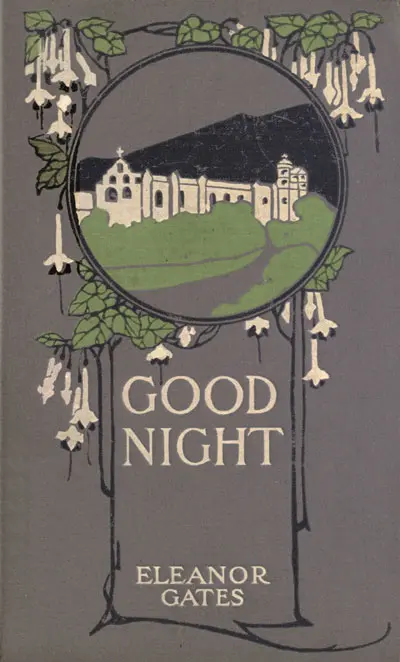
Eleanor Gates
BEHIND THE BOOK
This eBook is for the use of anyone anywhere in the United States and most other parts of the world at no cost and with almost no restrictions whatsoever. You may copy it, give it away or re-use it under the terms of the Project Gutenberg License included with this eBook or online at www.gutenberg.org. If you are not located in the United States, you will have to check the laws of the country where you are located before using this eBook. Read the source licence.
The original source file, including credits and licence, is retained by this library. Request an original-format copy at no charge. Please include the book title and Project Gutenberg identifier #15714.
KEEP YOUR CURIOSITY GOING
Coulson Kernahan

Maurice Baring
Frances Wright
Cécile Tormay
Francis Greenleaf Allinson & Anne C. E. (Anne Crosby Emery) Allinson

Frederic Jesup Stimson