THE CLASSIC COLLECTION✦The Pony Rider Boys on the Blue Ridge; or, A Lucky Find in the Carolina MountainsCLASSIC FREE BOOKS
The Pony Rider Boys on the Blue Ridge; or, A Lucky Find in the Carolina Mountains
Frank Gee Patchin
THE CLASSIC COLLECTION · 1924
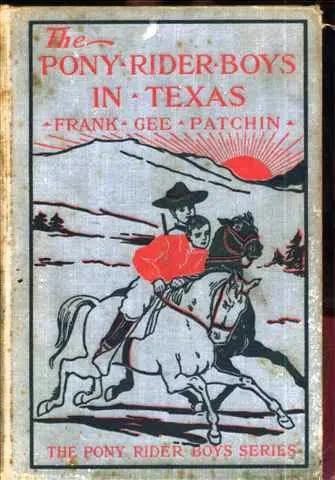
"The Pony Rider Boys in New England; or, An Exciting Quest in the Maine Wilderness" by Frank Gee Patchin is a novel written in the early 20th century. The book follows a group of adventurous boys, including the main character Tad Butler, as they prepare for and embark on an exciting summer trip to the Maine wilderness. Themes of friendship, bravery, and outdoor survival are likely prevalent throughout their journey. The opening of the story introduces Tad Butler, who is grappling with the disappointment of not being able to join his friends on a trip to the Maine Woods due to his mother's illness. As he interacts with his companions—Walter Perkins, Ned Rector, and the humorous "Chunky" Brown—their talk about preparations and their camaraderie highlights their excitement and plans for adventure. Tad's sense of responsibility for his mother contrasts sharply with his friends' eagerness to venture into the wild, setting the stage for the unfolding events as they journey toward the Maine wilderness.
Introduction adapted from the source catalogue; source summaries may be automatically generated.
Free to read · English · 48,081 words · No account needed
MAKE TIME FOR A GOOD BOOK
On by default. Untick to stop anonymous reading totals. Each page counts after 10 seconds in view. How this works.
Anonymous counting is on unless you have switched it off.
"Let's see. Well, suppose I talk to you about campfires. Come over by the fire and sit down. Our friend, Master Stacy, is weary after his bee experience, and I don't know that I blame him," said Vaughn with a merry twinkle in his eyes.
"I'll warrant he isn't half as tired as the bees that stung him.
They surely will have contracted the hook-worm disease," declared
Ned.
"Now we are ready to hear about the campfire," reminded Tad, after they had seated themselves. The Professor, who had been reading, laid down his book to listen.
"As you know from sad experience, some green woods will not burn," began the guide. "Leaving aside the woods that will not burn, I'll mention some of those that will do good service when green. Hickory is the best of all. It makes a hot fire, lasts a long time, and burns down to a bed of coals that will keep up an even heat for hours. Next in value are the chestnut, oak and dogwood. Black birch is excellent, too, doing its own blowing."
"Blowing?" questioned the Professor.
"Yes, sir. That means that the oil in the birch assists its combustion, so that the wood needs no coaxing to make it burn. Sugar maple is good, too, but it is too valuable a tree to waste. Locust and mulberry are good fuel. Now white ash makes one of the first-class campfire fuels. It is easy to cut and tote and catches fire readily."
"What about kindling?" interjected Tad.
"Yes, kindling," urged Stacy. "I've burned up half of my old shirts
trying to start fires."
"The birch bark is one of the best," answered the guide. "Besides, it makes good torches. It is full of resinous oil, blazes up at once, will burn in any wind, and even wet sticks may be kindled with it."
"That's new," nodded Butler.
"Stacy, there's your job. You won't have to sacrifice any more shirts in trying to start a campfire," said Ned. "Your job, from now on, is peeling birch bark for kindling."
"Pitch pine, of course, affords the best knots," continued Cale. "Splits from a stump whose outside has been burned are rich in resin. Don't pick up sticks from the ground, but rather those from the down wood. Ordinarily you will find fine dry wood in a tree that has been shivered by lightning."
"Br-r-r!" shivered the fat boy.
"To get to our subject--fire--you must remember that more necessary than kindling or firewood is air. What I mean is, don't jumble your fuel together any old way, but build up a systematic structure so the air can draw under it and upward through the pile."
Your reading position is saved on this browser. Take it to another device with a library code. Reading pages adapt to text, rather than matching a printed edition.
Frank Gee Patchin
Frank Gee Patchin
Frank Gee Patchin
Frank Gee Patchin
BEHIND THE BOOK
This eBook is for the use of anyone anywhere in the United States and most other parts of the world at no cost and with almost no restrictions whatsoever. You may copy it, give it away or re-use it under the terms of the Project Gutenberg License included with this eBook or online at www.gutenberg.org. If you are not located in the United States, you will have to check the laws of the country where you are located before using this eBook. Read the source licence.
The original source file, including credits and licence, is retained by this library. Request an original-format copy at no charge. Please include the book title and Project Gutenberg identifier #45117.
KEEP YOUR CURIOSITY GOING
Coulson Kernahan

Maurice Baring
Frances Wright
Cécile Tormay

Frederic Jesup Stimson

W. H. P. (William Henry Pope) Jarvis