
Stories of Intellect
Rebecca Harding Davis & Thomas De Quincey & Charles Dickens & Nathaniel Hawthorne & Edward Bulwer Lytton, Baron Lytton & Edgar Allan Poe & Harriet Elizabeth Prescott Spofford
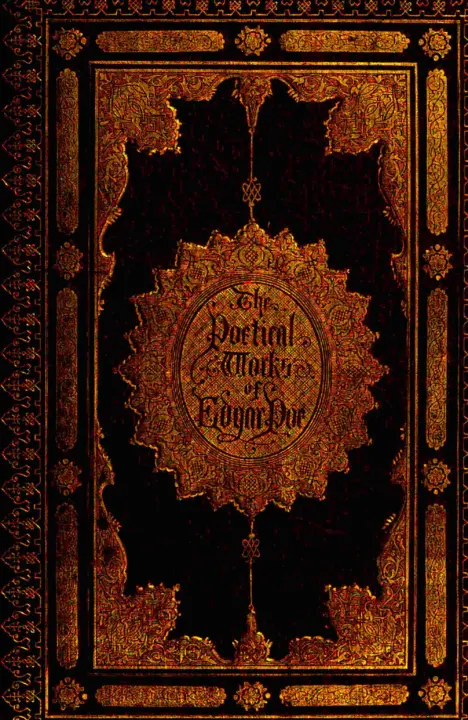
THE CLASSIC COLLECTION · 1857
The poetical works of Edgar Allan Poe by Edgar Allan Poe. Explore this classic work in a free online edition. Subjects include Fantasy poetry, American; American poetry -- 19th century. Read the locally hosted text below, adjust the reading display, and continue where you left off.
Introduction adapted from the source catalogue; source summaries may be automatically generated.
Free to read · English · 31,776 words · No account needed
MAKE TIME FOR A GOOD BOOK
On by default. Untick to stop anonymous reading totals. Each page counts after 10 seconds in view. How this works.
Anonymous counting is on unless you have switched it off.
This was John P. Kennedy, the novelist, author of “Horse Shoe Robinson,” and eminent as a lawyer and a statesman. To this gentleman Poe came on hearing of his success, poorly clad, pale, and emaciated; he told his story, and his ambition, and at once gained the confidence and affection of the more prosperous author. He was in utter want, and had not yet received the amount to which he was entitled for his story. Mr. Kennedy took him by the hand, furnished him with means to render him immediately comfortable, and enabled him to make a respectable appearance; and in a short time afterwards procured for him a situation as editor of the “Literary Messenger,” a monthly magazine published in Richmond. In his new place he continued for a while to work with great industry, and wrote a great number of reviews and tales; but he fell into his old habits, and after a debauch quarrelled with the proprietor of the “Messenger,” and was dismissed.
It was one of the strange peculiarities of Poe to make humble and penitent appeals for forgiveness and reconciliation to those he had offended by his abuse and insolence, and he was no sooner conscious of his error in quarrelling with the publisher of the “Messenger” than he endeavoured to regain the position he had lost. He was successful; and though he often fell into his old habits, yet he retained his connexion with the work until January, 1837, when he abandoned the “Messenger” and left Richmond for New York. During his last residence in Richmond, while working for a salary of ten dollars a week, he married his cousin, Virginia Clemm, a young, amiable, and gentle girl, without fortune or friends, and as ill-calculated as himself to buffet the waves of an adverse fortune. In New York he wrote for the literary periodicals, but soon removed to Philadelphia, where he was employed as editor of “Burton’s Gentleman’s Magazine;” he continued but a year in his post, and after several quarrels with the proprietor of the magazine, left him to establish a magazine of his own. To have a magazine of his own, which he could manage as he pleased, was always the great ambition of his life. He had invented a title, selected a motto, written an introduction, and made the entire plans for the great work, which was to be called the “Stylus;” it was the chimera which he nursed, the castle in the air which he longed for, the rainbow of his cloudy hopes. But he did not succeed in establishing it then, and was soon installed as editor of “Graham’s Magazine.” As a matter of course he quarrelled with Graham, and then went to New York, where he engaged as a sub-editor on the “Mirror,” a daily paper, of which his friend Willis was editor. But he did not remain long at this employment, which was wholly unsuited to him, and he left the “Mirror” without quarrelling with the proprietor. During his engagements with these different periodicals, he had written some of his finest prose tales, had published an anonymous work in the style of Robinson Crusoe, entitled the “Adventures of Arthur Gordon Pym,” and a collection of his tales in a volume, which he called “Tales of the Grotesque and the Arabesque,” and gained another prize by his story of the Gold Bug. He was beginning to be known as a fierce and terrible critic, rather than as a poet or a writer of tales, when the publication of his poem of the Raven in the “American Review,” a New York monthly magazine, first attracted the attention of the literary world to his singular and powerful genius. Up to the appearance of this wild fantasy, he had not been generally recognised as a poet, and had known nothing of society. But he became at once a lion, and his writings were eagerly sought after by publishers. The prospect lay bright before him; he abandoned for awhile the vices which so fearfully beset him; he was living quietly in a pleasant rural neighbourhood in Westchester, near the city, with his delicate wife and her mother, and a brilliant future appeared to be in store for him. But he could never keep clear from magazine editing, and he joined Mr. C. F. Briggs in publishing the “Broadway Journal,” a literary weekly periodical; but the inevitable quarrel ensued, and this project was abandoned at the end of a year. It was while editing the “Broadway Journal” that he engaged in furious onslaught upon Longfellow, whom he accused of plagiarising from his poems, and, at the same time, involved himself in numberless disputes and quarrels with other authors. But he also gained the affection and admiration of many estimable literary people, some of whom he alienated by appearing before them when in a state of intoxication. He delivered a lecture on poetry, but attracted no hearers, and he was so chagrined by his disappointment, that he fell again into his old habits, and disgusted his new friends by his gross misconduct; he involved himself in another quarrel with some of the literati of Boston, and to show his contempt for them, went there and delivered a poem in public, which he pretended to have written in his tenth year. On his return to New York he was again reduced to great straits; and in 1848 he advertised a series of lectures, in order to raise sufficient means to put into execution his long-cherished plan of a magazine; but he delivered only one lecture on the Cosmogony of the Universe, which was afterwards published under the title of “Eureka, a Prose Poem.” His wife had died the year previously, and during her illness he was reduced to such extremities that public appeals, which were generously responded to, were made in his behalf by the papers of New York.
Your reading position is saved on this browser. Take it to another device with a library code. Reading pages adapt to text, rather than matching a printed edition.
Rebecca Harding Davis & Thomas De Quincey & Charles Dickens & Nathaniel Hawthorne & Edward Bulwer Lytton, Baron Lytton & Edgar Allan Poe & Harriet Elizabeth Prescott Spofford
Edgar Allan Poe
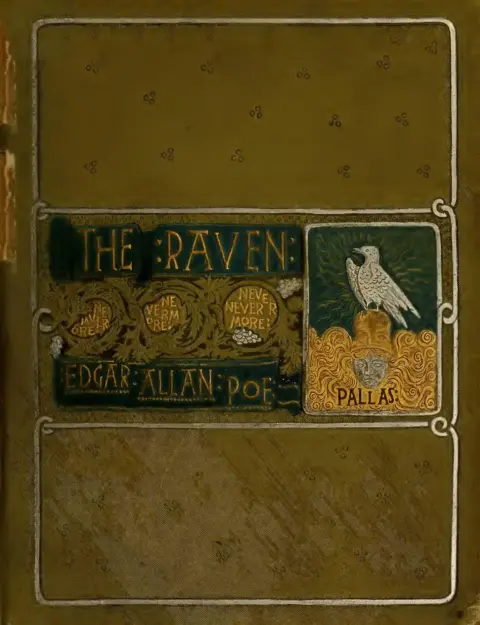
Edgar Allan Poe
Edgar Allan Poe
BEHIND THE BOOK
This eBook is for the use of anyone anywhere in the United States and most other parts of the world at no cost and with almost no restrictions whatsoever. You may copy it, give it away or re-use it under the terms of the Project Gutenberg License included with this eBook or online at www.gutenberg.org. If you are not located in the United States, you will have to check the laws of the country where you are located before using this eBook. Read the source licence.
The original source file, including credits and licence, is retained by this library. Request an original-format copy at no charge. Please include the book title and Project Gutenberg identifier #79019.
KEEP YOUR CURIOSITY GOING

Maurice Baring
Francis Greenleaf Allinson & Anne C. E. (Anne Crosby Emery) Allinson

Eric Mackay
Edmund Gosse
Sophia Margaretta Hensley
Stuart Dodgson Collingwood