
Reflections on the death of a porcupine and other essays
D. H. (David Herbert) Lawrence
THE CLASSIC COLLECTION · 1926
"The Plumed Serpent" by D. H. Lawrence is a political, mythological, and romance novel published in 1926. Set in post-revolutionary Mexico, it follows Kate Leslie, an Irish tourist who becomes entangled with two charismatic men leading a radical religious movement. Don Ramón and General Don Cipriano seek to abolish Christianity and restore ancient Aztec gods to power. As Kate is drawn deeper into their world, she faces a fateful choice about marriage and her role in their dangerous vision for Mexico's spiritual transformation.
Introduction adapted from the source catalogue; source summaries may be automatically generated.
Free to read · English · 173,772 words · No account needed
MAKE TIME FOR A GOOD BOOK
On by default. Untick to stop anonymous reading totals. Each page counts after 10 seconds in view. How this works.
Anonymous counting is on unless you have switched it off.
These men wanted to take her will away from her, as if they wanted to deny her the light of day.
“I must be going home now,” she said. “The sun will be setting.”
“Ya va?” said Cipriano, in his soft, velvety Indian voice, with a note of distant surprise and reproach. “Will you go already?”
“Oh, no, Señora!” cried Carlota. “Stay until to-morrow. Oh, yes, stay until to-morrow, with me.”
“They will expect us home,” she said, wavering.
“Ah, no! I can send a boy to say you will come to-morrow. Yes? You will stay? Ah, good, good!”
And she laid her hand caressively on Kate’s arm, then rose to hurry
away to the servants.
Cipriano had taken out his cigarette case. He offered it to Kate.
“Shall I take one?” she said. “It is my vice.”
“Do take one,” he said. “It isn’t good, to be perfect.”
“It isn’t, is it?” she laughed, puffing her cigarette.
“Now would you call it peace?” he asked with incomprehensible irony.
“Why?” she cried.
“Why do white people always want peace?” he asked.
“Surely peace is natural! Don’t all people want it? Don’t you?”
“Peace is only the rest after war,” he said. “So it is not more natural than fighting: perhaps not so natural.”
“No, but there is another peace: the peace that passes all understanding. Don’t you know that?”
“I don’t think I do,” he said.
“What a pity!” she cried.
“Ah!” he said. “You want to teach me! But to me it is different. Each man has two spirits in him. The one is like the early morning in the time of rain, very quiet, and sweet, moist, no?--with the mocking-bird singing, and birds flying about, very fresh. And the other is like the dry season, the steady, strong hot light of the day, which seems as if it will never change.”
“But you like the first better,” she cried.
“I don’t know!” he replied. “The other lasts longer.”
“I am sure you like the fresh morning better,” she said.
Your reading position is saved on this browser. Take it to another device with a library code. Reading pages adapt to text, rather than matching a printed edition.
D. H. (David Herbert) Lawrence
D. H. (David Herbert) Lawrence
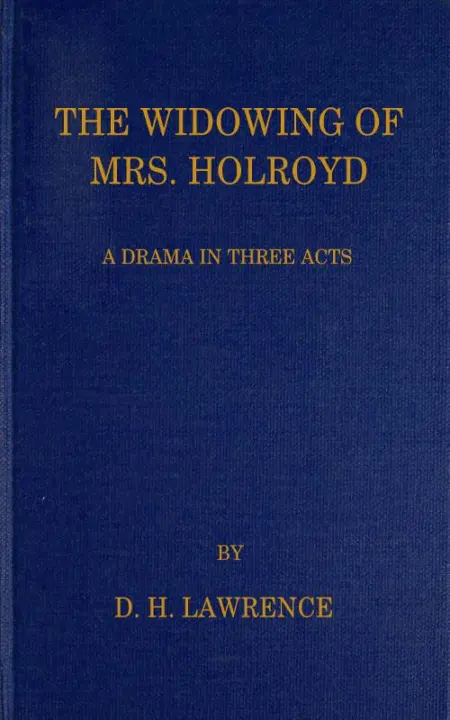
D. H. (David Herbert) Lawrence
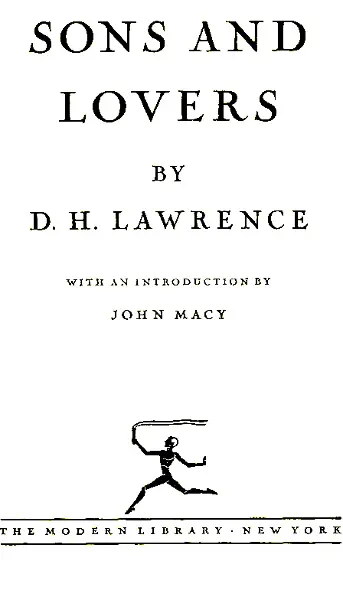
D. H. (David Herbert) Lawrence
BEHIND THE BOOK
This eBook is for the use of anyone anywhere in the United States and most other parts of the world at no cost and with almost no restrictions whatsoever. You may copy it, give it away or re-use it under the terms of the Project Gutenberg License included with this eBook or online at www.gutenberg.org. If you are not located in the United States, you will have to check the laws of the country where you are located before using this eBook. Read the source licence.
The original source file, including credits and licence, is retained by this library. Request an original-format copy at no charge. Please include the book title and Project Gutenberg identifier #73677.
KEEP YOUR CURIOSITY GOING
Coulson Kernahan

Maurice Baring
Frances Wright
Cécile Tormay

Frederic Jesup Stimson

W. H. P. (William Henry Pope) Jarvis