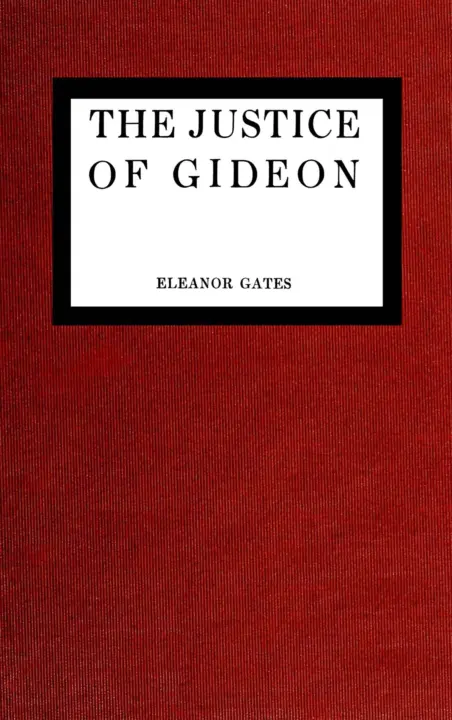
The justice of Gideon
Eleanor Gates
THE CLASSIC COLLECTION · 1906
"The Plow-Woman" by Eleanor Gates is a novel written in the early 20th century. This work chronicles the experiences of Dallas Lancaster, a determined young woman adapting to life on the Dakota prairie in the face of challenges that come with homesteading, family struggles, and the complexities of community life during a time of expansion in the American West. The story examines themes of resilience, responsibility, and the clash between the encroaching railroad and the lives of settlers. At the start of the narrative, we meet Dallas, who is diligently plowing their new land with her mules, Ben and Betty, as winter approaches. The opening chapter introduces her family, including her father Evan, a crippled former railroad worker, and her delicate younger sister, Marylyn. The family's hopes hinge on their claim's potential value because of the imminent arrival of the railroad, which Dallas worries will disrupt their hard-earned life. As Dallas handles her plowing and interacts with her surroundings, the narrative builds a sense of both the arduous labor required for homesteading and the subtle shifts in their circumstances, foreshadowing conflict that may arise from their precarious position in the frontier. The arrival of outsiders, including a storekeeper named John Lounsbury, hints at evolving relationships and possible tensions in this tightly-knit community.
Introduction adapted from the source catalogue; source summaries may be automatically generated.
Free to read · English · 89,168 words · No account needed
MAKE TIME FOR A GOOD BOOK
On by default. Untick to stop anonymous reading totals. Each page counts after 10 seconds in view. How this works.
Anonymous counting is on unless you have switched it off.
As Oliver talked, his woe-begone face had grown fierce and dark. Now, he arose, lifting clenched fists. "Murder," he cried; "under my very nose, and against a household that I had sworn to guard. Speak, Matthews, speak!"
Matthews screwed up his mouth thoughtfully and looked into space. "Beginning the ev'ning after the command left?" he said. "Let me see. Why, I ain't crossed since the Colonel left."
"Account for your time," repeated Oliver.
"I messed at Blakely's that night. Afterward, me and Kippis had a little
game."
"What game?"
"Cards."
"Ah!" At once, Oliver sent for the sutler and the sergeant, and, waiting for them, tramped up and down. When the men came, he halted and with pointed finger asked Matthews to repeat his story. The interpreter did so.
"And how long did that game last?" demanded Oliver.
Without looking in Kippis' direction, the interpreter answered. "Till
revelly," he said.
Fraser grunted, the surgeon smiled broadly. But the captain frowned.
"Of that, later," he said significantly. "Kippis?"
The sergeant stepped forward. "Hit's hall true, sir," he faltered. It was Kippis' misfortune always to look more guilty than he was. With Oliver's angry gaze upon him, he flushed redder than fire.
The captain was only half satisfied. He turned to the sutler. "And
you, Blakeley?"
The sutler had a round, jolly figure--a figure that was a living advertisement of the fat-producing quality of his edible wares. At Oliver's question that figure gave a startled bounce, like a kernel of corn on a hot grid. "True, sir, true," he vowed huskily, and coughed in apprehension behind a plump hand.
The captain looked keenly from man to man. "Very well," he said. Those twelve hours accounted for, Matthews was shown innocent of planting the pole. "Tell me what you did yesterday from revelly on."
"Slept till stables."
"I know that's so," said Fraser.
"After that?" Oliver asked.
"I goes into the stockade. Little Thief was carving his bride."
The captain glanced at Fraser. The latter nodded back.
"I remember," said Oliver, slowly. "Then----?"
"Cards till revelly."
The listening officers laughed.
But there was no softening of the captain's face. "Who played with
you?"
Matthews indicated the sutler and the sergeant by a sideways move of the head. "Them two," he answered.
"Blakely?"
"True--true." And Blakely gave another bounce.
"Sergeant?"
"True's far's Hi know, sir."
The thirty-six hours were now covered. Oliver sat down. "That'll do. I want The Squaw and the men who have been on duty at the stockade since the command left. Matthews, you may go."
Matthews bowed, Blakely and the sergeant saluted, and the three withdrew. Outside, beyond hearing, they exchanged congratulatory shakes of the hand.
Your reading position is saved on this browser. Take it to another device with a library code. Reading pages adapt to text, rather than matching a printed edition.
Eleanor Gates
Eleanor Gates
Eleanor Gates
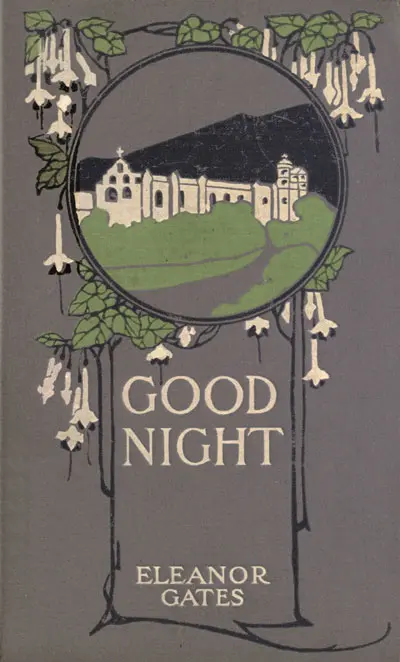
Eleanor Gates
BEHIND THE BOOK
This eBook is for the use of anyone anywhere in the United States and most other parts of the world at no cost and with almost no restrictions whatsoever. You may copy it, give it away or re-use it under the terms of the Project Gutenberg License included with this eBook or online at www.gutenberg.org. If you are not located in the United States, you will have to check the laws of the country where you are located before using this eBook. Read the source licence.
The original source file, including credits and licence, is retained by this library. Request an original-format copy at no charge. Please include the book title and Project Gutenberg identifier #31139.
KEEP YOUR CURIOSITY GOING
Cécile Tormay

Moritz Busch
Coulson Kernahan
John L. Ransom

Maurice Baring
Frances Wright