
Lying lips
William Le Queux
THE CLASSIC COLLECTION · 1900
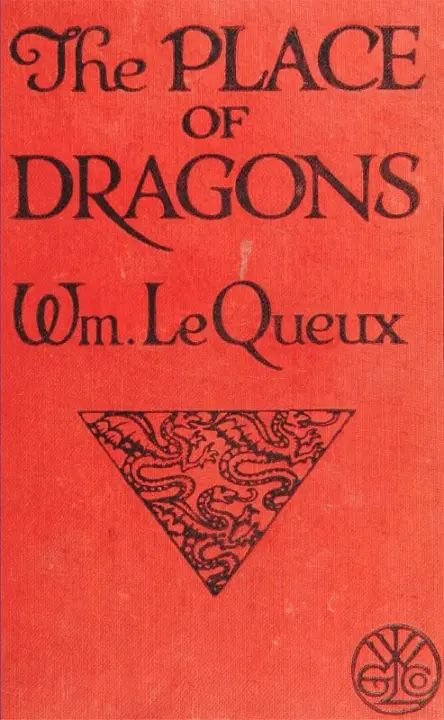
"The Place of Dragons: A Mystery" by William Le Queux is a detective novel written in the early 20th century. The story revolves around Herbert Vidal, an investigator of crime, who is drawn into a puzzling case involving the mysterious death of a wealthy old man named Vernon Gregory. The narrative unfolds in the seaside town of Cromer, where Vidal becomes intertwined with a series of eccentric characters and peculiar events that suggest deeper, hidden motives behind Gregory's passing and the reappearance of his nephew. The opening of the novel introduces Vidal and Major Keppell, who discuss the curious circumstances of Gregory's habitual morning walks and his sudden death, found early in the morning by a coast-guard. As Vidal investigates further, he discovers that Gregory might not even be who he claimed, leading to a complexity of identities involving his nephew, Edward Craig. These initial chapters not only establish an intriguing setting but also pose numerous questions about the relationships between these characters, hinting at deception and a web of secrets yet to be unraveled.
Introduction adapted from the source catalogue; source summaries may be automatically generated.
Free to read · English · 78,223 words · No account needed
MAKE TIME FOR A GOOD BOOK
On by default. Untick to stop anonymous reading totals. Each page counts after 10 seconds in view. How this works.
Anonymous counting is on unless you have switched it off.
"Yes, sir. But there'll be no harm in watching the trains, will there?" my man remarked. "If he went in a taxi he might leave by train."
"True," I said, and after a few seconds' reflection, added, "Yes. We'll
try the trains."
So, on the night of the twenty-ninth, at about nine o'clock in the evening, I took up my post in the small arcade which formed the exit of the station and there waited patiently.
I was in a shabby tweed suit, with patched boots, and a cloth golf-cap, presenting the appearance of a respectable workman, as I smoked my short briar-pipe and idled over the Evening News.
As each train arrived I eagerly scanned the emerging passengers, while pretending to look in the shop window, but I saw nobody whom I knew.
The expression, "Where the two C's meet," kept running through my mind as I stood there in impatient inactivity. It was already past nine, and, in three-quarters of an hour, the fateful meeting, for somehow I felt that it was a fateful meeting, would be held.
The two "C's." The idea suddenly flashed across my mind, whether the spot indicated could be the junction of two roads, or streets, the names of which commenced with "C." Yet, how could I satisfy myself? If I searched Ealing again for roads commencing with a "C," I could only do so in daylight, too late to learn what I so dearly wished.
Of a porter I inquired the time of arrival of the next underground train and found that I had eight minutes. So I dashed along to the Feathers Hotel, where I obtained a map of the Ealing district and eagerly scanned it to find streets commencing with "C."
For some minutes I was unsuccessful, until of a sudden I noticed Castlebar Road, and examining the map carefully saw, to my excitement, that at an acute angle it joined another road, called Carlton Road, a triangular open space lying between the two thoroughfares.
It was the spot in Ealing where the two C's met!
I glanced at the clock.
It still wanted a quarter to ten, therefore I drained my glass hastily and, leaving the hotel, struck across the small open space opposite the station, in which, in a direct line, lay the junction of the two roads.
The evening was dark and sultry, with every indication of a thunderstorm. I remembered Rayner's vigil, but alas! had no time to go to him and explain my altered plans.
Along the dark, rather ill-lit, suburban road I hurried until, before me, I saw a big electric-light standard with four great inverted globes.
It showed a parting of the ways.
Your reading position is saved on this browser. Take it to another device with a library code. Reading pages adapt to text, rather than matching a printed edition.
William Le Queux
William Le Queux
William Le Queux
William Le Queux
BEHIND THE BOOK
This eBook is for the use of anyone anywhere in the United States and most other parts of the world at no cost and with almost no restrictions whatsoever. You may copy it, give it away or re-use it under the terms of the Project Gutenberg License included with this eBook or online at www.gutenberg.org. If you are not located in the United States, you will have to check the laws of the country where you are located before using this eBook. Read the source licence.
The original source file, including credits and licence, is retained by this library. Request an original-format copy at no charge. Please include the book title and Project Gutenberg identifier #40434.
KEEP YOUR CURIOSITY GOING
Coulson Kernahan

Maurice Baring
Frances Wright
Cécile Tormay

Frederic Jesup Stimson

W. H. P. (William Henry Pope) Jarvis