
Lying lips
William Le Queux
THE CLASSIC COLLECTION · 1900
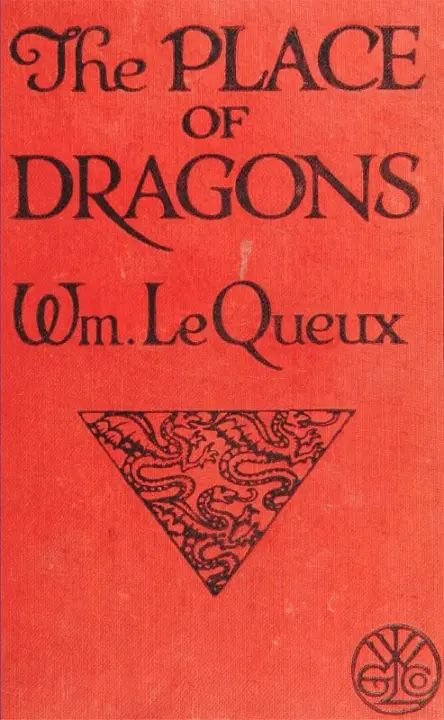
"The Place of Dragons: A Mystery" by William Le Queux is a detective novel written in the early 20th century. The story revolves around Herbert Vidal, an investigator of crime, who is drawn into a puzzling case involving the mysterious death of a wealthy old man named Vernon Gregory. The narrative unfolds in the seaside town of Cromer, where Vidal becomes intertwined with a series of eccentric characters and peculiar events that suggest deeper, hidden motives behind Gregory's passing and the reappearance of his nephew. The opening of the novel introduces Vidal and Major Keppell, who discuss the curious circumstances of Gregory's habitual morning walks and his sudden death, found early in the morning by a coast-guard. As Vidal investigates further, he discovers that Gregory might not even be who he claimed, leading to a complexity of identities involving his nephew, Edward Craig. These initial chapters not only establish an intriguing setting but also pose numerous questions about the relationships between these characters, hinting at deception and a web of secrets yet to be unraveled.
Introduction adapted from the source catalogue; source summaries may be automatically generated.
Free to read · English · 78,223 words · No account needed
MAKE TIME FOR A GOOD BOOK
On by default. Untick to stop anonymous reading totals. Each page counts after 10 seconds in view. How this works.
Anonymous counting is on unless you have switched it off.
"I certainly should, Signore, if I were you," was his polite answer. "Besides they are wanted in England, you say, therefore it would be better to arrest them on the English steamer, or on their arrival in Dover, and thus avoid the long formalities of extradition. Our Government, as you know, never gives up criminals to England."
Instantly I realized the soundness of his argument, and, thanking him, we both climbed back into the wagon-lit we had occupied, and were soon slowly entering the black, stifling tunnel.
Need I further describe that eager, anxious journey, save to say that when next day we traversed the Ceinture in Paris, and arrived from the Gare de Lyon, at the Gare du Nord, we kept a vigilant and expectant watch, for it was there that the two men might join our train. Our watch, however, proved futile. They might have joined the ordinary express from Paris to Calais which had left half an hour before us--ours being a train-de-luxe. So we possessed ourselves in patience till at length, after a halt at Calais-Ville, we slowly drew up on the quay near where the big white Dover boat was lying.
The soft felt hat I had bought in Genoa, I pulled over my eyes, and then rushed along the gangway, and on board, with Fournier at my side, making a complete tour of the vessel, peeping into every cabin, and in every hole and corner, to discover the fugitives.
Already the gangway was up, and the three blasts sounded upon the siren announcing the departure of the boat. Therefore the pair, if on board, could not now escape.
Throughout the hour occupied in the crossing I was ever active, and when we were moored beside the pier in Dover Harbour, I stood at the gangway to watch every one leave.
Yet all my efforts were, alas! in vain.
They had evidently changed their route to London a second time, and had travelled from Bâle to Brussels and Ostend!
The thought occurred to me as I stood watching the last passengers leaving the steamer. If they had travelled direct by way of Ostend, then they would be seated in the train for Charing Cross, for the Ostend boat had been in half an hour, we were told.
The train, one of those gloomy, grimy, South-Eastern "expresses," was waiting close by. Therefore I ran frantically from end to end, peering into each carriage, but, to my dismay, the men I sought were not there!
So Fournier and I entered a first-class compartment and, full of bitter disappointment, travelled up to Charing Cross, where we arrived about seven o'clock.
Your reading position is saved on this browser. Take it to another device with a library code. Reading pages adapt to text, rather than matching a printed edition.
William Le Queux
William Le Queux
William Le Queux
William Le Queux
BEHIND THE BOOK
This eBook is for the use of anyone anywhere in the United States and most other parts of the world at no cost and with almost no restrictions whatsoever. You may copy it, give it away or re-use it under the terms of the Project Gutenberg License included with this eBook or online at www.gutenberg.org. If you are not located in the United States, you will have to check the laws of the country where you are located before using this eBook. Read the source licence.
The original source file, including credits and licence, is retained by this library. Request an original-format copy at no charge. Please include the book title and Project Gutenberg identifier #40434.
KEEP YOUR CURIOSITY GOING
Coulson Kernahan

Maurice Baring
Frances Wright
Cécile Tormay

Frederic Jesup Stimson

W. H. P. (William Henry Pope) Jarvis