
Lying lips
William Le Queux
THE CLASSIC COLLECTION · 1900
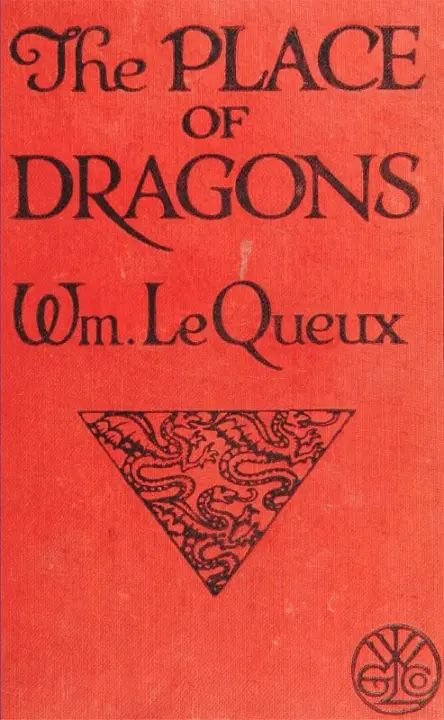
"The Place of Dragons: A Mystery" by William Le Queux is a detective novel written in the early 20th century. The story revolves around Herbert Vidal, an investigator of crime, who is drawn into a puzzling case involving the mysterious death of a wealthy old man named Vernon Gregory. The narrative unfolds in the seaside town of Cromer, where Vidal becomes intertwined with a series of eccentric characters and peculiar events that suggest deeper, hidden motives behind Gregory's passing and the reappearance of his nephew. The opening of the novel introduces Vidal and Major Keppell, who discuss the curious circumstances of Gregory's habitual morning walks and his sudden death, found early in the morning by a coast-guard. As Vidal investigates further, he discovers that Gregory might not even be who he claimed, leading to a complexity of identities involving his nephew, Edward Craig. These initial chapters not only establish an intriguing setting but also pose numerous questions about the relationships between these characters, hinting at deception and a web of secrets yet to be unraveled.
Introduction adapted from the source catalogue; source summaries may be automatically generated.
Free to read · English · 78,223 words · No account needed
MAKE TIME FOR A GOOD BOOK
On by default. Untick to stop anonymous reading totals. Each page counts after 10 seconds in view. How this works.
Anonymous counting is on unless you have switched it off.
Fournier suffered from sea-sickness, so did Mr. Veale's second daughter, but we kept doggedly on, snatching hasty meals and performing the monotonous, soul-killing work of stoking. The run was as hard a strain as ever had been put upon the engines of the Viking, and I knew that the engineer was in hourly dread of their breaking down under it.
If she did, then all our efforts would be in vain.
So he alternately nursed them, and urged them along through the long, angry waves which had now arisen.
Another long and weary night passed, and again we both steamed along with all lights out, a dangerous proceeding now that we were right in the track of the shipping. Then, when morning broke, we found we were off the yellow Ligurian coast, close to Savona, and heading, as our captain had predicted, for Genoa. The race became fiercely contested. We stood on deck full of excitement. Even Fournier shook off his sea-sickness.
Soon the high, square lighthouse came into view through the haze, and we then put on all the speed of which we were capable in a vain endeavour to get closer to the fugitives. But again the black smoke trailed out upon the horizon, and suddenly rounding the lighthouse, they were lost to view.
At last we, too, rounded the end of the Mole, and entered the harbour where the Carlo Alberta had moored three-quarters of an hour earlier. Fournier instantly invoked the aid of the dock police and, with them, we boarded the vessel, only, alas! to find that its owner and his English guest had landed and left, leaving orders to the captain to proceed to Southampton.
The vessel was, we found, spick and span, luxuriously appointed, and tremendously swift, though, on that run across the Mediterranean, one of the engines had been under repair when the Count and his friend had so unexpectedly come on board, and the other was working indifferently.
The captain, a dark-bearded, pleasant-faced Englishman from Portsmouth, believed that his master had dashed to catch the express for Rome. He had, he said, heard him speaking with Mr. Vernon as to whether they could catch it.
"Did they use the wireless apparatus on board?" I asked quickly.
"Once, sir," was the captain's reply. "The Comte was in the wireless cabin last night for nearly an hour. He's always experimenting."
"You don't know if he sent any messages--eh?"
"Oh, yes. He sent some, for I heard them, but I didn't trouble to try to
read the sounds."
Your reading position is saved on this browser. Take it to another device with a library code. Reading pages adapt to text, rather than matching a printed edition.
William Le Queux
William Le Queux
William Le Queux
William Le Queux
BEHIND THE BOOK
This eBook is for the use of anyone anywhere in the United States and most other parts of the world at no cost and with almost no restrictions whatsoever. You may copy it, give it away or re-use it under the terms of the Project Gutenberg License included with this eBook or online at www.gutenberg.org. If you are not located in the United States, you will have to check the laws of the country where you are located before using this eBook. Read the source licence.
The original source file, including credits and licence, is retained by this library. Request an original-format copy at no charge. Please include the book title and Project Gutenberg identifier #40434.
KEEP YOUR CURIOSITY GOING
Coulson Kernahan

Maurice Baring
Frances Wright
Cécile Tormay

Frederic Jesup Stimson

W. H. P. (William Henry Pope) Jarvis