
Lying lips
William Le Queux
THE CLASSIC COLLECTION · 1900
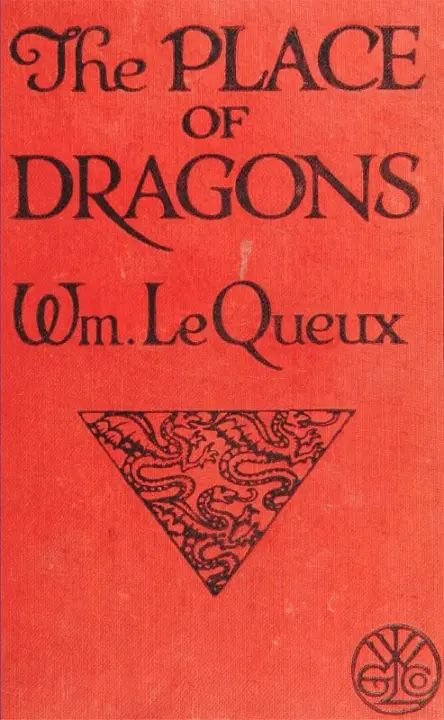
"The Place of Dragons: A Mystery" by William Le Queux is a detective novel written in the early 20th century. The story revolves around Herbert Vidal, an investigator of crime, who is drawn into a puzzling case involving the mysterious death of a wealthy old man named Vernon Gregory. The narrative unfolds in the seaside town of Cromer, where Vidal becomes intertwined with a series of eccentric characters and peculiar events that suggest deeper, hidden motives behind Gregory's passing and the reappearance of his nephew. The opening of the novel introduces Vidal and Major Keppell, who discuss the curious circumstances of Gregory's habitual morning walks and his sudden death, found early in the morning by a coast-guard. As Vidal investigates further, he discovers that Gregory might not even be who he claimed, leading to a complexity of identities involving his nephew, Edward Craig. These initial chapters not only establish an intriguing setting but also pose numerous questions about the relationships between these characters, hinting at deception and a web of secrets yet to be unraveled.
Introduction adapted from the source catalogue; source summaries may be automatically generated.
Free to read · English · 78,223 words · No account needed
MAKE TIME FOR A GOOD BOOK
On by default. Untick to stop anonymous reading totals. Each page counts after 10 seconds in view. How this works.
Anonymous counting is on unless you have switched it off.
With one accord we promised. Then, crossing to where the body lay, I lifted the heavy brown sail that covered it, and in the dim light gazed upon the white, dead countenance.
Yes. It was the face of Edward Craig.
Frayne at that moment came up, and after two men had taken the covering from the body, commenced to search the dead man's pockets. In the old mackintosh cape was a pouch, from which the detective drew a small wallet of crocodile leather, much worn, together with two letters. The latter were carried to the light and at once examined.
One proved to be a bill from a well-known hatter in Piccadilly. The superscription on the other envelope, of pale blue-grey paper, was undoubtedly in the hand of an educated woman.
Frayne drew from this envelope a sheet of notepaper, which bore neither address nor date, merely the words--
"At Ealing, at 10 p.m., on the twenty-ninth of August, where the two C's
meet."
"Ah, an appointment," remarked Frayne. Then, looking at the post-mark, he added: "It was posted the day before yesterday at Bridlington. I wonder what it means?"
"I see it is addressed to Mr. Gregory!" I pointed out, "not to the dead
man."
"Then the old man had an appointment on the twenty-ninth of August somewhere in Ealing--where the two C's meet. I wonder where that can be? Some agreed-on spot, I suppose, where two persons, whose initials are C, are in the habit of meeting."
"Probably," was my reply. But I was reflecting deeply.
In the wallet were four five-pound notes; a few of Gregory's cards; a letter from a local charity, thanking him for a contribution of two guineas; and a piece of paper bearing a number of very elaborate calculations, apparently of measured paces.
It seemed as though the writer had been working out some very difficult problem of distances, for the half-sheet of quarto paper was absolutely covered with minute pencilled figures; lengths in metres apparently.
I looked at them, and at a glance saw that old Gregory had either received his education abroad, or had lived for a long time upon the continent when a young man. Why? Because, when he made a figure seven, he drew a short cross-stroke half-way up the downward stroke, in order, as foreigners do, to distinguish it from the figure one.
"I wonder what all these sums can mean?" remarked the detective, as Treeton and I looked over his shoulder.
"Mr. Gregory was a business man," the local police officer said. "These are, no doubt, his things, not his nephew's."
"They seem to be measurements," I said, "not sums of money."
Your reading position is saved on this browser. Take it to another device with a library code. Reading pages adapt to text, rather than matching a printed edition.
William Le Queux
William Le Queux
William Le Queux
William Le Queux
BEHIND THE BOOK
This eBook is for the use of anyone anywhere in the United States and most other parts of the world at no cost and with almost no restrictions whatsoever. You may copy it, give it away or re-use it under the terms of the Project Gutenberg License included with this eBook or online at www.gutenberg.org. If you are not located in the United States, you will have to check the laws of the country where you are located before using this eBook. Read the source licence.
The original source file, including credits and licence, is retained by this library. Request an original-format copy at no charge. Please include the book title and Project Gutenberg identifier #40434.
KEEP YOUR CURIOSITY GOING
Coulson Kernahan

Maurice Baring
Frances Wright
Cécile Tormay

Frederic Jesup Stimson

W. H. P. (William Henry Pope) Jarvis