THE CLASSIC COLLECTION✦Karl GrierCLASSIC FREE BOOKS
Karl Grier
Louis Tracy
THE CLASSIC COLLECTION · 1904
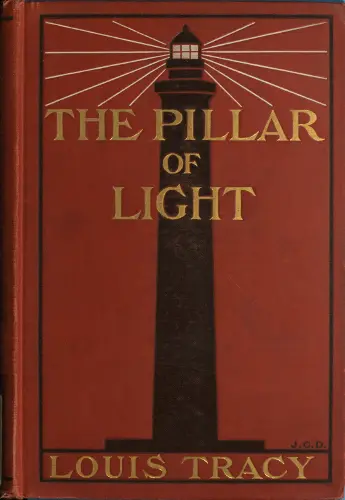
"The Pillar of Light" by Louis Tracy is a novel written in the early 20th century. The story is centered around the Gulf Rock lighthouse, focusing on its keeper, Stephen Brand, and his companions as they navigate the challenges of life at sea, including a dramatic rescue that intertwines their fates with an abandoned baby. The book explores themes of duty, adventure, and the complexity of human relationships, promising both suspense and emotional depth as the characters confront the mysteries of the ocean and their own pasts. At the start of the narrative, we are introduced to the solitary yet vital life of the lighthouse keeper, Stephen Brand, watching over the treacherous waters and responding to the foggy night. The atmosphere is heavy with suspense as Brand spots a drifting lifeboat, leading to the discovery of a baby hidden beneath a sail, representing both a miracle and a mystery. As Brand grapples with the potential tragedy surrounding the lifeboat, he is drawn into a life-altering event that forces him to confront his own past. The chapters unfold amidst vivid descriptions of the sea, revealing not only the dangers of the environment but also the characters' connections to one another as they face impending storms, both literal and metaphorical.
Introduction adapted from the source catalogue; source summaries may be automatically generated.
Free to read · English · 80,398 words · No account needed
MAKE TIME FOR A GOOD BOOK
On by default. Untick to stop anonymous reading totals. Each page counts after 10 seconds in view. How this works.
Anonymous counting is on unless you have switched it off.
Brand, foreseeing the importance of clearness and brevity, had already written out a full draft of his detailed message.
Faithful to his promise, Stapleton was acting as signaller-in-chief on board the Falcon, so Brand might manipulate his flags as quickly as lay in his power, with chief officer Emmett reading the words at his elbow: there was no fear that any mistake would be made by the receiver.
The story, if condensed, was complete. Beginning with an explanation of the liner's disablement, it dealt with her desperate but unavailing struggle to weather the reef, described Pyne's gallant and successful effort to get in touch with the lighthouse, the rescue of a fourth of those on board, the names of the survivors, and, finally, their predicament in the matter of food and water.
All this took long to tell.
Within the lantern, Mr. Charles A. Pyne, appointed supernumerary assistant-keeper, was burnishing brasswork as per instructions received. He little knew the use which was being made of his name by the tiny bits of linen tossing about on the exterior gallery. In such wise, helped by a compositor and dignified by headlines, does a man become a hero in these days of knighthood conferred by the Press.
Constance was scrutinizing the Falcon from the trimming-stage. Hearing Enid's cheery "Good-morning" to Pyne when that young lady raced upwards from the kitchen to catch a glimpse of the reported vessel, she dropped her glasses for a moment.
"Jack is on board," she announced. "Of course he would be there. And there is such a lot of other men--half Penzance, I think."
Enid joined her; Pyne, too, thought he could polish a burner up there as well as on the floor of the service-room.
Stanhope's stalwart figure, clad in oilskins, was clearly defined as he stood alone on the port side of the Falcon's small bridge, reading off the signals and sending back spasmodic twitterings of the flags which he, also, had procured, to indicate that each word was understood.
"Who is the skipper of the tug?" inquired Pyne quietly.
Both girls laughed.
"You mean Jack," cried Enid. "He is not the captain. He is an officer of the Royal Navy, our greatest friend."
"Jack is his front name, I suppose," went on Pyne, breathing on the copper disc in his hands to test its clearness.
"We will introduce you, even at this distance," said Constance airily. "Mr. Pyne--this is Lieutenant John Percival Stanhope, only son of the late Sir Charles and Lady Margaret Stanhope, of Tregarthen Lodge, Penzance, one of the best and dearest fellows who ever lived."
Your reading position is saved on this browser. Take it to another device with a library code. Reading pages adapt to text, rather than matching a printed edition.
Louis Tracy
Louis Tracy
Louis Tracy
Louis Tracy
BEHIND THE BOOK
This eBook is for the use of anyone anywhere in the United States and most other parts of the world at no cost and with almost no restrictions whatsoever. You may copy it, give it away or re-use it under the terms of the Project Gutenberg License included with this eBook or online at www.gutenberg.org. If you are not located in the United States, you will have to check the laws of the country where you are located before using this eBook. Read the source licence.
The original source file, including credits and licence, is retained by this library. Request an original-format copy at no charge. Please include the book title and Project Gutenberg identifier #40912.
KEEP YOUR CURIOSITY GOING
Coulson Kernahan

Maurice Baring
Frances Wright
Cécile Tormay

Frederic Jesup Stimson

W. H. P. (William Henry Pope) Jarvis