THE CLASSIC COLLECTION✦Karl GrierCLASSIC FREE BOOKS
Karl Grier
Louis Tracy
THE CLASSIC COLLECTION · 1904
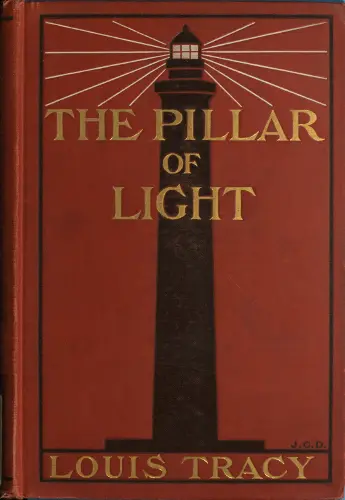
"The Pillar of Light" by Louis Tracy is a novel written in the early 20th century. The story is centered around the Gulf Rock lighthouse, focusing on its keeper, Stephen Brand, and his companions as they navigate the challenges of life at sea, including a dramatic rescue that intertwines their fates with an abandoned baby. The book explores themes of duty, adventure, and the complexity of human relationships, promising both suspense and emotional depth as the characters confront the mysteries of the ocean and their own pasts. At the start of the narrative, we are introduced to the solitary yet vital life of the lighthouse keeper, Stephen Brand, watching over the treacherous waters and responding to the foggy night. The atmosphere is heavy with suspense as Brand spots a drifting lifeboat, leading to the discovery of a baby hidden beneath a sail, representing both a miracle and a mystery. As Brand grapples with the potential tragedy surrounding the lifeboat, he is drawn into a life-altering event that forces him to confront his own past. The chapters unfold amidst vivid descriptions of the sea, revealing not only the dangers of the environment but also the characters' connections to one another as they face impending storms, both literal and metaphorical.
Introduction adapted from the source catalogue; source summaries may be automatically generated.
Free to read · English · 80,398 words · No account needed
MAKE TIME FOR A GOOD BOOK
On by default. Untick to stop anonymous reading totals. Each page counts after 10 seconds in view. How this works.
Anonymous counting is on unless you have switched it off.
He consulted Ben Pollard again; the girls were already climbing the steep stairs to sympathize with and tend to the injured men.
"Do you think it will blow harder, Ben, when the tide turns?" he asked.
The old fellow seemed to regard the question as most interesting and novel. Indeed, to him, some such query and its consideration provided the chief problem of each day. Therefore he surveyed land, sea and sky most carefully before he replied:
"It may be a'most anything afore night, Misser Brand."
At another time Brand would have smiled. Today he was nervous, distraught, wrenched out of the worn rut of things.
"I fancy there is some chance of the doctor being unable to land when he reaches the rock. Do you agree with me?"
His voice rang sharply. Ben caught its note and dropped his weather-wise
ambiguity.
"It'll blow harder, an' mebbe snaw agin," he said.
"I shall need some help here in that case, so I will retain the young ladies. Of course you can manage the boat easily enough without them?"
Pollard grinned reassuringly.
"We'm run straight in wi' thiccy wind," he said.
So they settled it that way, all so simply.
A man sets up two slim masts a thousand miles apart and flashes comprehensible messages across the void. The multitude gapes at first, but soon accepts the thing as reasonable. "Wireless telegraphy" is the term, as one says "by mail."
A whole drama was flowing over a curve of the earth at that moment but the Marconi station was invisible. There was no expert in telepathic sensation present to tell Brand and the fisherman that their commonplace words covered a magic code.
Jackson, white and mute, was lowered first. The brave fellow would not content himself with nursing his agony amidst the cushions aft. When Bates, given some slight strength by a stiff dose of brandy, was carried, with infinite care, down three flights of steep and narrow stairs, and slung to the crane in an iron cot to be lowered in his turn, Jackson stood up. Heedless of remonstrances, he helped to steady the cot and adjust it amidships clear of the sail.
"Well done, Artie," said Brand's clear voice.
"Oh, brave!" murmured Enid.
"We will visit you every day at the hospital," sang out Constance.
Jackson smiled, yes, smiled, though his bandaged arms quivered and the seared nerves of his hands throbbed excruciatingly. Speak aloud he could not Yet he bent over his more helpless mate and whispered hoarsely:
"Cheer up, old man. Your case is worse'n mine. An' ye did it for me."
Your reading position is saved on this browser. Take it to another device with a library code. Reading pages adapt to text, rather than matching a printed edition.
Louis Tracy
Louis Tracy
Louis Tracy
Louis Tracy
BEHIND THE BOOK
This eBook is for the use of anyone anywhere in the United States and most other parts of the world at no cost and with almost no restrictions whatsoever. You may copy it, give it away or re-use it under the terms of the Project Gutenberg License included with this eBook or online at www.gutenberg.org. If you are not located in the United States, you will have to check the laws of the country where you are located before using this eBook. Read the source licence.
The original source file, including credits and licence, is retained by this library. Request an original-format copy at no charge. Please include the book title and Project Gutenberg identifier #40912.
KEEP YOUR CURIOSITY GOING
Coulson Kernahan

Maurice Baring
Frances Wright
Cécile Tormay

Frederic Jesup Stimson

W. H. P. (William Henry Pope) Jarvis