THE CLASSIC COLLECTION✦Karl GrierCLASSIC FREE BOOKS
Karl Grier
Louis Tracy
THE CLASSIC COLLECTION · 1904
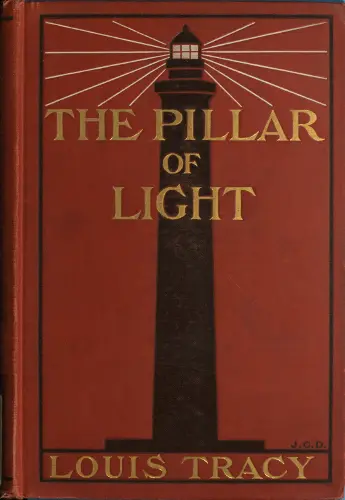
"The Pillar of Light" by Louis Tracy is a novel written in the early 20th century. The story is centered around the Gulf Rock lighthouse, focusing on its keeper, Stephen Brand, and his companions as they navigate the challenges of life at sea, including a dramatic rescue that intertwines their fates with an abandoned baby. The book explores themes of duty, adventure, and the complexity of human relationships, promising both suspense and emotional depth as the characters confront the mysteries of the ocean and their own pasts. At the start of the narrative, we are introduced to the solitary yet vital life of the lighthouse keeper, Stephen Brand, watching over the treacherous waters and responding to the foggy night. The atmosphere is heavy with suspense as Brand spots a drifting lifeboat, leading to the discovery of a baby hidden beneath a sail, representing both a miracle and a mystery. As Brand grapples with the potential tragedy surrounding the lifeboat, he is drawn into a life-altering event that forces him to confront his own past. The chapters unfold amidst vivid descriptions of the sea, revealing not only the dangers of the environment but also the characters' connections to one another as they face impending storms, both literal and metaphorical.
Introduction adapted from the source catalogue; source summaries may be automatically generated.
Free to read · English · 80,398 words · No account needed
MAKE TIME FOR A GOOD BOOK
On by default. Untick to stop anonymous reading totals. Each page counts after 10 seconds in view. How this works.
Anonymous counting is on unless you have switched it off.
He always had a pleasant quip or funny story to brighten their talk.
"You can conquer trouble with a grin," he said. "Worry doesn't cut ice."
Enid, of course, chaffed him about his American accent, which, she protested, she would acquire after a week's practice.
"It is so quaint to our ears," she went on. "I never before grasped the reason why Mark Twain makes me laugh. All he does is to act as a phonograph. Every American is a born humorist."
"There's something in that," admitted Pyne. "We do try to dis-inter a joke. Say, have you girls ever heard how an English professor explained the Yankee drawl?"
"No," they cried.
"He said it represented the effort of an uneducated man to make a speech. Every time his vocabulary gave out he lifted his voice to show he wasn't half through with his ideas."
"Oh," said Constance, "that is neither kind nor true, surely."
"Well," agreed Pyne slowly, "that is the view a friend of mine took of the remark. So he asked the professor if he had a nice agreeable sort of definition, all ready for use, of the way Englishmen clipped their syllables. The other fellow allowed that he hadn't pondered on it. 'I guess,' said my friend, 'it represents the effort of an educated ass to talk English.'"
Though the laugh was against them they were forced to snigger approval.
"I think," said Constance, "that our chief national failing is pomposity, and your story hits it off exactly. In one of our small Cornish towns we have a stout little Mayor who made money in cheese and bacon. He went to see the Paris Exhibition, and an Exeter man, meeting him unexpectedly at the foot of the Eiffel Tower, hailed him with delight. 'Hello, Mr. Mayor--' he began. 'Hush,' said the mayor, glancing around mysteriously, 'I'm 'ere in cog.'"
None who heard these light-hearted young people yelling with merriment would imagine that they had just dined off a piece of hard-baked bread made without yeast and washed down with water tasting of tar and turpentine.
"Now, Miss Enid, your turn," cried Pyne.
Her eyes danced mischievously.
"Unfortunately, by the accident of birth, I am deprived of the sense of
humor," she said.
"It seems to be in the family all right," he hazarded, looking at
Constance.
"Alas!" said Enid, "I am an American."
"I'll smile now, if that is all," said Pyne.
Your reading position is saved on this browser. Take it to another device with a library code. Reading pages adapt to text, rather than matching a printed edition.
Louis Tracy
Louis Tracy
Louis Tracy
Louis Tracy
BEHIND THE BOOK
This eBook is for the use of anyone anywhere in the United States and most other parts of the world at no cost and with almost no restrictions whatsoever. You may copy it, give it away or re-use it under the terms of the Project Gutenberg License included with this eBook or online at www.gutenberg.org. If you are not located in the United States, you will have to check the laws of the country where you are located before using this eBook. Read the source licence.
The original source file, including credits and licence, is retained by this library. Request an original-format copy at no charge. Please include the book title and Project Gutenberg identifier #40912.
KEEP YOUR CURIOSITY GOING
Coulson Kernahan

Maurice Baring
Frances Wright
Cécile Tormay

Frederic Jesup Stimson

W. H. P. (William Henry Pope) Jarvis