THE CLASSIC COLLECTION✦The Pilgrim’s Progress by John Bunyan Every Child Can ReadCLASSIC FREE BOOKS
The Pilgrim’s Progress by John Bunyan Every Child Can Read
John Bunyan
THE CLASSIC COLLECTION · 1693
"The Pilgrim's Progress from this world to that which is to come" by John Bunyan is a Christian allegory written in 1678. The story follows Christian, an everyman burdened by sin, as he abandons his home and family to journey from the City of Destruction to the Celestial City atop Mount Zion. Along the way, he encounters treacherous swamps, false guides, and spiritual tests. This dream narrative explores themes of faith, deliverance, and the perils facing those who seek salvation through the narrow path to Heaven.
Introduction adapted from the source catalogue; source summaries may be automatically generated.
Free to read · English · 57,233 words · No account needed
MAKE TIME FOR A GOOD BOOK
On by default. Untick to stop anonymous reading totals. Each page counts after 10 seconds in view. How this works.
Anonymous counting is on unless you have switched it off.
{179} FAITH. Yes, I met with one Discontent, who would willingly have persuaded me to go back again with him; his reason was, for that the valley was altogether without honour. He told me, moreover, that there to go was the way to disobey all my friends, as Pride, Arrogancy, Self-conceit, Worldly-glory, with others, who he knew, as he said, would be very much offended, if I made such a fool of myself as to wade through this valley.
CHR. Well, and how did you answer him?
{180} Faithful's answer to Discontent
FAITH. I told him, that although all these that he named might claim kindred of me, and that rightly, for indeed they were my relations according to the flesh; yet since I became a pilgrim, they have disowned me, as I also have rejected them; and therefore they were to me now no more than if they had never been of my lineage.
I told him, moreover, that as to this valley, he had quite misrepresented the thing; for before honour is humility, and a haughty spirit before a fall. Therefore, said I, I had rather go through this valley to the honour that was so accounted by the wisest, than choose that which he esteemed most worthy our affections.
CHR. Met you with nothing else in that valley?
{181} FAITH. Yes, I met with Shame; but of all the men that I met with in my pilgrimage, he, I think, bears the wrong name. The others would be said nay, after a little argumentation, and somewhat else; but this bold-faced Shame would never have done.
CHR. Why, what did he say to you?
FAITH. What! why, he objected against religion itself; he said it was a pitiful, low, sneaking business for a man to mind religion; he said that a tender conscience was an unmanly thing; and that for a man to watch over his words and ways, so as to tie up himself from that hectoring liberty that the brave spirits of the times accustom themselves unto, would make him the ridicule of the times. He objected also, that but few of the mighty, rich, or wise, were ever of my opinion [1 Cor. 1:26; 3:18; Phil. 3:7,8]; nor any of them neither [John 7:48], before they were persuaded to be fools, and to be of a voluntary fondness, to venture the loss of all, for nobody knows what. He, moreover, objected the base and low estate and condition of those that were chiefly the pilgrims of the times in which they lived: also their ignorance and want of understanding in all natural science. Yea, he did hold me to it at that rate also, about a great many more things than here I relate; as, that it was a shame to sit whining and mourning under a sermon, and a shame to come sighing and groaning home: that it was a shame to ask my neighbour forgiveness for petty faults, or to make restitution where I have taken from any. He said, also, that religion made a man grow strange to the great, because of a few vices, which he called by finer names; and made him own and respect the base, because of the same religious fraternity. And is not this, said he, a shame?
Your reading position is saved on this browser. Take it to another device with a library code. Reading pages adapt to text, rather than matching a printed edition.
John Bunyan
John Bunyan
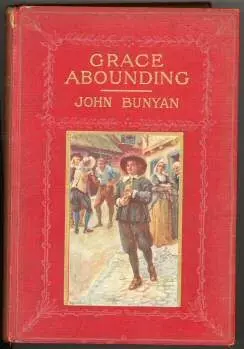
John Bunyan
BEHIND THE BOOK
This eBook is for the use of anyone anywhere in the United States and most other parts of the world at no cost and with almost no restrictions whatsoever. You may copy it, give it away or re-use it under the terms of the Project Gutenberg License included with this eBook or online at www.gutenberg.org. If you are not located in the United States, you will have to check the laws of the country where you are located before using this eBook. Read the source licence.
The original source file, including credits and licence, is retained by this library. Request an original-format copy at no charge. Please include the book title and Project Gutenberg identifier #131.
KEEP YOUR CURIOSITY GOING

David Patterson (Spirit) Hatch

David Patterson (Spirit) Hatch

David Patterson (Spirit) Hatch
Coulson Kernahan

Maurice Baring
Frances Wright