THE CLASSIC COLLECTION✦Advice to a wife and mother in two partsCLASSIC FREE BOOKS
Advice to a wife and mother in two parts
Pye Henry Chavasse
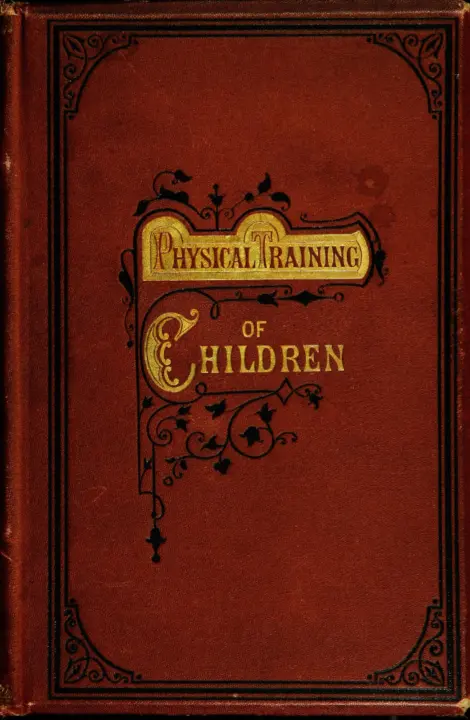
THE CLASSIC COLLECTION · 1871
"The Physical Training of Children" by Pye Henry Chavasse is a detailed guide on child health and physical education written in the late 19th century. The work emphasizes the importance of proper physical care during infancy and childhood, discussing vital aspects such as nutrition, exercise, and hygiene. The text serves as a resource for parents and caregivers, aiming to educate them on best practices to enhance the well-being of children and reduce mortality rates in early life. The opening of this guide introduces a dialogue format that sets the foundation for a deep exploration of child care methodologies. Chavasse underscores the critical lack of knowledge among parents, particularly mothers, regarding the physical development and health management of their children. He highlights the significance of proper washing techniques, clothing choices, and nutritional guidelines, advocating for natural approaches in caring for infants. Through a combination of practical advice and persuasive arguments, the author aims to equip caregivers with the knowledge necessary to foster a child's health and development, reflecting a broader concern of his time regarding high infant mortality rates and inadequate parental preparation.
Introduction adapted from the source catalogue; source summaries may be automatically generated.
Free to read · English · 115,304 words · No account needed
MAKE TIME FOR A GOOD BOOK
On by default. Untick to stop anonymous reading totals. Each page counts after 10 seconds in view. How this works.
Anonymous counting is on unless you have switched it off.
DEAR DOCTOR:—I must compliment you on your neat Introduction as in itself a good summary, with additional enforcement, of the advice contained in the work of Dr. Chavasse on the “Physical Training of Children.” The author has been very successful in conveying much needed instruction in language clear, forcible and readily comprehended by every reader. Mothers, for whose benefit the work has been prepared, must feel, with it in hand, that they have gained a friendly, disinterested and wise counsellor to admonish and guide them in many trying emergencies to a proper physical management, and to some extent concurrent moral culture, of their offspring, from the first hour of infantile life, on through childhood, until the time for school education begins. Familiar truths are here presented with a freshness and piquancy which carry with them the renewed assent and conviction of those who deemed themselves possessed of the requisite knowledge, while by the larger number, the uninitiated into maternal cares and children’s wants, they cannot fail to be received as the utterances of wisdom and long experience. In his inculcations the author does not assume that a child is a mere machine, to be made to go through certain movements by an older controlling hand, nor that it is to be left, like a young plant, to grow up in fruitless luxuriance, without pruning or grafting. He favors a large charter for nature, but he dwells also on the existence of natural laws, growing out of the very framework and constitution of a living body, an infraction of which, whether it be through ignorance, pedantic teaching, fashion or the intrusion of physic, is followed by injury to health and happiness. A child is not to be treated as an automaton, but as a being whose physical and mental organization, instincts and germs of intelligence are to be gradually developed under careful training. Growth, health and flexibility of movements come first: polish and the graces may well be an afterthought. The first instinctive wants of an infant, the gratifying of which is necessary to its existence, are air to breathe, food to nourish, external warmth by suitable covering, and sleep to invigorate and refresh. It is now that the reason of the mother and of her immediate aids should be deliberately exercised in the regulation of these instincts. Selection and limitation of means for the purpose must be made, and the physical training of the infant is thus already begun. How important that this training should be conducted with a full knowledge of the necessities of the case! and yet it is this very knowledge that is so generally wanting, and which it is the great object of Dr. Chavasse to supply. His advice and directions to this end are full and explicit, minute without being tedious and plain without being trivial. All the deeds and contingencies of nursery-life are anticipated, and the treatment required in consequence is carefully detailed. The cardinal purposes of a sanitary teacher are to preserve the health of the child, to restore it when lost and to prevent disease. While giving full scope to the fulfilment of these purposes, the author admits, with reserve, the necessity of indicating the means of curing some of the ailments and chief diseases incident to childhood. He enjoins the mother to send for a physician as soon as the case requires medical aid, and he gives the additional and often-needed advice to abide strictly by the directions of her medical adviser. There are times, however, when the suddenness and violence of the attack and the inability to procure timely professional assistance throw the mother on her own resources, and it is under these circumstances that the author teaches her how to act and what prescriptions to give, but not without many cautions on his part. It must still be continually borne in mind that everything can be done in the way of prevention, and much in the way of cure, by a timely and judicious use of the ordinary hygienic means applied for the growth and preservation of the child, viz.: air, water, food, clothing, exercise of the body and nurture of the affections. The medicine-chest ought never to form part of the furniture of the nursery. Meddlesome medicine is bad, and that medicine is always meddlesome when it is applied without actual necessity, clearly indicated by a competent judge. The mother will find this judge in the author of the present volume.
Your reading position is saved on this browser. Take it to another device with a library code. Reading pages adapt to text, rather than matching a printed edition.
Pye Henry Chavasse
Pye Henry Chavasse
BEHIND THE BOOK
This eBook is for the use of anyone anywhere in the United States and most other parts of the world at no cost and with almost no restrictions whatsoever. You may copy it, give it away or re-use it under the terms of the Project Gutenberg License included with this eBook or online at www.gutenberg.org. If you are not located in the United States, you will have to check the laws of the country where you are located before using this eBook. Read the source licence.
The original source file, including credits and licence, is retained by this library. Request an original-format copy at no charge. Please include the book title and Project Gutenberg identifier #65260.
KEEP YOUR CURIOSITY GOING

Charles G. (Charles Griffith) Ross
Hannah Webster Foster

Emily Lawless
Edwin Hamlin Carr

Charles De Lano Hine
Andrew Ure