THE CLASSIC COLLECTION✦Advice to a wife and mother in two partsCLASSIC FREE BOOKS
Advice to a wife and mother in two parts
Pye Henry Chavasse
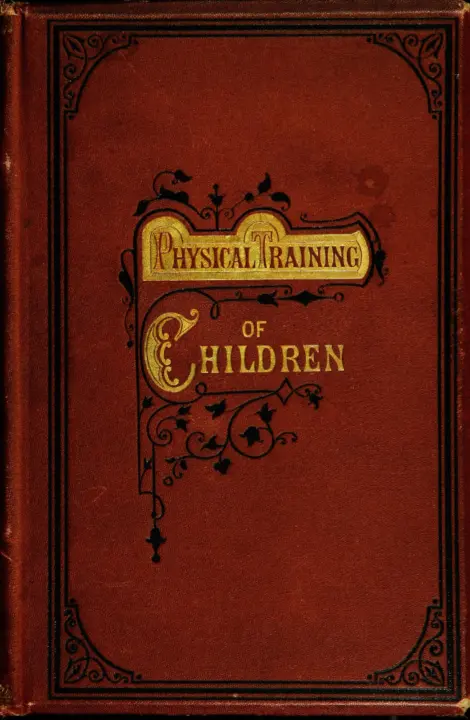
THE CLASSIC COLLECTION · 1871
"The Physical Training of Children" by Pye Henry Chavasse is a detailed guide on child health and physical education written in the late 19th century. The work emphasizes the importance of proper physical care during infancy and childhood, discussing vital aspects such as nutrition, exercise, and hygiene. The text serves as a resource for parents and caregivers, aiming to educate them on best practices to enhance the well-being of children and reduce mortality rates in early life. The opening of this guide introduces a dialogue format that sets the foundation for a deep exploration of child care methodologies. Chavasse underscores the critical lack of knowledge among parents, particularly mothers, regarding the physical development and health management of their children. He highlights the significance of proper washing techniques, clothing choices, and nutritional guidelines, advocating for natural approaches in caring for infants. Through a combination of practical advice and persuasive arguments, the author aims to equip caregivers with the knowledge necessary to foster a child's health and development, reflecting a broader concern of his time regarding high infant mortality rates and inadequate parental preparation.
Introduction adapted from the source catalogue; source summaries may be automatically generated.
Free to read · English · 115,304 words · No account needed
MAKE TIME FOR A GOOD BOOK
On by default. Untick to stop anonymous reading totals. Each page counts after 10 seconds in view. How this works.
Anonymous counting is on unless you have switched it off.
When will mothers arouse from their slumbers, rub their eyes, and see clearly the importance of the subject? When will they know that all the symptoms of rickets I have just enumerated usually proceed from the want of nourishment, more especially from the want of genuine and of an abundance of milk? There are, of course, other means of warding off rickets besides an abundance of nourishing food, such as thorough ablution, plenty of air, exercise, play, and sunshine; but of all these splendid remedies, nourishment stands at the top of the list.
I do not mean to say that rickets always proceeds from poorness of living—from poor milk. It sometimes arises from scrofula, and is an inheritance of one or of both the parents.
Rickety children, if not both carefully watched and managed, frequently, when they become youths, die of consumption. A mother, who has for some time neglected the advice I have just given, will often find, to her grievous cost, that the mischief has, past remedy, been done, and that it is now “too late!—too late!”
271. How may a child be prevented from becoming Rickety? or, if he be Rickety, how ought he to be treated?
If a child be predisposed to be rickety, or if he be actually rickety, attend to the following rules:
Let him live well, on good nourishing diet, such as on tender rump-steaks, cut very fine, and mixed with mashed potatoes, crumb of bread, and with the gravy of the meat. Let him have, as I have before advised, an abundance of good new milk—a quart or three pints during every twenty-four hours. Let him have milk in every form—as milk gruel, Du Barry’s Arabica revalenta made with milk, batter and rice puddings, suet-pudding, bread and milk, etc.
To harden the bones, let lime-water be added to the milk (a tablespoonful to each teacupful of milk).
Let him have a good supply of fresh, pure, dry air. He must almost live in the open air—the country, if practicable, in preference to the town, and the coast in summer and autumn. Sea bathing and sea breezes are often, in these cases, of inestimable value.
He ought not, at an early age, to be allowed to bear his weight upon his legs. He must sleep on a horse-hair mattress, and not on a feather bed. He should use, every morning, cold baths in the summer, and tepid baths in the winter, with bay salt (a handful) dissolved in the water.
Your reading position is saved on this browser. Take it to another device with a library code. Reading pages adapt to text, rather than matching a printed edition.
Pye Henry Chavasse
Pye Henry Chavasse
BEHIND THE BOOK
This eBook is for the use of anyone anywhere in the United States and most other parts of the world at no cost and with almost no restrictions whatsoever. You may copy it, give it away or re-use it under the terms of the Project Gutenberg License included with this eBook or online at www.gutenberg.org. If you are not located in the United States, you will have to check the laws of the country where you are located before using this eBook. Read the source licence.
The original source file, including credits and licence, is retained by this library. Request an original-format copy at no charge. Please include the book title and Project Gutenberg identifier #65260.
KEEP YOUR CURIOSITY GOING

Charles G. (Charles Griffith) Ross
Hannah Webster Foster

Emily Lawless
Edwin Hamlin Carr

Charles De Lano Hine
Andrew Ure