
Last letters from the living dead man
David Patterson (Spirit) Hatch
THE CLASSIC COLLECTION · 1877
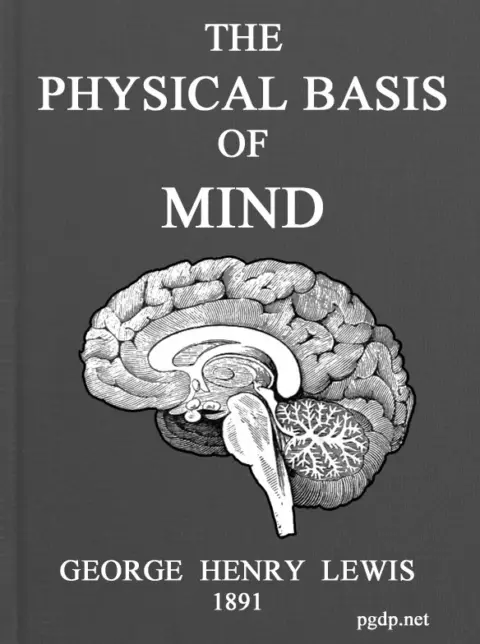
"The Physical Basis of Mind" by George Henry Lewes is a scientific publication written in the late 19th century. This work delves into the intricate relationship between life, the mind, and their biological foundations, aiming to clarify the principles that underlie the functioning of both mental and organic phenomena. It addresses the complex interplay between physical conditions and psychological functions, offering a framework that integrates biological understanding into psychological inquiry. At the start of the book, Lewes introduces the concept that the human mind, as conceived by scientists, is tightly interwoven with the organic life of the individual, emphasizing that every mental event has a basis in the vital functions of the organism. He argues for a twofold analysis of mind: one part rooted in individual biological conditions and the other shaped by social factors. The opening chapters lay the groundwork for a comprehensive exploration of vital processes, the nervous system, and the connections between the physical and mental realms, suggesting that knowledge of physiology is indispensable for psychologists seeking to understand the nature of consciousness and thought.
Introduction adapted from the source catalogue; source summaries may be automatically generated.
Free to read · English · 168,886 words · No account needed
MAKE TIME FOR A GOOD BOOK
On by default. Untick to stop anonymous reading totals. Each page counts after 10 seconds in view. How this works.
Anonymous counting is on unless you have switched it off.
[18] AGASSIZ, Essay on Classification, 1859, p. 15.
[19] HAECKEL, Generelle Morphologie, II. 211.
[20] See on this last point RANKE, Die Lebensbedingungen der Nerven,
1868, p. 34.
[21] See WALDEYER, art. Eierstock, in STRICKER’S Handbuch der Lehre von den Geweben, 1870, p. 570. “I found in a fœtus, which, in a case of extra-uterine pregnancy, had lain thirty years in the body of its mother, the structure of the muscles as intact as if it had been born at its full time.”--VIRCHOW, Cellular Pathologie, Lect. XIV.
[22] See BEALE, The Structure of the Simple Tissues, 1861; the Introd. to his edition of Todd and Bowman’s Physiological Anatomy, 1866; and How to Work with the Microscope, 4th ed., 1868; also Bioplasm, 1872.
[23] “The physical property of the tissue does not depend upon this matter, nor is its function due to it.”--Beale, Introduction to Todd and Bowman, p. 11. That is to say, he regards even contractility and neurility as physical, not vital facts.
[24] In turning over the pages of a work which was celebrated some half-century ago--RUDOLPHI’S Grundriss der Physiologie--I was interested to find a clear recognition of this biological principle: “Alle Theile aller Organismen,” he says, I. 233, “sie mögen noch so verschieden in ihrem Bau, in ihrer Mischung, und in ihrer Thätigkeit seyn, sind ohne Ausnahme als organisch und mithin als lebend zu betrachten.” In a note he adds that physiologists have considered certain solid parts--epidermis, nail, hair, and bones--to be dead; “but all these are organically developed, and are in direct connection with the other parts.”
[25] VIRCHOW, Die Cellular Pathologie, 1860, Lect. I.
[26] BEALE, Bioplasm, 104.
[27] KÖLLIKER, Gewebelehre, 5th ed., 1867, p. 12.
[28] Nevertheless there are some facts directly contradicting his conclusions. For example, he considers the axis cylinder of the nerve to be formed material, and agrees with MAX SCHULTZE and others as to its fibrillated structure; yet according to LISTER and TURNER, GERLACH and FREY, the axis cylinder is deeply stained by carmine, and in this respect resembles the nucleus of protoplasm.
[29] From the quite recent experiments M. BAILLON has submitted to the Académie des Sciences (15th February, 1875), it appears that although cut flowers absorb colored fluids, the roots when intact only absorb the fluid, and reject the coloring matters, by a veritable dialysis.
[30] GERLACH cited by RANKE, op. cit., p. 76.
[31] STEIN, Der Organismus der Infusionsthierchen, 1859, p. 76.
[32] STAHL had a profound conviction of the radical difference, though he was not able to point out the conditions involved. See his Disquisitio de mechanismi et organismi vera diversitate.
Your reading position is saved on this browser. Take it to another device with a library code. Reading pages adapt to text, rather than matching a printed edition.
BEHIND THE BOOK
This eBook is for the use of anyone anywhere in the United States and most other parts of the world at no cost and with almost no restrictions whatsoever. You may copy it, give it away or re-use it under the terms of the Project Gutenberg License included with this eBook or online at www.gutenberg.org. If you are not located in the United States, you will have to check the laws of the country where you are located before using this eBook. Read the source licence.
The original source file, including credits and licence, is retained by this library. Request an original-format copy at no charge. Please include the book title and Project Gutenberg identifier #60212.
KEEP YOUR CURIOSITY GOING
David Patterson (Spirit) Hatch
Coulson Kernahan

Ralph Waldo Emerson
Frances Wright

Edwin Abbott Abbott

Joseph Droz