THE CLASSIC COLLECTION✦The story of Keedon BluffsCLASSIC FREE BOOKS
The story of Keedon Bluffs
Charles Egbert Craddock
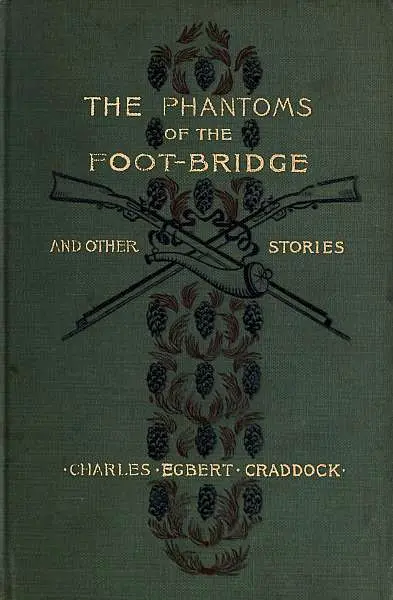
THE CLASSIC COLLECTION · 1895
"The Phantoms of the Foot-Bridge and Other Stories" by Charles Egbert Craddock is a collection of short stories written in the late 19th century. The stories delve into themes of the supernatural and the human experience, often exploring life in rural America, particularly in the Appalachian region. The collection sets its tone with rich descriptive language that evokes a sense of mystery and the uncanny, featuring characters that navigate both the physical and metaphysical realities of their world. At the start of the opening story, "The Phantoms of the Foot-Bridge," we meet two characters, Simeon Roxby and his silent companion, who discuss the haunted nature of a dilapidated footbridge spanning a gorge. Roxby reveals chilling tales of ghosts associated with the bridge, including a young mother who lost her child there and now wanders in sorrowful remembrance. The atmosphere is steeped in a mix of local superstition and natural beauty, highlighting the contrast between the mundane and the supernatural as Roxby speaks of various specters encountered over the years. This setting establishes a compelling narrative of loss and the spectral remnants of the past, setting the stage for the eerie tales that follow in the collection.
Introduction adapted from the source catalogue; source summaries may be automatically generated.
Free to read · English · 93,141 words · No account needed
MAKE TIME FOR A GOOD BOOK
On by default. Untick to stop anonymous reading totals. Each page counts after 10 seconds in view. How this works.
Anonymous counting is on unless you have switched it off.
His companion's gloomy gaze was lifted for a moment with an expression of inquiry from the slowly widening circles of the water about the horse's head as he drank. But Roxby's eyes, with a certain gleam of excitement, a superstitious dilation, still dwelt upon the bridge at the end of the upward vista. He went on merely from the impetus of the subject. "Yes, sir--she seen it a-pacin' of its sorrowful way acrost that bredge, same ez the t'others of the percession o' harnts. 'Twar my niece, Mill'cent--brother's darter--by name, Mill'cent Roxby. Waal, Mill'cent an' a lot o' young fools o' her age--little over fryin' size--they 'tended camp-meetin' down hyar on Tomahawk Creek--'tain't so long ago--along with the old folks. An' 'bout twenty went huddled up tergether in a road-wagin. An', lo! the wagin it bruk down on the way home, an' what with proppin' it up on a crotch, they made out ter reach the cross-roads over yander at the Notch, an' thar the sober old folks called a halt, an' hed the wagin mended at the blacksmith-shop. Waal, it tuk some two hours, fur Pete Rodd ain't a-goin' ter hurry hisself--in my opinion the angel Gabriel will hev ter blow his bugle oftener'n wunst at the last day 'fore Pete Rodd makes up his mind ter rise from the dead an' answer the roll-call--an' this hyar young lot sorter found it tiresome waitin' on thar elders' solemn company. The old folks, whilst waitin', set outside on the porches of the houses at the settlemint, an' repeated some o' the sermons they hed hearn at camp, an' more'n one raised a hyme chune. An' the young fry--they hed hed a steady diet o' sermons an' hyme chunes fur fower days--they tuk ter stragglin' off down the road, two an' two, like the same sorter idjits the world over, leavin' word with the old folks that the wagin would overtake 'em an' pick 'em up on the road when it passed. Waal, they walked several mile, an' time they got ter the crest o' the hill over yander the moon hed riz, an' they could look down an' see the mist in the valley. The moon war bright in the buryin'-groun' when they passed it, an' the head-boards stood up white an' stiff, an' a light frost hed fell on the mounds, an' they showed plain, an' shone sorter lonesome an' cold. The young folks begun ter look behind em' fur the wagin. Some said--I b'lieve 'twar Em'ry Keenan--they could read the names on the boards plain, 'twar so light, the moon bein' nigh the full: but Em'ry never read nuthin' at night by the moon in his life; he ain't enny too capable o' wrastlin' with the alphabet with a strong daytime on his book ter light him ter knowledge. An' the shadows war black an' still, an' all the yearth looked ez ef nuthin' lived nor ever would agin, an' they hearn a wolf howl. Waal, that disaccommodated the gals mightily, an' they hed a heap more interes' in that old wagin, all smellin' rank with wagin-grease an' tar, than they did in thar lovyers; an' they hed ruther hev hearn that old botch of a wheel that Pete Rodd hed set onto it comin' a-creakin' an' a-complainin' along the road than the sweetest words them boys war able ter make up or remember. So they stood thar in the road--a-stare-gazin' them head-boards, like they expected every grave ter open an' the reveilly ter sound--a-waitin' ter be overtook by the wagin, a-listenin', but hearin' nuthin' in the silence o' the frost--not a dead leaf a-twirlin', nor a frozen blade o' grass astir. An' then two or three o' the gals 'lowed they hed ruther walk back ter meet the wagin, an' whenst the boys 'lowed ter go on--nuthin' war likely ter ketch 'em--one of 'em bust out a-cryin'. Waal, thar war the eend o' that much! So the gay party set out on the back track, a-keepin' step ter sobs an' sniffles, an' that's how kem they seen no harnt. But Mill'cent an' three or four o' the t'others 'lowed they'd go on. They warn't two mile from home, an' full five from the cross-roads. So Em'ry Keenan--he hev been waitin' on her sence the year one--so he put his skeer in his pocket an' kem along with her, a-shakin' in his shoes, I'll be bound! So down the hill in the frosty moonlight them few kem--purty nigh beat out, I reckon, Mill'cent war, what with the sermonizin' an' the hyme-singin' an' hevin' ter look continual at the sheep's-eyes o' Em'ry Keenan--he wears my patience ter the bone! So she concluded ter take the short-cut. An' Em'ry he agreed. So they tuk the lead, the rest a followin', an' kem down thar through all that black growth"--he lifted his arm and pointed at the great slope, dense with fir and pine and the heavy underbrush--"keepin' the bridle-path--easy enough even at night, fur the bresh is so thick they couldn't lose thar way. But the moonlight war mightily slivered up, fallin' through the needles of the pines an' the skeins of dead vines, an' looked bleached and onnatural, an' holped the dark mighty leetle. An' they seen the water a-shinin' an' a-plungin' down the gorge, an' the glistenin' of the frost on the floor o' the bredge. Thar war a few icicles on the hand-rail, an' the branches o' the firs hung ez still ez death; only that cold, racin', shoutin', jouncin' water moved. Jes ez they got toler'ble nigh the foot-bredge a sudden cloud kem over the face o' the sky. Thar warn't no wind on the yearth, but up above the air war a-stirrin'. An' Em'ry he 'lowed Mill'cent shouldn't cross the foot-bredge whilst the light warn't clar--I wonder the critter hed that much sense! An' she jes' drapped down on that rock thar ter rest"--he pointed up the slope to a great fragment that had broken off from the ledges and lay near the bank: the bulk of the mass was overgrown with moss and lichen, but the jagged edges of the recent fracture gleamed white and crystalline among the brown and olive-green shadows about it. A tree was close beside it. "Agin that thar pine trunk Em'ry he stood an' leaned. The rest war behind, a-comin' down the hill. An' all of a suddenty a light fell on the furder eend o' the foot-bredge--a waverin' light, mighty white an' misty in the darksomeness. Mill'cent 'lowed ez fust she thunk it war the moon. An' lookin' up, she seen the cloud; it held the moon close kivered. An' lookin' down, she seen the light war movin'--movin' from the furder eend o' the bredge, straight acrost it. Sometimes a hand war held afore it, ez ef ter shield it from the draught, an' then Mill'cent 'seen twar a candle, an' the white in the mistiness war a 'oman wearin' white an' carryin' it. Lookin' ter right an' then ter lef' the 'oman kem, with now her right hand shieldin' the candle she held, an' now layin' it on the hand-rail. The candle shone on the water, fur it didn't flare, an' when the 'oman held her hand before it the light made a bright spot on the foot-bredge an' in the dark air about her, an' on the fir branches over her head. An' a thin mist seemed to hang about her white frock, but not over her face, fur when she reached the middle o' the foot-bredge she laid her hand agin on the rail, an' in the clear light o' the candle Mill'cent seen the harnt's face. An' thar she beheld her own face; her own face she looked upon ez she waited thar under the tree watchin' the foot-bredge; her own face pale an' troubled; her own self dressed in white, crossin' the foot-bredge, an' lightin' her steps with a corpse's candle." He drew up the reins abruptly. He seemed in sudden haste to go.
Your reading position is saved on this browser. Take it to another device with a library code. Reading pages adapt to text, rather than matching a printed edition.
Charles Egbert Craddock
Charles Egbert Craddock
Charles Egbert Craddock
Charles Egbert Craddock
BEHIND THE BOOK
This eBook is for the use of anyone anywhere in the United States and most other parts of the world at no cost and with almost no restrictions whatsoever. You may copy it, give it away or re-use it under the terms of the Project Gutenberg License included with this eBook or online at www.gutenberg.org. If you are not located in the United States, you will have to check the laws of the country where you are located before using this eBook. Read the source licence.
The original source file, including credits and licence, is retained by this library. Request an original-format copy at no charge. Please include the book title and Project Gutenberg identifier #36771.
KEEP YOUR CURIOSITY GOING
Coulson Kernahan

Maurice Baring
Frances Wright
Cécile Tormay
Francis Greenleaf Allinson & Anne C. E. (Anne Crosby Emery) Allinson

Frederic Jesup Stimson