THE CLASSIC COLLECTION✦A dead man’s diaryCLASSIC FREE BOOKS
A dead man’s diary
Coulson Kernahan
THE CLASSIC COLLECTION · 1909
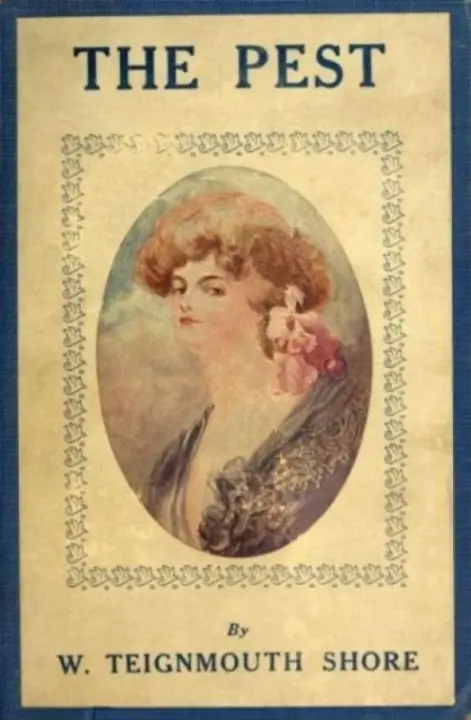
"The Pest" by W. Teignmouth Shore is a novel written in the early 20th century. The story centers around George Maddison, a successful painter, who unexpectedly reunites with Marian, a woman from his past who is now a curate's wife. Their encounter stirs complex emotions as they navigate their respective dissatisfaction with their current lives and the longing for something more fulfilling. At the start of the novel, the setting is a dreary and foggy afternoon in London, introducing George Maddison as he strolls through the city, contemplating his new association with the Royal Academy. He then encounters Marian Lewis, who has just married the curate Edward Squire. Their conversation reveals their mixed feelings about their lives and the constraints imposed by societal expectations. This initial meeting sets the stage for the ensuing conflict and the exploration of themes such as ambition, desire, and the struggle for individual freedom, as both characters grapple with their past and the limitations of their present circumstances. The opening establishes a poignant tension that hints at the personal revolutions that will unfold throughout the narrative.
Introduction adapted from the source catalogue; source summaries may be automatically generated.
Free to read · English · 66,039 words · No account needed
MAKE TIME FOR A GOOD BOOK
On by default. Untick to stop anonymous reading totals. Each page counts after 10 seconds in view. How this works.
Anonymous counting is on unless you have switched it off.
“‘Try’ is the word,” rejoined West, biting the end of his cigar; “try! When you get married, Maddison, you’ll remember that little word ‘try.’”
“Don’t be naughty, Philip,” said Mrs. West, pouting. “You know you always have your own way, except about grumbling. Life’s too short for grumbling, isn’t it, Mr. Maddison?”
“Much. Your husband as a business man ought to know better than to waste
his time.”
“What a prosaic view to take!” Mrs. West answered. “He ought to leave business behind him in the office and just waste his time when he’s at home. But all men are prosaic, I think.”
“And all women are—?” asked West.
“Just what you like to make them,” his wife replied. “That’s the worst of it—what we are depends on what you are.”
“What do you say to such views, Alice?” West said, appealing to Miss Lane, who was looking out of the window at the miles of dreary suburbs flying by.
“Nothing!” she answered. “You know I never theorize about things. What’s the use of it?”
“Practical, steady, unemotional Alice!” laughed Mrs. West; but Maddison knew better, for he caught a glimpse of a look of contemptuous scorn before Miss Lane turned away again to the window.
“Where are you going to put up?” Maddison asked.
“At the Metropole, it’s amusing,” answered Mrs. West. “You must come in and dine with us.”
“Maddison hates big hotels,” said West.
“Big anything,” interjected Maddison, “except when Nature provides them. Most of men’s big things are vulgar failures. London, for example, you needn’t go farther.”
“Is a bad example,” rejoined West. “That example won’t prove your point: just the opposite. On the whole, London is a success; it’s the most comfortable, most luxurious and most beautiful city in the world.”
“And the most comfortless, most squalid, and most ugly,” said Maddison. “That’s where London is such a dismal failure; she’s just like a horse with an uncertain temper: one moment an angel, the next a devil.”
“Or you can put it another way and draw another conclusion; London has just that charm which belongs to a woman—you’re never quite certain of her—at least if she’s worth bothering about. It may be a scratch, it may be a kiss.”
“I don’t like your talking that way, Phil,” said Mrs. West; “you know you don’t mean it.”
“It’d be too stupid if we only said what we meant; most of us mean such
commonplaces.”
Mrs. West picked up a magazine, and neither of the men feeling inclined to talk, the conversation dropped.
Your reading position is saved on this browser. Take it to another device with a library code. Reading pages adapt to text, rather than matching a printed edition.
BEHIND THE BOOK
This eBook is for the use of anyone anywhere in the United States and most other parts of the world at no cost and with almost no restrictions whatsoever. You may copy it, give it away or re-use it under the terms of the Project Gutenberg License included with this eBook or online at www.gutenberg.org. If you are not located in the United States, you will have to check the laws of the country where you are located before using this eBook. Read the source licence.
The original source file, including credits and licence, is retained by this library. Request an original-format copy at no charge. Please include the book title and Project Gutenberg identifier #50453.
KEEP YOUR CURIOSITY GOING
Coulson Kernahan

Maurice Baring
Frances Wright
Cécile Tormay

Frederic Jesup Stimson

W. H. P. (William Henry Pope) Jarvis