THE CLASSIC COLLECTION✦A dead man’s diaryCLASSIC FREE BOOKS
A dead man’s diary
Coulson Kernahan
THE CLASSIC COLLECTION · 1909
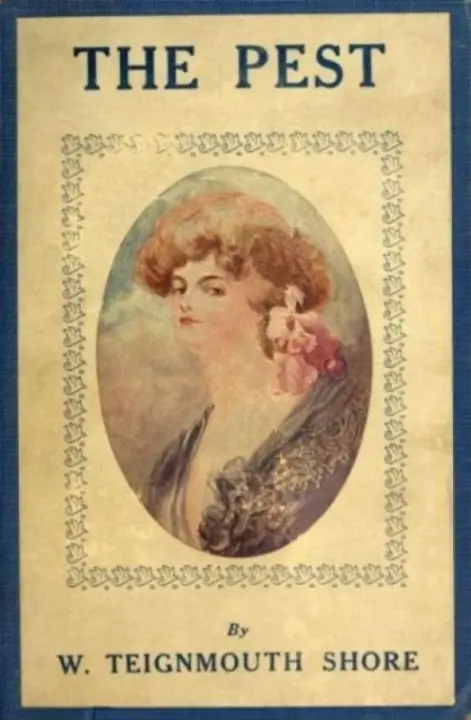
"The Pest" by W. Teignmouth Shore is a novel written in the early 20th century. The story centers around George Maddison, a successful painter, who unexpectedly reunites with Marian, a woman from his past who is now a curate's wife. Their encounter stirs complex emotions as they navigate their respective dissatisfaction with their current lives and the longing for something more fulfilling. At the start of the novel, the setting is a dreary and foggy afternoon in London, introducing George Maddison as he strolls through the city, contemplating his new association with the Royal Academy. He then encounters Marian Lewis, who has just married the curate Edward Squire. Their conversation reveals their mixed feelings about their lives and the constraints imposed by societal expectations. This initial meeting sets the stage for the ensuing conflict and the exploration of themes such as ambition, desire, and the struggle for individual freedom, as both characters grapple with their past and the limitations of their present circumstances. The opening establishes a poignant tension that hints at the personal revolutions that will unfold throughout the narrative.
Introduction adapted from the source catalogue; source summaries may be automatically generated.
Free to read · English · 66,039 words · No account needed
MAKE TIME FOR A GOOD BOOK
On by default. Untick to stop anonymous reading totals. Each page counts after 10 seconds in view. How this works.
Anonymous counting is on unless you have switched it off.
He held her face close to his; the scent of her hair, the warmth of her breath intoxicated him as he kissed her and pressed her close.
“You do love me, really love me, George?”
He kissed her again.
“I do, my dear, I do. You’re a witch. I often thought I should never love any woman really, though I very nearly loved you when you were a little country girl. Then you come along and just wind yourself into my life and make me forget everything except you.”
“Everything except me,” she repeated dreamily, “and I forget everything except you. I feel just like Cinderella must have done when she met the prince, only this is all real, real, all real. Now, come along; you’re a man, and—dinner is ready. Come, give me your arm and lead your hostess in.”
The dining table was plainly but daintily furnished; pretty flowers, simple china, cheap green German glass, a homely dinner, light Rhine wine, red and white, good coffee, mellow liqueurs. There was nothing to remind him of the garish restaurant life they had been leading, no touch of meretriciousness or hint of sham.
When the servant left them, Marian drew her chair close to his, filled
his glass and her own.
“Have you no toast to propose?” she asked.
“Yes, but no wine in the world is good enough to drink it in, dear.
You—you!”
“I’ve a better toast—and it’s the wish, not the wine, that counts—We.
We!”
“You’re right! We! Though I should be nothing without you. We!”
They clinked glasses and drank.
“How nice and quiet it is here!” she said. “Just you and I, and all the rest of the world shut out. I wonder——”
“What?”
“Should we have been as happy if you had quite loved me then?”
“We were different then.”
“Yes, how different!” said Marian; “I at any rate. I daresay you haven’t changed much. You were grown-up then, but I was merely a child. I don’t know that I am very much more now, am I?”
She laughed lightly as she spoke, and glanced at him; then laughed again as she leaned back in her chair and nibbled a marron glacé.
“A child!” she went on. “Am I anything more than a mere grown-up child? I don’t think I can be much more. I don’t want to really grow up. Just a Cinderella, whom you found sitting among the ashes. I’d never met a prince before, so—I let you carry me off in your fairy hansom. So—they lived happily ever afterward. I wonder, did they?”
Your reading position is saved on this browser. Take it to another device with a library code. Reading pages adapt to text, rather than matching a printed edition.
BEHIND THE BOOK
This eBook is for the use of anyone anywhere in the United States and most other parts of the world at no cost and with almost no restrictions whatsoever. You may copy it, give it away or re-use it under the terms of the Project Gutenberg License included with this eBook or online at www.gutenberg.org. If you are not located in the United States, you will have to check the laws of the country where you are located before using this eBook. Read the source licence.
The original source file, including credits and licence, is retained by this library. Request an original-format copy at no charge. Please include the book title and Project Gutenberg identifier #50453.
KEEP YOUR CURIOSITY GOING
Coulson Kernahan

Maurice Baring
Frances Wright
Cécile Tormay

Frederic Jesup Stimson

W. H. P. (William Henry Pope) Jarvis