THE CLASSIC COLLECTION✦A dead man’s diaryCLASSIC FREE BOOKS
A dead man’s diary
Coulson Kernahan
THE CLASSIC COLLECTION · 1909
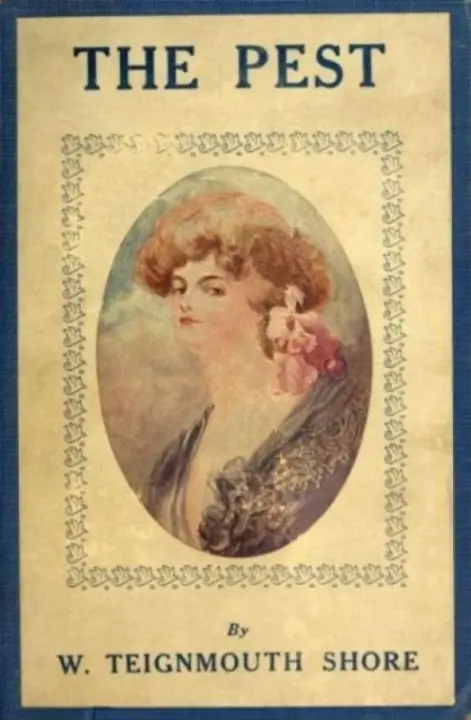
"The Pest" by W. Teignmouth Shore is a novel written in the early 20th century. The story centers around George Maddison, a successful painter, who unexpectedly reunites with Marian, a woman from his past who is now a curate's wife. Their encounter stirs complex emotions as they navigate their respective dissatisfaction with their current lives and the longing for something more fulfilling. At the start of the novel, the setting is a dreary and foggy afternoon in London, introducing George Maddison as he strolls through the city, contemplating his new association with the Royal Academy. He then encounters Marian Lewis, who has just married the curate Edward Squire. Their conversation reveals their mixed feelings about their lives and the constraints imposed by societal expectations. This initial meeting sets the stage for the ensuing conflict and the exploration of themes such as ambition, desire, and the struggle for individual freedom, as both characters grapple with their past and the limitations of their present circumstances. The opening establishes a poignant tension that hints at the personal revolutions that will unfold throughout the narrative.
Introduction adapted from the source catalogue; source summaries may be automatically generated.
Free to read · English · 66,039 words · No account needed
MAKE TIME FOR A GOOD BOOK
On by default. Untick to stop anonymous reading totals. Each page counts after 10 seconds in view. How this works.
Anonymous counting is on unless you have switched it off.
Mortimer considered himself quick at seeing whether a new acquaintance would prove to his liking, and immediately decided that there was not much chance of there being any real goodwill between Alice Lane and himself. She was not of a type that appealed to him; too sedate, too cool; stately, well-proportioned, almost robust, with a breezy, blunt, direct manner of speech, gesture and look.
“Why are you so late?” Mrs. West asked. “We waited lunch ever so long for you, and now it is almost tea time.”
“It’s partly my fault because I was so busy; partly the fog’s.”
“Chiefly his fault,” said Mortimer; “he kept me waiting in his room for two solid hours. Gave me The Times and a lot of cigars to keep me quiet.”
“You must be famished. Poor things! I’ll ring for tea at once. How can you be so naughty, Phil?”
“If you pull my hair like that I shall kiss you, and you know how that disgusts Alice. I should like to see her in love with some emotional young man like me——”
“Young!” exclaimed Mrs. West, with a merry laugh. “Young! Dark, thin and forty, you mean!”
“Like myself,” he continued, ignoring the interruption. “I wonder whether he would thaw her or she freeze him?”
“Don’t mind him, Alice.”
“I don’t. He’ll grow up some day.”
“There, Mrs. West,” he said, striking an attitude of triumph; “you see, this sensible young woman realizes that I am young. Profit by her example.”
Darkness was closing in, but Mrs. West protested that it would be far more pleasant to sit, chat and drink tea by the firelight than to have the lamp brought in.
“What a quaint quartette we are!” said West. “I, sedate and elderly; Alice, sedate and quite young; Agatha, the child; and Fred—well, all cynics are old.”
“Are you a cynic?” asked Mrs. West, handing him his cup.
“What do you mean by a cynic?”
“I always think cynics are—disagreeable and——”
“And you ask me if I am one!”
“Had you then, Aggie!” laughed her husband.
“I don’t care a bit. Mr. Mortimer knows I didn’t mean anything nasty. I’m always saying shocking things, and no one minds a bit.”
“Any more than when a kitten scratches,” said West.
“A kitten’s scratches hurt, and mine don’t. It’s mean of you to sit the other side of Alice, so that I can’t pull your hair. We have her here, Mr. Mortimer, to keep us good, and to make her better.”
“Aggie trying to make epigrams! What next! Heaven defend the poor man whose wife makes epigrams.”
Your reading position is saved on this browser. Take it to another device with a library code. Reading pages adapt to text, rather than matching a printed edition.
BEHIND THE BOOK
This eBook is for the use of anyone anywhere in the United States and most other parts of the world at no cost and with almost no restrictions whatsoever. You may copy it, give it away or re-use it under the terms of the Project Gutenberg License included with this eBook or online at www.gutenberg.org. If you are not located in the United States, you will have to check the laws of the country where you are located before using this eBook. Read the source licence.
The original source file, including credits and licence, is retained by this library. Request an original-format copy at no charge. Please include the book title and Project Gutenberg identifier #50453.
KEEP YOUR CURIOSITY GOING
Coulson Kernahan

Maurice Baring
Frances Wright
Cécile Tormay

Frederic Jesup Stimson

W. H. P. (William Henry Pope) Jarvis