THE CLASSIC COLLECTION✦An outlaw’s diary: the CommuneCLASSIC FREE BOOKS
An outlaw’s diary: the Commune
Cécile Tormay
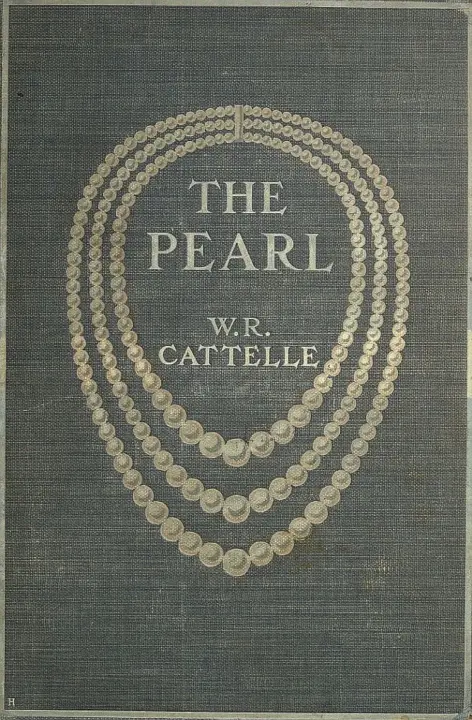
THE CLASSIC COLLECTION · 1907
"The Pearl, its story, its charm, and its value" by Wallis Richard Cattelle is a comprehensive exploration of pearls written in the early 20th century. This work delves into the history, allure, and valuation of pearls, exploring their significance across cultures and their journey from the depths of the ocean to becoming coveted treasures. The text combines historical accounts with practical information on pearl quality and market trends, making it appealing to gem enthusiasts and historians alike. At the start of the book, Cattelle paints a vivid picture of the sea's mysterious beauty and the fascinating world of pearls beneath its surface. He introduces readers to the symbolic relationship between pearls and wealth, emphasizing the allure they have held throughout history, especially among royalty and the wealthy. The opening remarks on the natural origins of pearls set the stage for the detailed examination of their value, craftsmanship, and the intricacies involved in pearl diving and trading that unfolds throughout the subsequent chapters.
Introduction adapted from the source catalogue; source summaries may be automatically generated.
Free to read · English · 59,546 words · No account needed
MAKE TIME FOR A GOOD BOOK
On by default. Untick to stop anonymous reading totals. Each page counts after 10 seconds in view. How this works.
Anonymous counting is on unless you have switched it off.
DRESS.—Diving apparatus consisting of a one piece dress from the neck down, corselet, helmet, air-pipes and life-line.
DROP-PEARL.—Ovoid, or obovoid, not necessarily of perfect shape.
DRILLED PEARLS.—Pearls with one hole for setting on peg, or quite through the centre for stringing. Chinese drill two or three small holes half way between circumference and bottom, for holding-wires.
EGG PEARLS.—Ovoid: shaped like an egg.
FLAT.—In connection with price quotation means, price per grain
regardless of size.
FRESH-WATER PEARLS.—Pearls taken from inland streams.
GREEN EARS.—Shell of Haliotis having green mother-of-pearl lining.
HALF PEARLS.—Round pearls sawed in half.
HELMET.—Diving head-gear.
LINGAHS.—Pearl oyster shells from the Arabian Sea and others of
similar size and quality.
MADRAS PEARLS.—Fine white pearls from the Ceylon fisheries, so called because marketed principally in that city.
MANUL.—Loose or soft sand sea bottom (Ceylon).
MULTIPLE.—Price of pearls subject to the multiple of weight.
MUSSEL-EGG.—Name given to pearls by Tennesseans.
NACRE.—The substance of which pearls and the lining of pearl-shells
consists.
NAKED DIVING.—Diving without any appliances.
ORIENT.—As applied to pearls, the luster of the skin.
ORIENTAL PEARLS.—Generally, pearls from salt water; specifically, pearls from the Indian Seas.
OUNCE PEARLS.—Poor grades sold by the ounce.
PAAR.—Ceylon name for rock or hard bottom oyster-bed.
PEARLER.—One who fishes for mussels for the pearls.
PEAR-SHAPE.—Shaped like a pear; obovoid.
PEELER.—A pearl with an imperfect skin, the removal of which would
improve the pearl.
RED-EARS.—Abalone shell with pearly red interior.
ROSE-PEARLS.—Pink, iridescent, fresh-water baroques.
SEED-PEARLS.—Very small round pearls.
SLUGS.—Nacreous excrescences from the Unio.
SKIN.—As applied to pearls, the outer layer of nacre.
SQUARE.—Method of reckoning the cost of a pearl of any size at a lot price, by the square of price given, with the grain as a unit.
STRAWBERRY-PEARLS.—Large, pink, iridescent and lustrous baroques, fairly regular in shape, with the appearance of being thickly sanded under the nacre.
SWEET-WATER PEARLS.—Pearls from fresh-water.
TRUE-PEARLS.—Pearls formed of nacre as distinguished from similar formations which are not nacreous.
TWINNED-PEARLS.—Pearls enveloped together in one or more layers of
nacre.
WHITE-SHELL.—Pearl-oyster shells with nacre white to the edge.
YELLOW-SHELL.—Pearl-oyster shells with yellowish nacre.
ARABIAN SEA.—Pearls have fine orient, but the color inclines to
yellow.
Shells are larger than those of Ceylon but of little value for mother-of-pearl: iridescent, black-edge m. of p.; known as Lingahs.
AROE.—Pearls usually good orient; many of irregular shape.
Shells are of medium size, black-edge and iridescent.
AUCKLAND.—Pearls white, but not remarkable for luster.
Your reading position is saved on this browser. Take it to another device with a library code. Reading pages adapt to text, rather than matching a printed edition.
BEHIND THE BOOK
This eBook is for the use of anyone anywhere in the United States and most other parts of the world at no cost and with almost no restrictions whatsoever. You may copy it, give it away or re-use it under the terms of the Project Gutenberg License included with this eBook or online at www.gutenberg.org. If you are not located in the United States, you will have to check the laws of the country where you are located before using this eBook. Read the source licence.
The original source file, including credits and licence, is retained by this library. Request an original-format copy at no charge. Please include the book title and Project Gutenberg identifier #63623.
KEEP YOUR CURIOSITY GOING
Cécile Tormay

Moritz Busch
John L. Ransom
Frances Wright
Cécile Tormay

Mabel Potter Daggett